When a commercial aircraft descends onto a runway, it’s not just the tires and brakes doing the heavy lifting. Behind the scenes, thrust reversers—the mechanical structures that make it seem like the plane’s engines “open up”—play a vital role in ensuring safe, efficient landings. What appears to be an engine cracking open mid-landing is actually a marvel of aerospace engineering working to decelerate a 60-ton jet traveling at over 150 miles per hour.
The Physics of Stopping a 60-Ton Aircraft
A fully loaded airliner possesses a massive amount of kinetic energy on approach. To bring it safely to a halt, multiple systems work in concert. At first glance, one might assume the wheel brakes alone would suffice. After all, like any car, the aircraft is equipped with strong disc brakes. These brakes work by converting the forward momentum (kinetic energy) into heat (thermal energy). However, while the brakes on a car typically stop a 1.5-ton vehicle, an airliner like a Boeing 777 or Airbus A350 can weigh upwards of 350,000 pounds at landing.
The challenge is twofold: the brakes must work instantly, and they must do so repeatedly throughout the day on aircraft that often have minimal turnaround time. This is where thrust reversers provide a crucial secondary function, helping pilots quickly decelerate while conserving brake wear and reducing the risk of thermal overload.
What Happens When the Engines Open Up?
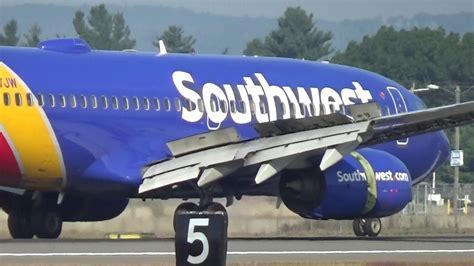
The dramatic moment when a jet’s engines appear to split open during landing is the deployment of thrust reversers. These mechanisms are designed not to alter engine power, but to redirect airflow. In most commercial jet engines, only a portion of the total airflow passes through the combustion chamber; the rest flows around the engine core in what’s called the bypass stream.
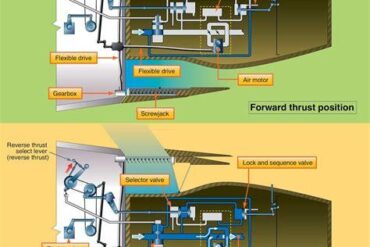
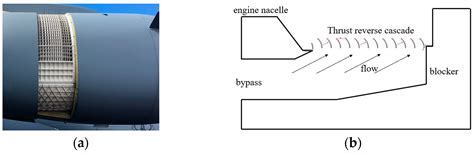
In high-bypass turbofan engines, this bypass air makes up the majority of thrust. When a thrust reverser is deployed, the engine’s cowling—essentially the exterior panels—slides open, revealing a series of cascade vanes and blocker doors. These vanes redirect the bypass air forward instead of backward, thereby producing reverse thrust.
Types of Thrust Reversers
There are several distinct types of thrust reversers, each with different design philosophies tailored to various engine layouts and aircraft types:
Cold Stream (Cascade) Reversers
The most common design in modern commercial jets like the Boeing 737 and Airbus A320, cold stream reversers use the bypass air only. The system slides open the nacelle to expose vanes that turn bypass airflow forward. This provides powerful, reliable deceleration.
Clamshell Reversers
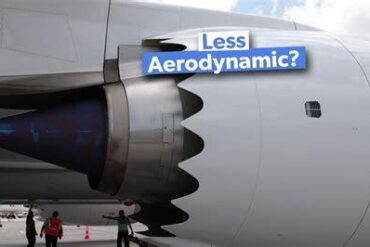
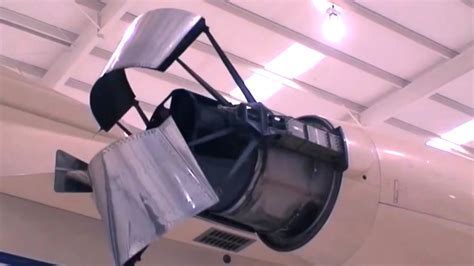
Often found on older aircraft or those with rear-mounted engines like the McDonnell Douglas DC-9, this system uses deflector doors that swing out over the exhaust to redirect the entire jet stream forward. While effective, it is heavier and less aerodynamically efficient than newer models.
Pivot Door Reversers
Seen in some early Airbus models, these reversers work by rotating parts of the engine nacelle forward, essentially acting as an external air deflector. Though mechanically simpler, they are largely phased out in newer jets.
Bucket Reversers
Used predominantly on engines like the JT8D, these systems employ two large bucket-shaped doors that pivot into the jet stream. Though older, they remain a textbook example of brute-force reverse thrust.
Why Not Just Use Brakes?
Although the main landing gear brakes are indeed capable of stopping an aircraft, they have inherent limitations. Most crucially, their efficiency degrades as they overheat. The intense friction generated while stopping a heavy aircraft causes the brake assemblies to reach temperatures that can exceed 3,000 degrees Fahrenheit. This level of heat can result in brake fade, where the stopping power deteriorates due to excessive thermal load.
This can become particularly dangerous during a Rejected Takeoff (RTO). In such an event—where the pilot aborts the takeoff due to a fault—the aircraft must come to a full stop using every available system. If the brakes are already compromised from a previous landing, the risk of overshooting the runway increases.
Wet Runways and Hydroplaning Risks
Thrust reversers aren’t just about brake longevity. They’re vital safety tools on wet or contaminated runways. When rain or snow is present, tires can lose grip and begin to hydroplane, which renders the brakes ineffective. The aircraft’s tires skate across the surface, much like a car aquaplaning on a wet road.
In these conditions, thrust reversers provide independent deceleration from the wheels. Since they operate by redirecting engine airflow, their effectiveness remains unchanged by surface conditions. This is one of the most critical benefits of reverse thrust, especially for aircraft landing at high-speed on short, wet runways.
When Are Thrust Reversers Used?
Despite their effectiveness, reversers are not used on every landing. In some cases, particularly with noise-sensitive airports, pilots may elect to rely on brakes alone or use idle reverse thrust. Regulations sometimes restrict their use in urban or densely populated areas to reduce acoustic footprint.
Additionally, thrust reversers are most effective at higher speeds, typically just after touchdown. As the aircraft slows down, the benefit of reverse thrust diminishes and the pilots shift more control to traditional braking systems and spoilers.
Mechanical Complexity and Maintenance
Thrust reversers are mechanically intricate systems that demand frequent inspection and maintenance. Their deployment mechanisms, sensors, hydraulic actuators, and linkage systems must function flawlessly, as a failure can lead to dangerous asymmetric deployment or worse. In extreme cases, uncommanded reverser deployment—where the system engages without pilot input—can result in catastrophic consequences during flight, though multiple safeguards and interlocks are now standard to prevent this.
Maintenance crews routinely inspect cascade vanes, actuators, and seals, particularly in high-utilization fleets. Airlines invest significantly in keeping these systems in top condition, both for safety and for the operational advantage of shorter landing rolls.
Environmental and Efficiency Considerations
While thrust reversers provide substantial benefits, they do come at a fuel efficiency cost. Using reverse thrust requires additional engine power, which burns more fuel compared to simply coasting to a stop using wheel brakes. That’s why pilots often use idle reverse—a minimal setting that provides some airflow redirection without spooling up the engines.
As the aviation industry pursues greener flight operations, airlines are increasingly training pilots to limit thrust reverser use when runway length and weather conditions allow. This not only reduces emissions but also prolongs engine life.
Final Approach: An Indispensable Safety Feature
Although visually dramatic, the deployment of thrust reversers during landing is far more than just a mechanical flourish. It is a vital part of aircraft deceleration strategy, ensuring safer landings, especially in adverse weather or during emergencies. Their ability to preserve brake health, counteract hydroplaning, and enhance stopping power underscores their enduring relevance, even as aviation technology evolves.
In an industry where safety, speed, and reliability are paramount, thrust reversers remain an essential ally on the tarmac. The next time you’re seated over the wing and hear that unmistakable roar after touchdown, you’ll know exactly why those engines opened wide—and why it matters.