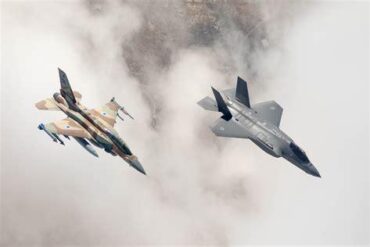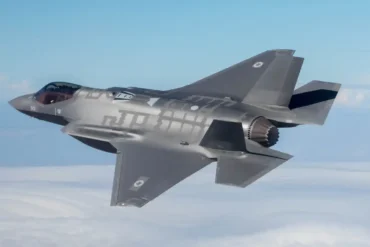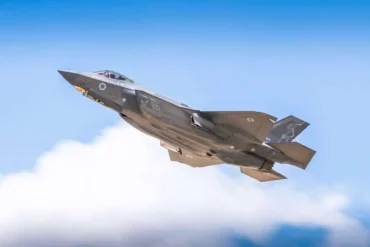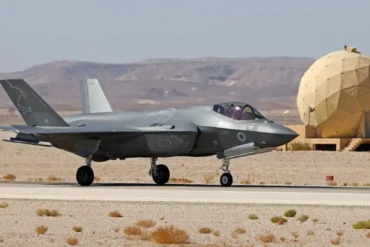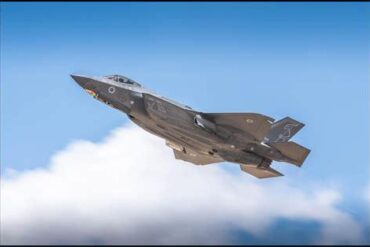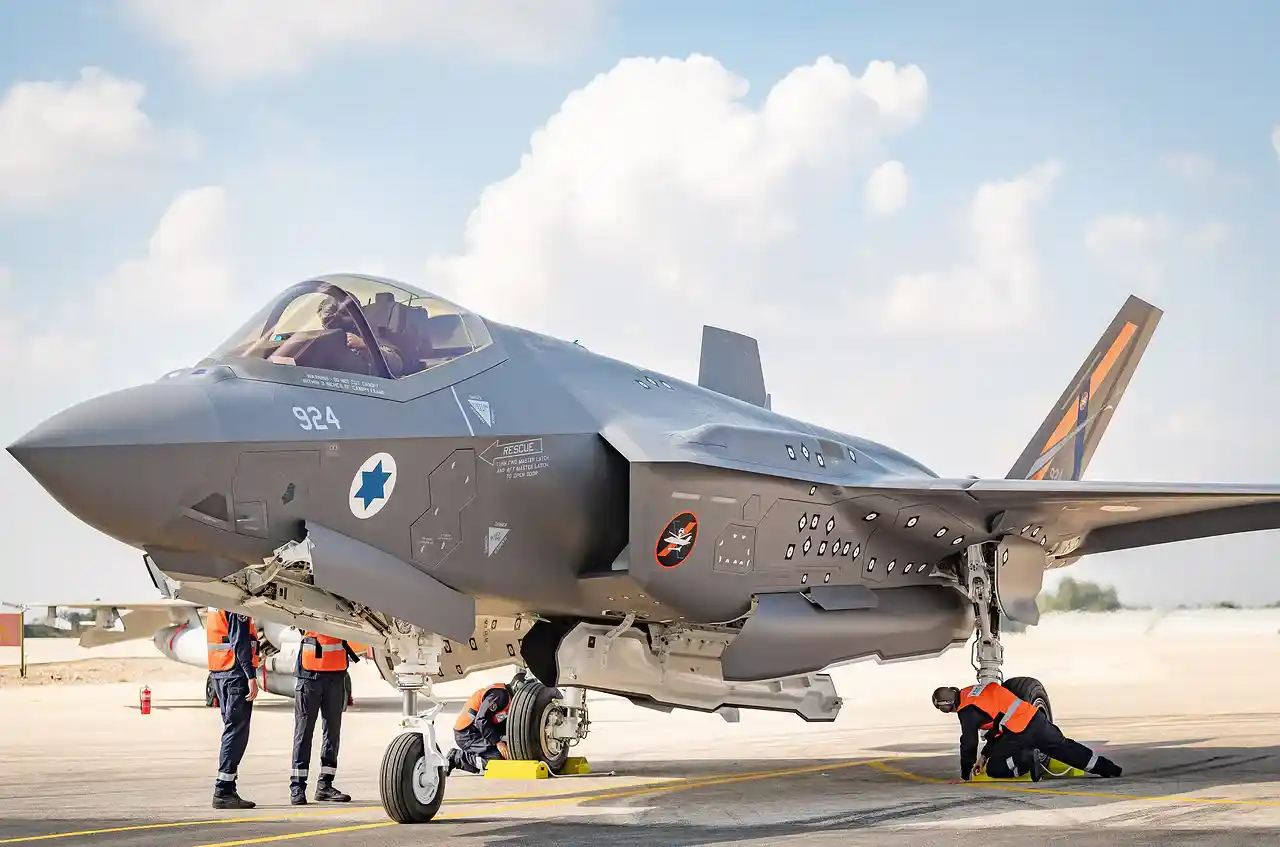
The F-35I “Adir”, meaning “Mighty” in Hebrew, represents Israel’s bold departure from the baseline Lockheed Martin F-35A. As a country constantly engaged in asymmetric warfare and surrounded by volatile airspaces, Israel recognized early that a cookie-cutter fifth-generation jet would not suffice. The result is the F-35I, a uniquely customized multirole stealth fighter that not only thrives in the complex operational environment of the Middle East but also paves the way for sixth-generation combat thinking. We explore the advanced capabilities, battlefield applications, and strategic future of this extraordinary aircraft.
A Fifth-Gen Platform Tailored for Asymmetric Warfare
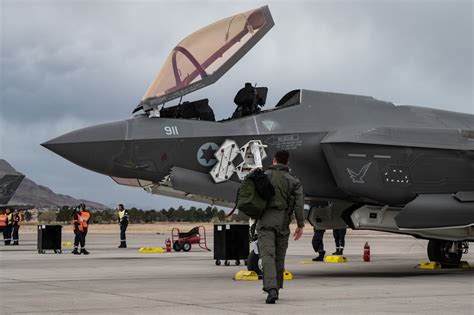
Unlike standard NATO-aligned F-35 variants, the F-35I Adir was born from the urgent need to combine stealth, agility, and Israeli-specific electronic warfare dominance. While based on the F-35A airframe, its internal architecture, software, and operational doctrine are fundamentally distinct. The aircraft was first delivered to the Israeli Air Force (IAF) in December 2016 and reached initial operational capability by 2017, making Israel the first country to deploy the F-35 in combat.
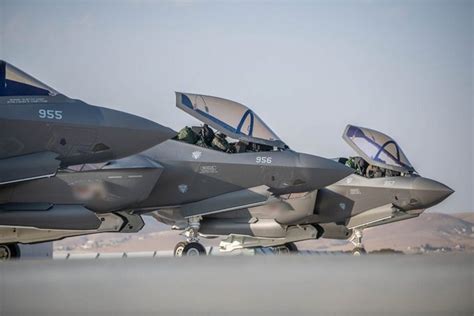
The F-35I is not simply another variant — it is a manifestation of sovereign mission autonomy, integrating homegrown avionics, open-architecture interfaces, and battle-tested tactics developed over decades in high-threat theaters like Syria, Lebanon, and Gaza.
“Beast Mode”: Redefining Stealth and Firepower
One of the most groundbreaking developments in F-35I operations is the use of “Beast Mode” — a tactical configuration that prioritizes firepower over stealth during strike phases.
Enhanced Payload Configuration
Traditional stealth fighters are limited to internal weapons bays to maintain low observability. However, when stealth is less critical, the F-35I employs external pylons to carry a vastly increased payload. While the internal bay can hold:
- 4 × AIM-120 AMRAAMs, or
- 2 × 2,000-lb JDAMs,
In Beast Mode, the F-35I can carry up to 9.9 tons of ordnance, including:
- 6 × JDAM precision-guided bombs
- Short-range air-to-air missiles
- Air-to-surface munitions tailored for urban conflict
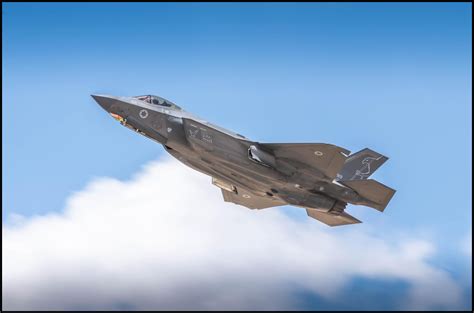
Preserving Stealth with Smart Pylons
To compensate for reduced stealth in Beast Mode, Israeli engineers have adopted low-observable pylons made with radar-absorbing materials and shaped with diamond cross-sections. These reduce radar cross-section (RCS) by up to 90% compared to conventional mounts. Combined with dynamic mission planning, the Adir can penetrate airspace stealthily, deploy its external load at the opportune moment, and exit the kill zone at supersonic speed.
This tactic has proved especially effective in operations against non-state actors like Hamas or Hezbollah, where advanced surface-to-air missile systems are absent.
Electronics Tailored for the Israeli Threat Theater
Unlike the F-35A, which remains closed-source in its software and data interfaces, the F-35I’s mission systems are open and locally modified, giving Israeli developers unparalleled control.
Passive Detection and High-Precision Localization
The Adir features an Israeli-designed passive antenna array, allowing it to detect and geolocate hostile radar emissions without broadcasting its own signals. Utilizing interferometry and spectrum analysis, it can identify threat emitters with surgical precision.
Block 4 Upgrades and TR-3 Hardware
Integrated into the Block 4 upgrade package, the Adir includes:
- Expanded electro-optical and radar sensor suites
- Support for long-range Israeli air-to-ground weapons
- Open architecture avionics compatible with indigenous systems
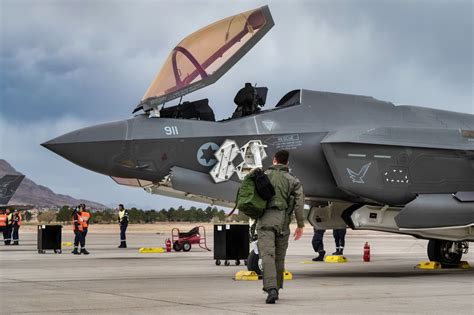
Combined with the TR-3 hardware backbone, the Adir now serves as a multi-domain fusion node, relaying data to ground-based missile systems, UAVs, and naval units.
Unified Command and Control
Israel has also embedded a domestically developed C2 interface that allows the F-35I to:
- Coordinate swarm attacks with legacy fighters
- Act as a battlefield node for ground and sea units
- Engage in real-time multi-platform data fusion
This system gives the IAF near-instantaneous cross-domain synchronization, particularly useful in multi-front skirmishes or rapid-response missions.
Breakthroughs in Cockpit and Flight Control Systems
Every aspect of the Adir’s cockpit is optimized for high-tempo operations in contested airspace. The aircraft’s Panoramic Cockpit Display (PCD) — a 20 x 8 inch touchscreen — combines all vital sensor inputs into a single interactive interface.
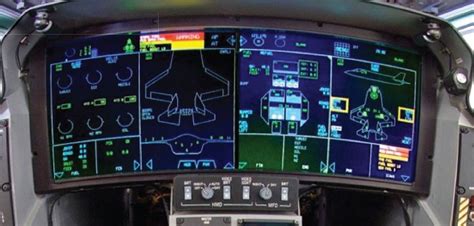
Paired with the Helmet Mounted Display System (HMDS), Israeli pilots benefit from:
- 360-degree real-time threat awareness
- Infrared and night-vision imagery superimposed on the canopy
- Seamless HOTAS (hands-on-throttle-and-stick) control
The fly-by-wire control architecture features non-linear dynamic inverse control, enabling:
- Flight envelope protection in complex terrains
- Automated pitch-trim balance
- Integrated airbrake actuation during targeting or escape maneuvers
The Distributed Aperture System (EODAS), made of six infrared sensors, supplies omnidirectional surveillance and is fused with the AN/APG-81 AESA radar, delivering beyond-visual-range detection and synthetic aperture imagery.
Battlefield Effectiveness and Operational Constraints
Since its combat debut in 2018, the F-35I has been a surgical strike asset for missions deep inside hostile territory. It has reportedly conducted airstrikes against Syrian missile depots, Iranian logistics hubs, and even nuclear development sites, all while maintaining air superiority and evading detection.
Reduced Maintenance Downtime
The Adir’s localized predictive maintenance algorithm and simplified modular repair architecture allow it to achieve:
- 40% faster turnaround times between sorties
- Higher mission-capable rates, crucial during multi-day escalations
Operational Trade-Offs
Despite its strengths, the F-35I faces challenges, especially when flying in Beast Mode. The probability of detection by S-400 systems increases from 5% to 35%, and the aircraft’s agility diminishes under the added weight and drag.
Moreover, airframe fatigue accelerates: the major overhaul interval drops from 6,000 hours to 4,500 hours due to prolonged high-load missions. This creates long-term sustainability questions if Israel’s sortie tempo remains high.
Strategic Outlook: From Adir to Sixth-Gen Platforms
The Adir is more than a fighter — it is a testbed for next-gen combat doctrines. Its modular nature and extensive Israeli software control allow it to evolve in ways other F-35 variants cannot.
Dynamic Stealth Evolution
Israel is exploring adaptive skin technologies and shape-shifting surfaces that could allow the Adir to switch between low-RCS and high-payload configurations dynamically, based on mission phases.
Manned-Unmanned Teaming (MUM-T)
The F-35I is expected to become the command node for drone swarms, such as IAI’s Harop or SkyStriker UAVs, using AI to delegate strike roles while the pilot retains final command authority.
Multi-Domain Data Integration
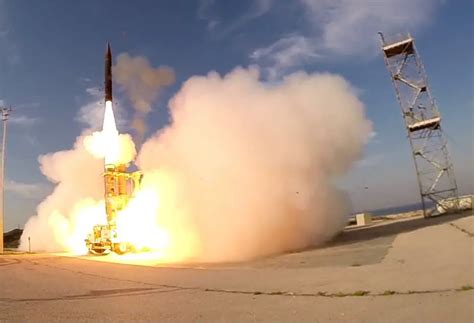
The Adir will soon interface directly with the Arrow-3 missile defense system, sharing radar and infrared data to create a real-time airspace control web — merging air, missile, and drone threats into a singular tactical picture.
Conclusion
The F-35I Adir represents a quantum leap in asymmetric aerial warfare, combining stealth, lethality, and digital warfare capabilities tailored for Israel’s unique threat environment. It is a symbol of how sovereignty in defense technology transforms an already advanced platform into a strategic force multiplier. The Adir isn’t just part of Israel’s airpower — it is helping shape the future of combat aviation worldwide.
FAQs
What makes the F-35I different from the standard F-35A?
The F-35I is a customized version of the F-35A tailored for Israel’s needs. It includes indigenous electronic warfare systems, modified software architecture, locally developed C2 systems, and the capability to carry Israeli-designed munitions. Unlike the standard F-35A, the Adir operates with greater mission flexibility and autonomy.
Has the F-35I been used in real combat?
Yes. The Israeli Air Force has used the F-35I in several combat operations since 2018, including strikes in Syria, Lebanon, and potentially against Iranian assets. These missions have showcased its stealth penetration, precision strike, and high sortie rates.
What are the future upgrades planned for the F-35I?
Future upgrades focus on manned-unmanned teaming, real-time battlefield data sharing, and adaptive stealth configurations. Israel is also expected to continue integrating the F-35I into missile defense networks and possibly deploy a two-seater training and electronic warfare variant.