The Netherlands’ integration of the F-35A Lightning II into its Royal Netherlands Air Force (RNLAF) marks a pivotal transformation in both national defense capability and NATO’s collective strategic posture. As a core member of the F-35 Joint Strike Fighter (JSF) program, the Netherlands has not only modernized its air fleet but also embedded itself deeply in the architecture of European deterrence, conventional warfare readiness, and nuclear operations. This article provides an extensive analysis of the Dutch F-35 program, encompassing deployment structure, operational roles, technical advancements, NATO interoperability, and future trajectories.
F-35A Fleet Structure and NATO Deployment
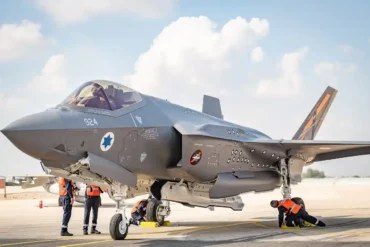
The RNLAF currently operates 40 F-35A fighters, with a final objective of expanding the fleet to 52 aircraft. These aircraft are not merely placeholders in an arsenal—they are integral to the Netherlands’ defense doctrine and NATO’s eastern front readiness.
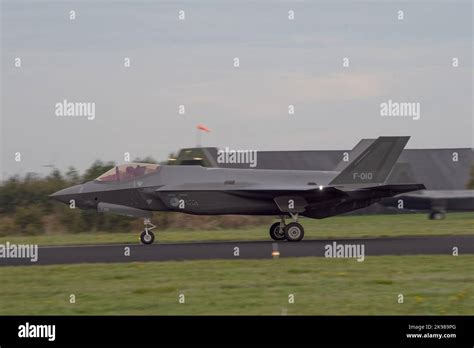
The fleet is distributed across two major operational hubs:
- Leeuwarden Air Base: Home to 322 Squadron, it serves as a primary node for conventional operations and rapid deployment.
- Volkel Air Base: Hosting 313 Squadron, this unit carries a specialized role in NATO’s nuclear deterrence mission, a responsibility passed on from the legacy F-16 fleet.
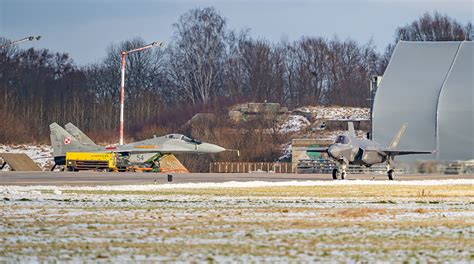
In late 2023, the Netherlands deployed four F-35As to Ämari Air Base in Estonia, bolstering NATO’s air policing operations over the Baltic states. Within weeks of deployment, Dutch F-35s intercepted 18 Russian aircraft, underlining the platform’s strategic responsiveness and situational awareness in contested airspace.
Attaining Full Operational Capability (FOC)
A landmark moment occurred in September 2024 when the Dutch F-35 fleet achieved Full Operational Capability (FOC). This designation affirms the fleet’s readiness to execute the full spectrum of missions: airspace surveillance, rapid reaction alert (QRA), counterterrorism, and nuclear deterrence.
From March 2024, the F-35 formally replaced the F-16 in QRA duties, reflecting confidence in the aircraft’s sensor fusion, stealth profile, and data-sharing capabilities. This transition has provided a strategic edge in threat detection, interception speed, and tactical coordination.
Anti-Drone Combat Training in the Baltic
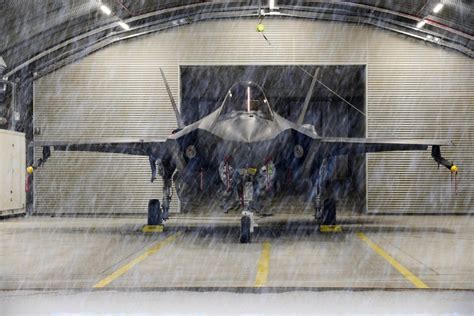
In March 2025, the RNLAF pushed its operational envelope by conducting live-fire anti-drone exercises in the Baltic region. The exercises demonstrated the F-35’s aptitude in multi-target engagements, where it successfully eliminated a fleet of simulated enemy drones using the AIM-9X Sidewinder.
These trials underscore the platform’s versatility in emerging low-cost, high-volume aerial threat environments, and position the Dutch F-35 force as a model for counter-unmanned aerial system (C-UAS) operations.
A Fifth-Generation Nuclear Deterrent: NATO’s New Standard
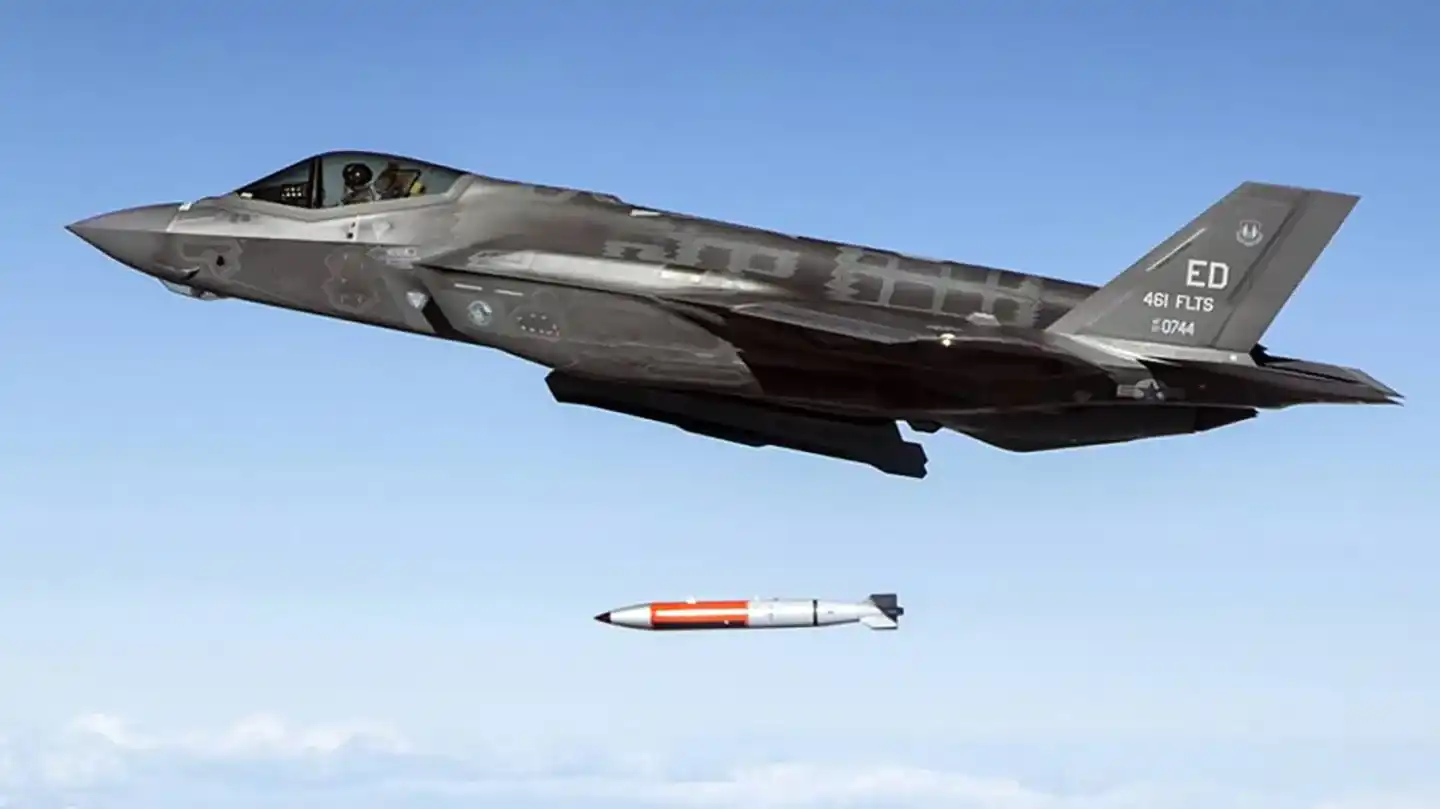
The transition of nuclear deterrence duties from the F-16 to the F-35A platform in June 2024 represents a critical shift in NATO’s nuclear architecture. The Netherlands is now the first NATO country to deploy a fifth-generation stealth fighter for nuclear roles under the NATO nuclear sharing agreement.
The aircraft is believed to be certified to carry B61-series nuclear bombs, most likely the B61-12. Stored under U.S. custody, their deployment requires dual authorization from U.S. and U.K. leadership—a safeguard reinforcing deterrence transparency and control.
The F-35’s low-observability, precision target acquisition, and advanced penetration capability significantly increase NATO’s nuclear credibility, especially against advanced anti-access/area denial (A2/AD) systems.
Weapons Integration and Combat Readiness
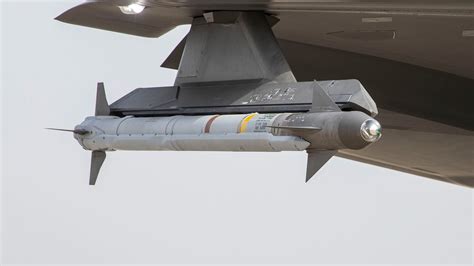
In September 2024, the Netherlands placed a $691 million order for 246 AIM-9X Block II missiles. These missiles enhance beyond-visual-range (BVR) interception capacity and support Lock-on After Launch (LOAL) capability—critical for engagements where targets are detected after missile ejection.
The AIM-9X Block II is fully compatible with the F-35’s Electro-Optical Targeting System (EOTS) and Distributed Aperture System (DAS), enabling 360-degree situational awareness and real-time threat tracking. This weapons upgrade aligns with the Netherlands’ aim to secure full-spectrum dominance in both defensive and offensive air operations.
Strategic Aid and NATO Synchronization
Parallel to upgrading its own fleet, the Netherlands also advanced European security by transferring 24 decommissioned F-16s to Ukraine. This move reflects a dual-track strategy: modernizing domestic forces while strengthening allied partners with battle-tested equipment.
Simultaneously, the F-35’s integration into NATO is marked by its seamless data-sharing ecosystem, including Link-16 and Multifunction Advanced Data Link (MADL). These systems allow Dutch F-35s to synchronize targeting data, threat assessments, and mission parameters with U.S., German, Belgian, and other allied assets in real-time, thereby maximizing coalition air superiority.
Maintenance Challenges and Technological Roadmap
Despite the aircraft’s combat promise, operating the F-35 poses significant technical and logistical challenges. Notably, the stealth coating maintenance, cooling systems, and software diagnostics demand a sophisticated and often costly support infrastructure. While the Netherlands has not publicly reported severe bottlenecks, parallels with Norway’s maintenance delays offer cautionary insights.
Looking forward, the Netherlands is set to benefit from the F-35 Block 4 upgrade cycle, expected to roll out incrementally between 2025 and 2028. These upgrades will bring:
- Enhanced Radar and Sensor Suites: Improving threat detection range and electronic warfare resilience.
- Expanded Weapons Compatibility: Including new stand-off precision munitions and directed energy integration.
- Artificial Intelligence Enhancements: Enabling predictive maintenance, mission autonomy, and human-machine teaming efficiencies.
Strategic Implications for NATO and Europe
By fully operationalizing the F-35 platform, the Netherlands asserts itself not only as a capable airpower within the Benelux region but as a foundational pillar in NATO’s fifth-generation defense network. This evolution reflects the broader shift toward multi-domain, network-centric warfare, where sensor fusion, stealth, and data interoperability determine battlefield superiority.
Moreover, by assuming the nuclear delivery role with a stealth platform, the Netherlands elevates its geopolitical stature within NATO’s inner circle—bridging gaps in the nuclear sharing doctrine previously reliant on aging fourth-generation jets.
This modernization has cascading benefits across Europe, demonstrating a model where mid-sized NATO members can execute highly advanced military strategies by aligning doctrine, platform capability, and alliance integration.
Frequently Asked Questions
What makes the Dutch F-35 program unique in NATO?
The Dutch F-35 program is distinguished by its integration into both conventional and nuclear missions. The Netherlands is the first country to operate the F-35 in NATO’s nuclear sharing mission, utilizing its stealth capabilities to enhance nuclear deterrence credibility.
How is the Netherlands supporting Ukraine with its fighter fleet?
As it phases out the F-16, the Netherlands is transferring 24 retired F-16s to Ukraine, enabling the latter to strengthen its air force amidst ongoing regional conflict. This support is part of a broader dual-track strategy balancing modernization and allied assistance.
What are the future upgrades expected for Dutch F-35s?
The Netherlands is preparing for Block 4 upgrades, which include advanced sensors, electronic warfare enhancements, and increased weapons compatibility. These upgrades will significantly improve mission autonomy, survivability, and operational effectiveness in multi-domain battle environments.