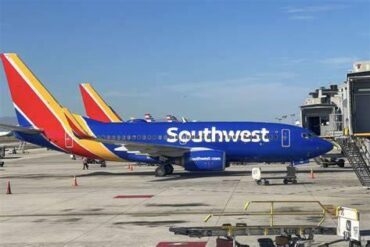
Southwest Airlines has crossed a significant threshold in its international expansion, scheduling more than 100 daily international departures for the first time in its history. The achievement is striking because Southwest only began flying beyond the United States in 2014. Just 12 years later, its international schedule has grown into a substantial operation spanning Mexico, the Caribbean, and Central America.
According to Cirium schedule data, Southwest has 10,703 international departures planned between August 1, 2026, and April 5, 2027, covering 81 international routes, with five additional routes scheduled to begin before the end of that period. The carrier’s previous high was 93 daily international departures, meaning the 100-flight threshold represents a clear acceleration rather than a marginal increase.
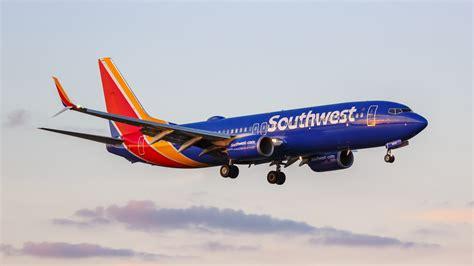
Yet there is an intriguing limitation behind the milestone. Every Southwest international flight is operated by a Boeing 737. That single-aircraft strategy has worked remarkably well for short- and medium-haul leisure markets, but it could become a major constraint if Southwest follows through on CEO Bob Jordan’s ambition to launch as many as 8 to 12 long-haul international routes within five years.
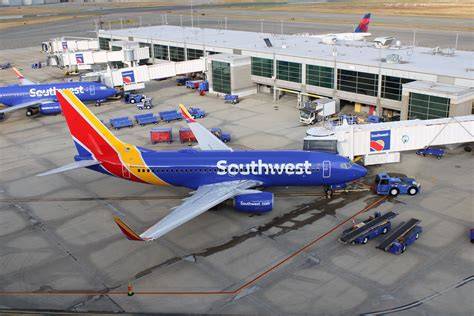
Southwest Airlines Reaches 100 Daily International Departures
The 100-daily-flight milestone gives us a useful measure of how dramatically Southwest’s international network has changed. When the airline began international operations on July 1, 2014, it launched with only six routes. Those services connected Baltimore/Washington, Atlanta, and Orlando with destinations such as Aruba, Montego Bay, and Nassau.
Expansion was initially cautious. Southwest added international destinations gradually, generally focusing on markets where its established domestic network could generate connecting traffic. Mexico, the Caribbean, and Central America became the natural foundation because these regions combine relatively short flight times with strong leisure demand.
The pace changed considerably in 2026. New international services from Las Vegas, Nashville, Austin, and Columbus helped push daily departures beyond the previous record of 93. Las Vegas was particularly notable because Southwest began international operations from Harry Reid International Airport in June 2026, introducing services to Cancun and Los Cabos before adding Puerto Vallarta.
This expansion demonstrates an important feature of Southwest’s strategy. Rather than transforming itself into a traditional long-haul international carrier overnight, the airline is extending its existing domestic network into carefully selected international leisure markets.
That distinction matters. Southwest operates roughly 4,100 daily flights, meaning international departures still account for only a small portion of its overall schedule. Nevertheless, crossing 100 daily international flights represents an important strategic milestone for a company that spent most of its history operating almost exclusively within the United States.
Mexico, Caribbean, and Central America Drive the Network
Southwest’s international network remains highly concentrated geographically, and there is a practical reason for that concentration: the Boeing 737 is exceptionally well suited to these markets.
Cancun International Airport is the standout destination. Southwest connects Cancun with numerous US cities, making it one of the carrier’s most important international markets by both departures and passenger volume. Los Cabos, Puerto Vallarta, Nassau, Montego Bay, Punta Cana, Grand Cayman, Providenciales, San José, and Liberia are also important components of the network.
Most of these destinations share the same basic characteristics. They are leisure-oriented, relatively close to the United States, and capable of generating strong seasonal demand. That makes them a natural fit for an airline whose fleet does not include a dedicated widebody aircraft.
Orlando International Airport and Houston Hobby Airport are among Southwest’s most important international departure points. Both have substantial domestic networks that can feed connecting passengers into international flights. This connectivity allows Southwest to serve destinations beyond the immediate local market without requiring an enormous international hub operation.
The airline’s expansion also illustrates why network breadth can sometimes be more valuable than simply increasing frequencies. The five routes scheduled to launch during the current schedule period originate from Las Vegas, Nashville, Austin, and Columbus. These cities are not Southwest’s largest international gateways, suggesting that the carrier is deliberately opening additional international access points rather than concentrating every new flight at a handful of established bases.
The Boeing 737 MAX 8 Defines Southwest’s International Ceiling
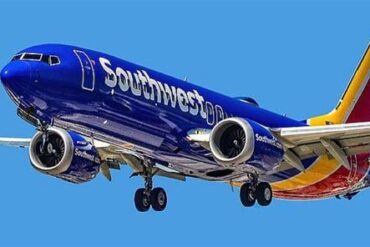
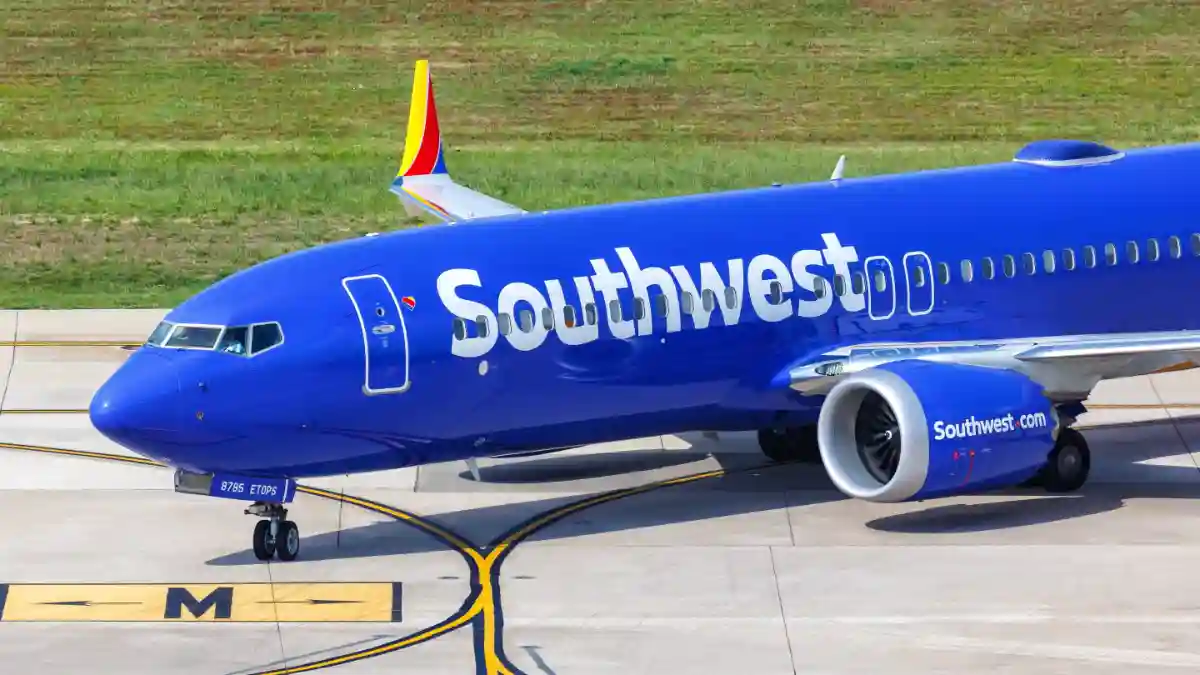
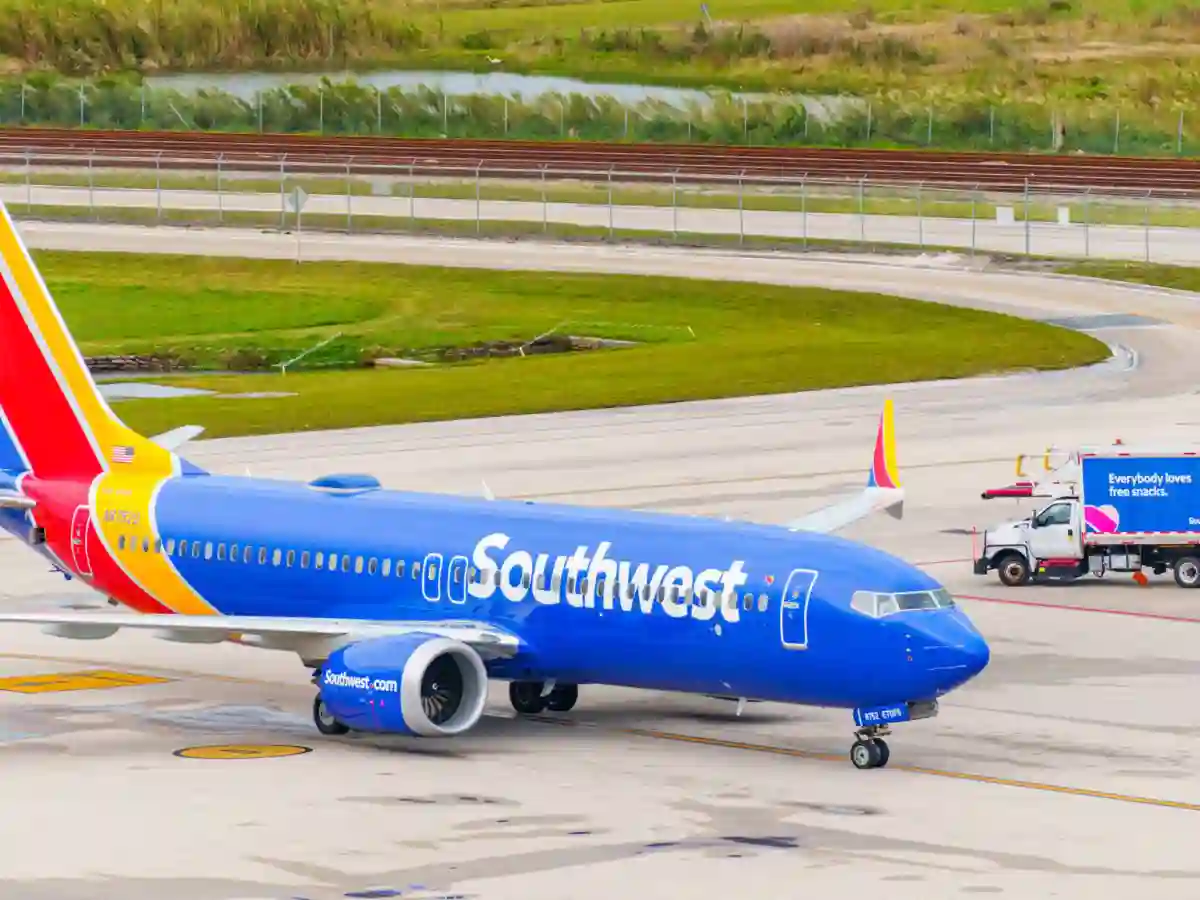
The most interesting part of Southwest’s international story is also its biggest constraint. Southwest operates an all-737 fleet, with approximately 317 Boeing 737 MAX 8 aircraft supplemented by 737-700s and 737-800s.
For today’s international network, that is not a serious problem. The 737 MAX 8 has a published range of approximately 3,550 nautical miles, or about 6,570 kilometers, with a 175-passenger configuration. That is enough for Southwest to reach Mexico, the Caribbean, and Central America from virtually every relevant point in the continental United States.
The airline’s existing routes therefore operate comfortably inside the aircraft’s capabilities. Even its longer services to Central America and the Caribbean generally leave meaningful range margins.
But the situation changes once Southwest looks toward Europe.
The Boeing 737 MAX 8 can technically reach some of the closest European destinations from the US East Coast. From Baltimore/Washington, Iceland is approximately 2,500 nautical miles away, while the Azores are roughly 2,100 nautical miles distant. Shannon and Dublin are farther, at approximately 2,900 to 3,000 nautical miles.
Those numbers appear encouraging until we consider what “range” actually means in airline operations.
Range Is Not the Same as Commercial Capability
An aircraft’s published maximum range does not mean an airline can automatically fill every seat, load unlimited baggage, carry substantial cargo, and fly the route under every possible weather condition.
Wind, fuel reserves, passenger weight, baggage, routing, alternate-airport requirements, and operational restrictions all matter. A 737 MAX 8 flying close to its maximum range could require payload limitations under unfavorable conditions, particularly when strong headwinds affect an eastbound transatlantic flight.
This is why a theoretical route from Baltimore to London is very different from a practical year-round commercial service.
The aircraft might be capable of making the flight under favorable conditions. The bigger question is whether Southwest could operate it consistently while carrying a commercially attractive passenger and baggage load and maintaining appropriate fuel reserves.
That distinction becomes especially important because Southwest’s current international strategy has been built around relatively short sectors. The carrier has not needed to optimize its operation around the demanding requirements of six- or seven-hour international flights.
A planned Las Vegas-San José route illustrates the point. At approximately 2,700 nautical miles, it would have been Southwest’s longest international service. The route was ultimately canceled before entering the schedule, despite using less than 80% of the 737 MAX 8’s published range.
The cancellation does not prove that Southwest cannot operate longer routes. It does, however, demonstrate that range alone does not determine whether a route makes commercial and operational sense.
Bob Jordan Has Bigger International Ambitions
Southwest CEO Bob Jordan has indicated that the airline’s ambitions extend beyond its current international footprint. Speaking at the Bernstein Strategic Decisions Conference on May 28, Jordan said Southwest could operate 8 to 12 long-haul international routes within five years.
Baltimore/Washington International Airport could play a particularly important role in that strategy. Jordan described BWI as a “natural hopping-off point” for potential European service, supported by Southwest’s dominant position at the airport and its extensive domestic network.
That domestic connectivity is crucial. A potential transatlantic flight does not have to depend exclusively on passengers originating in Baltimore. Southwest could use its domestic network to funnel travelers from numerous US cities onto international departures.
This is one of the strongest arguments for BWI. Southwest has more than 70% market share there and averages roughly 420 daily movements, while its network connects the airport with dozens of destinations across the United States.
In theory, that creates the passenger feed necessary to support new international routes.
But the aircraft remains the difficult part of the equation.
Southwest Needs More Than Range for Transatlantic Flights
Launching transatlantic service would require Southwest to address more than aircraft performance. It would need to rethink the passenger experience, crew operation, scheduling, and onboard product associated with longer flights.
The 737 MAX 8 used by Southwest carries 175 passengers in an all-economy configuration. It does not provide lie-flat seating, and its galley capacity is limited compared with the widebody aircraft typically used for transatlantic operations.
That may be perfectly acceptable for a three-hour flight to Cancun. It becomes a much more consequential issue on a six- or seven-hour journey.
Southwest has already been transforming its traditional product. Assigned seating, premium cabin sections, and airport lounges are part of a broader effort to evolve the airline’s proposition. Those changes could become particularly important if Southwest begins competing directly with established transatlantic carriers.
A passenger choosing a long-haul flight expects more than simply reaching the destination. Comfort, food service, baggage handling, lounge access, seat differentiation, and the ability to work or sleep become much more important as flight duration increases.
Southwest therefore needs its commercial transformation to progress alongside any long-haul ambitions.
Pilot Contracts Add Another Layer
Crew considerations also cannot be overlooked. Southwest’s pilot union, the Southwest Airlines Pilots Association, has provisions related to expanded international flying, and the airline notified SWAPA in 2025 of its intention to operate more international flights using the 737 MAX.
Longer international missions can affect pilot pay, duty-time rules, scheduling, and rest requirements. These issues become more complicated as sectors become longer and cross multiple time zones.
For Southwest, that means the decision to launch transatlantic service is not simply a matter of selecting destinations on a route map. The airline must build an operational structure capable of supporting the missions reliably and economically.
This is another reason the carrier’s current transformation matters. Southwest can gradually prepare its network, aircraft, crews, and customer proposition before committing to a much more ambitious international operation.
International Growth Is Still Small Compared With Domestic Flying
Despite the headline-grabbing 100 daily international departures, Southwest remains overwhelmingly a domestic airline.
The carrier is expected to operate roughly 4,100 daily flights, making 100 international departures only about 2.4% of its total daily operation. In other words, more than 97% of its flying remains domestic.
Passenger numbers tell a similar story. Southwest carried approximately 3.9 million international passengers in 2025, compared with more than 175 million passengers across its overall system.
That context makes the milestone more interesting, not less. Southwest is not abandoning its domestic model. Instead, it is adding international flying around the edges of a massive US network.
The strategy is relatively disciplined. Rather than immediately attempting to compete across Europe, South America, and Asia, Southwest has focused on markets where the 737 can operate efficiently and where its existing customer base already generates substantial leisure demand.
The Next Step Could Be the Hardest
Southwest’s first 100 daily international departures were achieved largely within the comfortable operating envelope of the Boeing 737. The next stage will be considerably more complicated.
The airline has demonstrated that it can grow an international network quickly when destinations are close enough and demand is strong enough. What remains uncertain is whether the same fleet strategy can support the long-haul international expansion envisioned by Bob Jordan.
The 737 MAX 8 can reach some of the closest European destinations from the US East Coast. But technical possibility is only the beginning. Southwest would need to determine whether those routes work with commercially useful payloads, favorable economics, appropriate crew arrangements, and a product that passengers will consider competitive.
For now, the 100-flight milestone represents something more than a record. It is a signal that Southwest’s international ambitions are entering a new phase.
The airline has spent 12 years building a network around Mexico, the Caribbean, and Central America. It now has the scale to test whether that model can stretch farther. The Boeing 737 has taken Southwest a surprisingly long way. The question is whether it can take the airline far enough.