The battlefield of 2026 is being reshaped by combat drones, but the phrase itself covers a far wider spectrum than many people realize. A combat drone can be a low-cost first-person-view quadcopter carrying a small explosive charge, a long-range one-way attack system designed to overwhelm enemy defenses, or a highly advanced autonomous aircraft built to operate alongside — and eventually challenge — traditional fighter jets.
Unlike previous generations of military aviation, where technological advantage was often measured by the number of expensive aircraft and missiles available, modern drone warfare increasingly depends on mass, adaptability, software, and production speed. A drone costing only a few hundred dollars can force an adversary to spend millions on defensive systems. At the same time, billion-dollar defense programs are developing autonomous aircraft that could redefine air superiority.
The result is a new global strike environment where inexpensive weapons and next-generation platforms exist side by side. Some drones disappear after a single mission, while others represent decades of investment into artificial intelligence, autonomous flight, and future air combat.
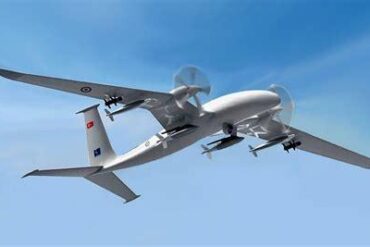
The rapid evolution of these systems has also demonstrated that no combat drone remains dominant forever. The Bayraktar TB2, for example, became one of the most famous unmanned aircraft in modern warfare after successful operations in Syria, Libya, Azerbaijan, and the early stages of the Ukraine conflict. However, once sophisticated air defenses adapted, its effectiveness declined significantly.
This cycle has become a defining characteristic of drone warfare. Innovation happens quickly, countermeasures follow, and manufacturers continuously modify designs to survive in increasingly contested environments. The five combat drone categories below represent different levels of this transformation, from mass-produced frontline weapons to ambitious autonomous aircraft designed for future air dominance.
FPV Combat Drones: The Low-Cost Weapons Changing Frontline Warfare
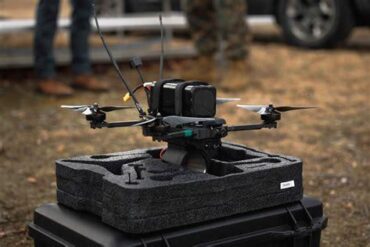
Among all modern combat drones, FPV (First Person View) drones represent the most dramatic change in battlefield economics. These small aircraft are often based on commercial racing drone designs, but military versions have evolved into highly customized weapons capable of destroying armored vehicles, artillery positions, communication centers, and defensive structures.
The key advantage of FPV drones is not advanced engineering alone. Their power comes from quantity and accessibility. A modern army can deploy thousands of these systems at a fraction of the cost required for conventional weapons. In Ukraine, both sides have integrated FPV drones into daily operations on a scale that has transformed frontline tactics.
Estimates suggest that approximately 10,000 FPV drones may be used every day in the Ukrainian conflict. Their widespread deployment has reduced dependence on traditional artillery in certain situations while creating a new operational layer between soldiers and long-range strike systems.
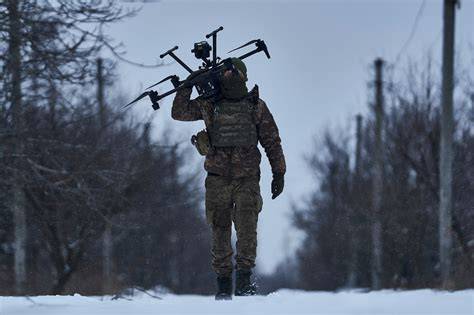
These drones have also changed the concept of the frontline itself. Instead of a clearly defined combat zone, the battlefield has become a large surveillance and attack area where even small units can possess significant aerial capabilities.
However, military FPV drones are far removed from hobbyist products. Operators and manufacturers have modified them to resist electronic warfare, reduce vulnerability to jamming, improve navigation, and protect communication links. Many Ukrainian-developed systems now use locally produced components designed specifically for battlefield conditions.
The global spread of FPV technology is also significant. Militias, insurgent groups, and non-state actors have gained access to aerial strike capabilities previously limited to national militaries. From the Middle East to Africa and other conflict regions, low-cost drones are changing who can conduct air operations.
Shahed-Type One-Way Attack Drones: The Rise Of Affordable Long-Range Strikes
The second major category reshaping global strike capabilities is the Shahed-type one-way attack drone. These systems represent a middle ground between small tactical drones and expensive cruise missiles, providing long-range strike capability at comparatively low cost.
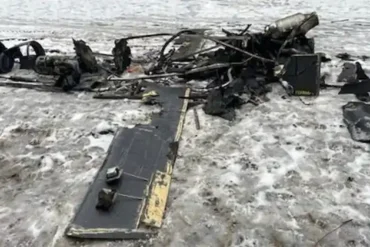
The concept behind these drones has roots stretching back decades. Earlier anti-radar drone programs in Europe influenced later developments, including Israel’s IAI Harpy system. Iran eventually developed the HESA Shahed-136, which became internationally recognized after Russia began using large numbers of similar systems during the Ukraine conflict.
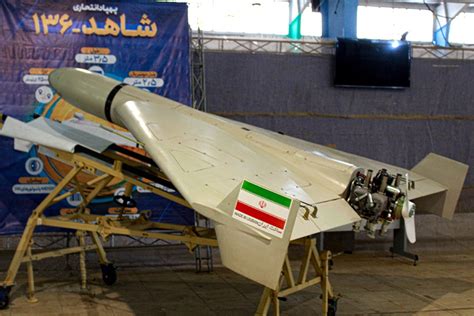
The appeal of Shahed-type drones comes from their strategic economics. A country can launch large numbers of relatively inexpensive aircraft against important targets, forcing defenders to choose between expensive interceptor missiles and less costly defensive solutions.
Russia has expanded the concept through domestic production of the Geran-2 family, integrating these drones into its long-range strike campaigns. Their targets have included infrastructure, military facilities, and logistics networks.
The technology is also spreading. Several countries are developing similar systems, while existing designs continue to evolve. Some variants have gained additional capabilities, including improved navigation, stronger resistance against electronic warfare, and even adaptations intended to threaten aircraft operating in contested areas.
The United States has also studied and developed comparable systems. Reverse-engineered concepts such as the LUCAS (Low-cost Uncrewed Combat Attack System) demonstrate how major military powers are increasingly interested in affordable mass-produced strike drones.
The significance of Shahed-type drones is not only their destructive capability but their role in changing military planning. Future conflicts may increasingly involve waves of inexpensive autonomous weapons designed to exhaust defensive networks before more valuable assets enter the battlefield.
Ukraine’s Fire Point FP-1 And FP-2: Middle-Range Strike Drones Expanding Reach
While Shahed-type drones demonstrated the effectiveness of affordable long-range attacks, Ukraine’s Fire Point FP-1 and FP-2 drones represent another stage in unmanned warfare development.
These systems are designed around a different requirement: achieving greater operational flexibility while maintaining relatively low production costs. The FP-1 offers longer range with a smaller payload, allowing missions against distant strategic targets, while the FP-2 provides a different balance between range and explosive capacity.
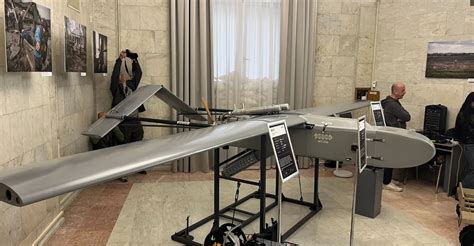
During Ukraine’s 2026 strike campaigns, these drones have become important tools for attacking logistics networks, military infrastructure, airfields, and industrial targets. Their effectiveness demonstrates how medium-cost unmanned systems can create strategic effects far beyond their size.
Several factors contribute to their success. Satellite connectivity, improved navigation systems, relay drones, better resistance to electronic interference, and increasing levels of autonomy have all expanded their capabilities.
The development of these drones also highlights a broader trend: modern combat drones are becoming increasingly software-driven. Hardware remains important, but the ability to update systems, improve targeting methods, and adapt quickly to battlefield conditions has become equally valuable.
The Ukrainian experience shows that future conflicts may not be dominated only by the most advanced aircraft. Instead, victory may depend on which side can produce, improve, and deploy effective systems faster.
Anduril FQ-44A: The Loyal Wingman Moving Toward Autonomous Air Combat
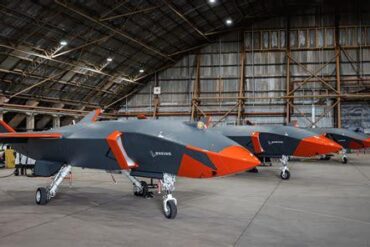
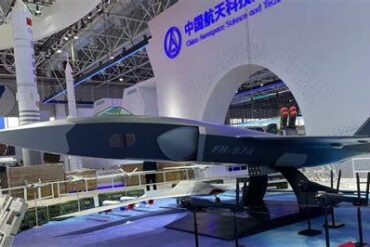
At the opposite end of the drone spectrum is the Anduril FQ-44A, a next-generation combat aircraft designed to operate alongside human-piloted fighters.
Unlike FPV drones or one-way attack systems, the FQ-44A belongs to the emerging category of Collaborative Combat Aircraft (CCA). These aircraft are intended to support manned fighters by performing missions such as reconnaissance, electronic warfare, targeting support, and potentially offensive operations.
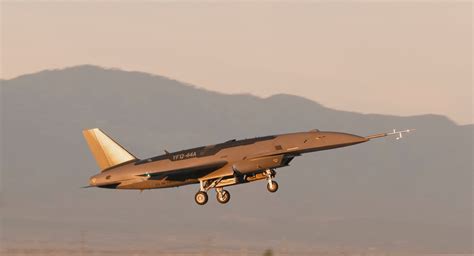
The United States Air Force views CCAs as a critical component of future air power. Modern fighter aircraft have become increasingly capable but also increasingly expensive and difficult to produce in large numbers. Autonomous aircraft offer a possible solution by restoring numerical strength without requiring every platform to carry a human pilot.
The FQ-44A is being developed with advanced artificial intelligence capabilities, including autonomous decision-support technology from Shield AI’s Hivemind system. The goal is not simply remote control but greater independence in complex environments.
The aircraft is part of a broader transformation connected to the Next Generation Air Dominance (NGAD) program and future sixth-generation fighters. The USAF plans to introduce early CCA capabilities before expanding toward more advanced versions with greater range and mission complexity.
Future versions could operate across long distances, including challenging regions such as the Indo-Pacific. Their role may include protecting valuable manned aircraft, increasing mission capacity, and creating new tactical options.
Shield AI X-BAT: The Ambitious Vision Of Autonomous Fighter Aircraft
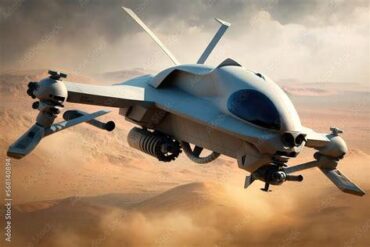
Perhaps the most ambitious example of future combat drone development is the Shield AI X-BAT concept. While many drones are designed to assist existing aircraft, the X-BAT represents a vision of highly autonomous aircraft capable of performing missions traditionally assigned to fighter jets.
The aircraft concept combines vertical takeoff and landing capability with advanced artificial intelligence. Shield AI’s Hivemind platform is designed to enable autonomous mission execution even in environments where communication links and satellite navigation may be disrupted.
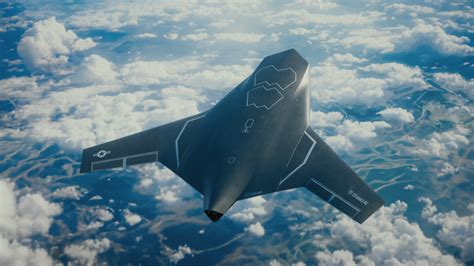
The potential impact of such systems is enormous. A future force of autonomous aircraft could conduct missions in areas considered too dangerous for human pilots. They could operate in heavily defended environments, coordinate with other drones, and respond faster than traditional aircraft.
However, replacing fighter aircraft completely remains a significant challenge. Air combat requires complex judgment, adaptability, and strategic decision-making. Artificial intelligence continues to improve, but questions remain regarding reliability, ethics, command authority, and international regulations.
Still, the X-BAT represents an important direction in aerospace development. It demonstrates that future combat drones are not only about cheaper weapons — they are also about creating entirely new forms of air power.
The Global Strike Map Is Entering A Drone-Dominated Era
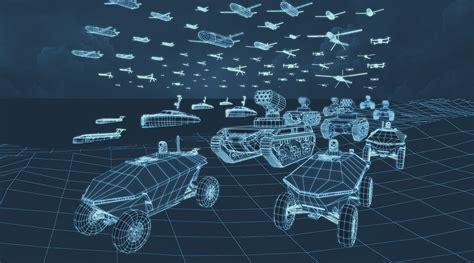
The five combat drone categories shaping 2026 reveal a fundamental change in warfare. The future is not being defined by one single type of unmanned aircraft. Instead, it is being shaped by a layered ecosystem ranging from inexpensive FPV drones to autonomous fighter-like platforms.
Low-cost drones provide mass. One-way attack drones provide strategic reach. Medium-range strike systems provide flexibility. Advanced autonomous aircraft provide future air superiority.
The most important lesson from recent conflicts is that drone warfare evolves faster than traditional military procurement cycles. A system that dominates today may struggle tomorrow as opponents develop new countermeasures.
In 2026, the global strike map is being redrawn by a combination of affordability, artificial intelligence, and rapid innovation. The next generation of military power will likely belong not to nations with only the most advanced aircraft, but to those capable of producing, adapting, and deploying unmanned systems at unprecedented speed.