Modern naval warfare is no longer dominated solely by aircraft carriers, destroyers, and nuclear submarines. One of the most dangerous threats lurking beneath the ocean surface remains the naval mine — inexpensive to deploy, devastatingly effective, and capable of crippling global shipping lanes within hours. The recent tensions surrounding the Strait of Hormuz have once again exposed how vulnerable maritime trade routes can become when underwater explosives are introduced into crowded waterways. In response, the U.S. Navy is rapidly shifting toward a new generation of unmanned robotic systems designed specifically to locate and destroy these hidden threats before they can damage warships or commercial vessels.
Sea mines are uniquely dangerous because they combine stealth with strategic efficiency. A relatively small number of mines can disrupt global commerce, force military rerouting, and create enormous economic pressure. Iran’s renewed use of underwater mines in the Strait of Hormuz — a corridor responsible for transporting roughly one-fifth of the world’s oil supply — has highlighted a serious challenge for the United States Navy. Traditional minesweeping ships and helicopters have declined over recent decades as defense priorities shifted toward missile defense systems, stealth aircraft, and massive carrier strike groups. That capability gap has accelerated the Navy’s investment in autonomous and remotely operated mine-clearing technologies.
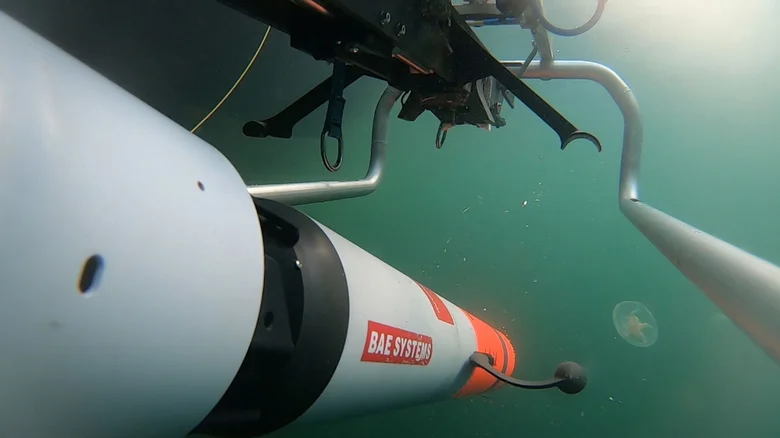
The centerpiece of this transformation is a compact but highly sophisticated robotic mine neutralizer known as the Archerfish. Developed as part of the Navy’s Airborne Mine Neutralization System, Archerfish represents a dramatic evolution in how underwater explosives are identified and destroyed. Instead of sending divers or crewed vehicles into dangerous waters, operators can deploy the system remotely from helicopters, surface ships, or unmanned underwater vehicles.
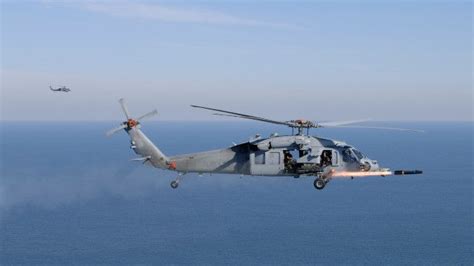
The Archerfish operates using a combination of high-frequency sonar and low-light video imaging systems. These sensors allow it to navigate murky underwater environments where visibility is often extremely limited. Once deployed into a suspected minefield, the robot transmits real-time imagery and sonar data back to operators through a fiber-optic cable connection. This live feedback allows naval personnel to inspect suspicious objects from a safe distance while maintaining precise control over the vehicle’s movements.
When the system confirms the presence of a mine, Archerfish transitions from reconnaissance to attack mode. It carries a shaped-charge explosive warhead specifically engineered to destroy underwater mines with concentrated force. Rather than detonating an entire minefield indiscriminately, the robot can neutralize individual threats with surgical precision. This capability dramatically reduces risk to nearby vessels while also minimizing danger to Navy crews.
What makes the Archerfish especially valuable is its flexibility across multiple deployment platforms. The system can be launched from the Sikorsky MH-60S Seahawk helicopter, from naval surface vessels, or from autonomous underwater drones. This modular approach gives commanders greater operational freedom during mine-clearing missions, especially in congested or politically sensitive waterways where rapid deployment is essential.
The Archerfish does not work alone. Supporting it is another advanced detection platform known as the AN/AQS-20C mine-hunting sonar system, one of the Navy’s most sophisticated underwater scanning technologies. Unlike conventional sonar arrays, the AN/AQS-20C combines four separate high-resolution sonar systems with electro-optical laser imaging to create detailed underwater maps of the ocean floor.
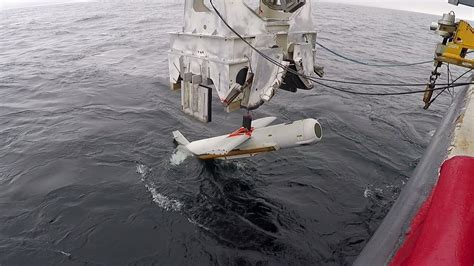
Operators essentially “fly” the towed sonar body beneath the water using an electromechanical cable connected to helicopters, ships, or unmanned surface vessels. As it scans the seabed, the system identifies anomalies that may indicate buried or drifting mines. Once a suspicious target is detected, Archerfish can then be dispatched to inspect and destroy it. Together, the two systems create a layered detection-and-neutralization network capable of clearing dangerous waterways far more safely than older minesweeping techniques.
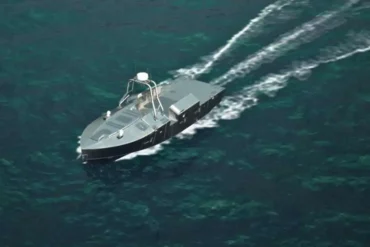
The Navy’s broader mine countermeasure strategy increasingly revolves around unmanned systems and artificial intelligence. One major example is the Mine Countermeasures Unmanned Surface Vehicle, a robotic boat designed to trigger mines remotely. Instead of physically removing explosives, the vessel tows specialized equipment that generates magnetic and acoustic signatures similar to those of large ships. This forces certain types of mines to detonate harmlessly before actual naval vessels enter the area.
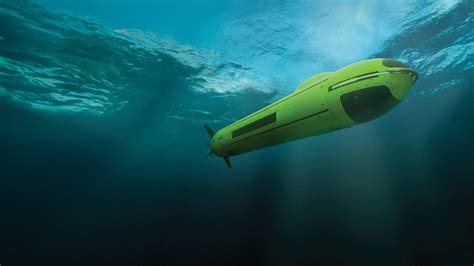
Additional underwater drones such as the MK18 Mod 2 Kingfish and the Knifefish, both developed by General Dynamics, further expand the Navy’s robotic arsenal. These autonomous submarines patrol underwater zones in carefully programmed search patterns while using advanced sonar systems to locate hidden explosives. Their ability to remain underwater for extended periods allows them to cover enormous areas with minimal human intervention.
Defense companies worldwide are also racing to improve mine warfare technology. Northrop Grumman has developed airborne laser systems capable of detecting submerged mines from helicopters, while European defense giant Thales is integrating artificial intelligence into sonar-equipped naval drones to accelerate mine identification. As maritime threats continue evolving, robotic mine hunters are becoming one of the most critical components of modern naval strategy — silent machines tasked with clearing some of the world’s most dangerous waters before disaster strikes.