The war in Ukraine has become the world’s most intense laboratory for counter-drone warfare. Cheap unmanned aerial vehicles—particularly Russia’s widely used Shahed loitering munitions—have reshaped the battlefield with relentless waves of attacks targeting infrastructure, military bases, and civilian cities. With drones now responsible for a staggering portion of casualties, Ukraine has been forced into a rapid cycle of innovation. Among the newest and most unconventional solutions is a compact but heavily armed vehicle that looks more like something out of a futuristic combat simulator than a conventional air defense platform.
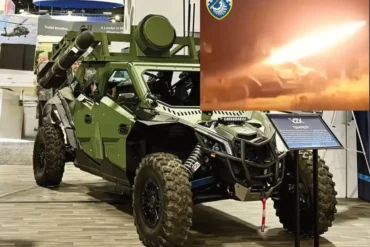
This machine is called the Tempest, a highly mobile anti-drone buggy designed to hunt hostile UAVs with precision missiles while moving quickly across rough terrain. The vehicle represents a radical departure from traditional static air defense systems. Instead of large radar stations and stationary launchers, the Tempest embodies a new philosophy: speed, improvisation, and decentralized interception.
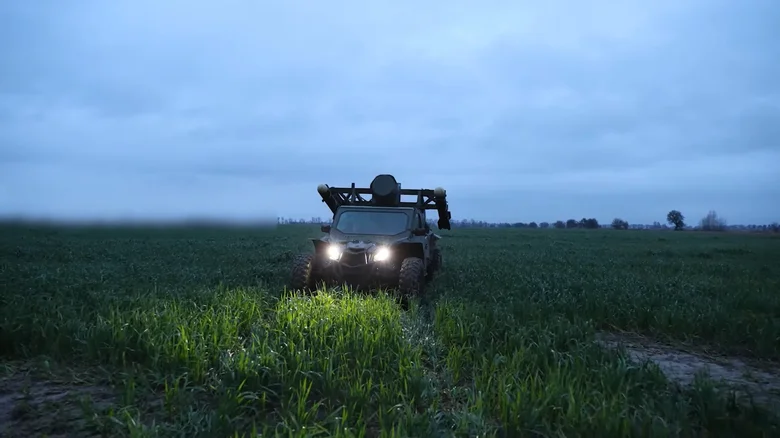
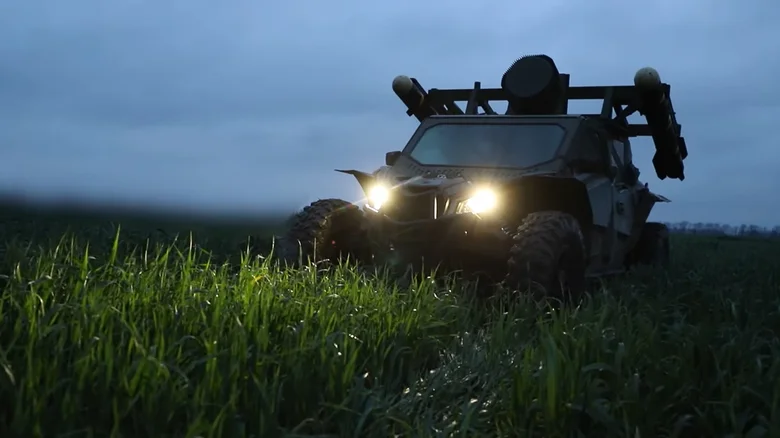
At its core, the Tempest is a militarized version of the Can-Am Maverick X3, a commercial off-road vehicle known for extreme mobility. By mounting advanced sensors and missile launchers on a lightweight chassis, developers created a platform capable of racing across fields, forests, and rural roads while still delivering lethal firepower against airborne threats.
A Drone Killer Built From Commercial Roots
One of the most intriguing aspects of the Tempest is its hybrid design philosophy. Rather than building a complex armored vehicle from scratch, engineers combined commercial off-the-shelf components with advanced military hardware. This approach drastically reduces production time and cost—two factors that matter enormously in a prolonged war where equipment must be replaced quickly.
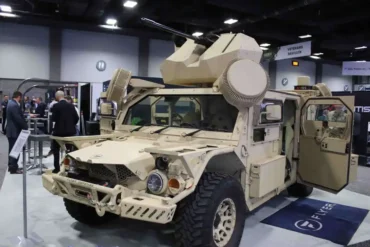
The platform was developed by V2X, a defense contractor based in Virginia. It made its public debut in October 2025 at the Association of the United States Army (AUSA) exhibition, where it attracted attention for its unusual configuration. By December 2025, Ukraine had already received several units, placing them directly into operational testing.
The logic behind the design is simple but powerful. Off-road buggies like the Maverick X3 already possess exceptional speed, suspension, and maneuverability. When paired with missile launchers and compact radar systems, the result is a vehicle that can perform rapid interception missions across dispersed battlefields. Instead of waiting for drones to approach defended zones, operators can actively pursue and intercept them.
Hellfire Missiles on a Lightweight Hunter
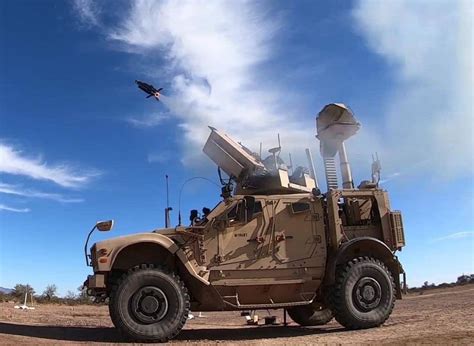
The Tempest’s most striking feature is its dual launcher for AGM-114 Hellfire missiles. Originally developed for attack helicopters such as the AH-64 Apache, the Hellfire has become one of the most versatile precision weapons in modern arsenals. Mounted on the small buggy, these missiles transform the vehicle into a formidable air defense hunter capable of engaging drones, helicopters, and even low-flying aircraft.
Many analysts believe the Tempest uses the Longbow Hellfire variant, which relies on radar guidance rather than laser designation. This allows the missile to track targets autonomously after launch. Each missile carries roughly 20 pounds of high explosive, giving it more than enough destructive power to obliterate small UAVs or cruise missiles.
The weapon’s five-mile engagement range dramatically expands the defensive envelope around key areas. In theory, a roaming Tempest team could patrol vulnerable regions and quickly eliminate aerial threats before they reach critical infrastructure.
However, the economics of missile warfare introduce a paradox. Each Hellfire missile cost around $200,000 in 2021, while many attack drones—including Iranian-designed Shahed variants—can cost as little as $35,000. Using expensive precision missiles to destroy relatively cheap drones highlights a challenge faced by nearly every modern military: the cost imbalance between offensive drones and defensive interceptors.
Sensors and Silent Detection Technology
Firepower alone cannot defeat drones. Detection is the real battlefield. The Tempest therefore carries a compact radar system mounted above the vehicle to identify incoming aerial targets. Radar allows operators to track drones at distance, providing the data needed to launch guided interceptors.
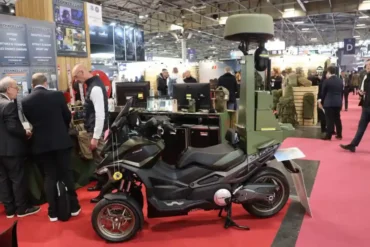
Observers examining the vehicle have also noticed what appears to be a passive radio frequency detection system. These sensors listen for the electronic signatures emitted by many drones during communication with their operators. Unlike traditional radar, passive detectors do not broadcast signals. That means they can scan the environment without revealing their own location.
In modern drone warfare, stealth in detection matters. Active radar systems can act like a beacon for enemy targeting systems, potentially drawing retaliatory strikes. Passive sensors, by contrast, enable 360-degree monitoring while remaining electronically quiet.
This approach does have limitations. Autonomous drones programmed with pre-set navigation routes may emit little or no radio frequency signals. Fiber-optic-controlled drones—another emerging technology—can also evade RF detection entirely. Nevertheless, passive systems remain a valuable tool within a broader detection network.
Mobility: The Tempest’s Real Superpower
The Tempest’s defining advantage may not be its missiles or sensors, but its extraordinary mobility. Built on an extreme off-road chassis, the vehicle can traverse mud, grasslands, rural roads, and uneven terrain at high speed. That mobility enables a tactical approach known as “shoot and scoot.”
In this method, air defense units fire their weapons and then immediately relocate to a new position. Mobility complicates enemy targeting and reduces the risk of counter-battery attacks or drone retaliation. For Ukraine, where front lines shift and targets are dispersed across thousands of square miles, a roaming interceptor platform offers critical flexibility.
The importance of mobility has only increased as drone warfare expands the geographic reach of attacks. Russian UAV strikes have targeted power stations, ammunition depots, transportation infrastructure, and urban centers far from the battlefield. Defending such a vast set of targets requires systems that can move quickly between potential hotspots.
Early Combat Success Against Shahed Drones
Despite its unconventional appearance, the Tempest has already proven effective in real operations. According to Ukraine’s Air Command Center, the system has been responsible for shooting down at least 21 Russian Shahed drones. This early success demonstrates the platform’s potential as a tactical counter-UAV tool.
The exact number of Tempest vehicles currently deployed remains unknown. Even if dozens were in service, however, they would still represent only a small piece of Ukraine’s massive air defense puzzle.
The scale of drone warfare is staggering. Analysts estimate that Russia launched more than 54,500 UAVs in 2025 alone, while Ukraine experienced roughly 19,000 nationwide air-raid alerts. Some individual attacks have involved hundreds of drones in a single night, overwhelming conventional defenses.
In such an environment, no single weapon system can solve the problem.
Part of a Larger Anti-Drone Defense Network
Ukraine is therefore building a multi-layered aerial defense architecture designed to intercept drones at different stages of flight. This strategy resembles Israel’s Iron Dome concept, but adapted for the unique realities of the Ukraine war.
The defensive network includes several key components:
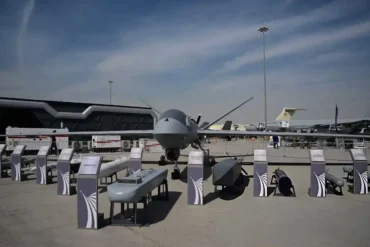
- Interceptor drones that chase and destroy hostile UAVs
- Short-range missile systems for high-speed aerial threats
- Electromagnetic and electronic warfare tools to jam guidance signals
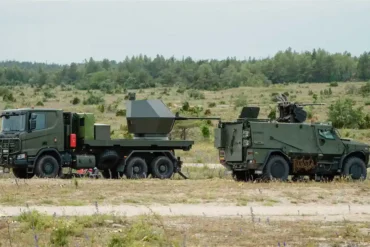
- High-energy laser systems such as the truck-mounted Sunray
- Thousands of miles of anti-drone nets protecting critical infrastructure
Within this ecosystem, the Tempest acts as a mobile hunter—a system that can patrol, intercept, and relocate rapidly. It does not replace traditional air defense batteries but complements them by filling gaps where fixed systems cannot easily operate.
The vehicle’s success reflects a broader lesson emerging from the war: adaptability is now as important as firepower. The battlefield is evolving at a pace rarely seen in modern history, driven by the rapid spread of inexpensive drones and autonomous systems.
The Tempest buggy embodies this new reality. A commercial off-road machine transformed into a missile-armed drone killer, it represents a blend of improvisation, engineering, and battlefield necessity. In a war defined by technological experimentation, strange machines like this may well shape the future of air defense.