The Swedish Army, in partnership with the Swedish Defence Materiel Administration (FMV) and local defense firms, has introduced a formidable new response to the ever-increasing threat of unmanned aerial systems (UAS): a pair of highly mobile, cannon-equipped vehicles designed for rapid counter-drone warfare. Revealed as part of Operation Gute, the initiative marks one of the fastest concept-to-deployment defense projects in Swedish military history, bringing advanced counter-UAS capabilities to the field in less than six months.
Strategic Response to the Drone Saturation Threat
The proliferation of commercial and military drones in modern combat theaters—from Ukraine to the Middle East—has forced militaries worldwide to reevaluate their air defense priorities. Sweden’s approach addresses a critical flaw in conventional air defense doctrine: missile-based systems are too expensive and limited in supply to deal with low-cost drone swarms, particularly FPVs and quadcopters that are often used for surveillance or kamikaze-style attacks.
To overcome this vulnerability, Sweden has invested in cannon-based systems that provide both precision and scalability. These new vehicles are designed for use not only by professional soldiers but also by conscripted personnel, a nod to Sweden’s conscription-based defense model. Key to their operational philosophy is the integration of high automation, real-time data fusion, and multi-sensor coordination, allowing operators to act quickly without being overwhelmed by sensor data or complex command interfaces.
A Twin-Vehicle Anti-Drone Concept Built for the Modern Battlefield
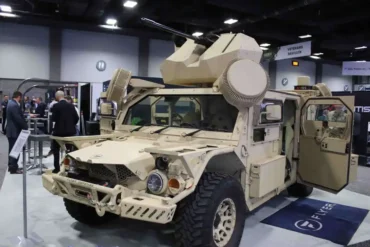
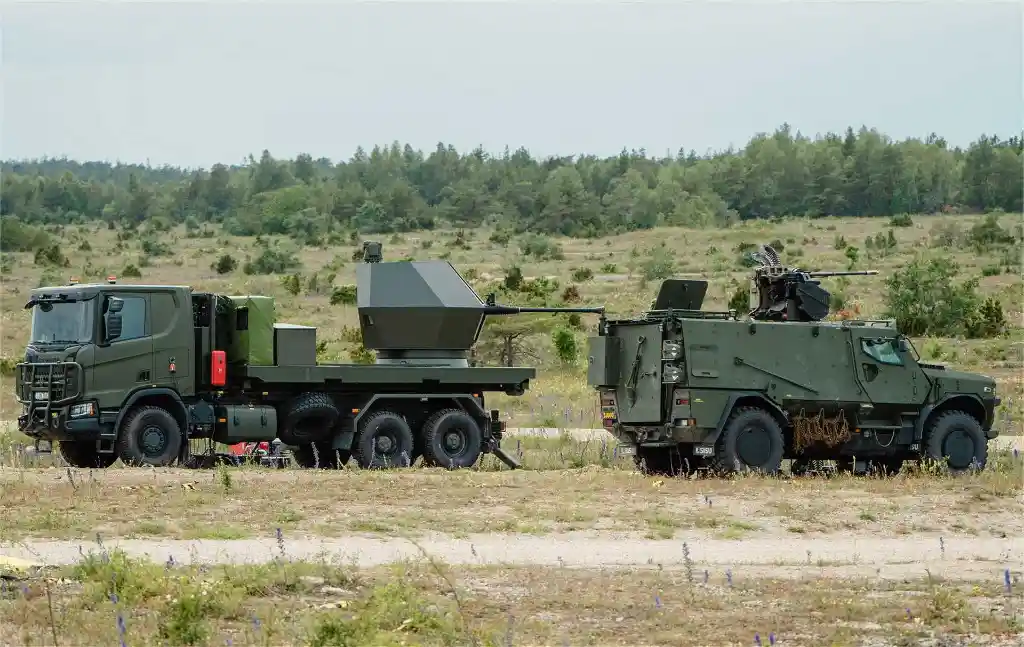
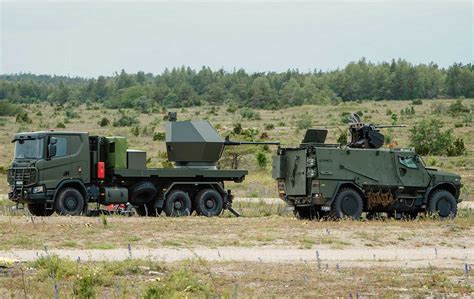
The live-fire showcase during Operation Gute featured two distinctly configured mobile platforms. The first is a 4×4 armored vehicle outfitted with the Saab Trackfire ARES Remote Weapon Station (RWS). Armed with a 30mm automatic cannon, the system is capable of engaging fast, low-flying aerial threats using its fully stabilized turret, integrated thermal and optical sensors, and a laser rangefinder for precise targeting. Designed for high agility and target tracking, this platform offers a vital shield for maneuvering units or static high-value sites.
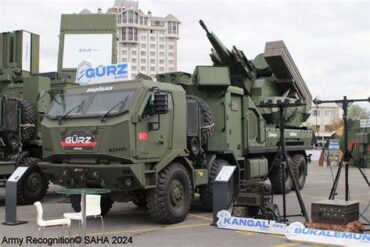
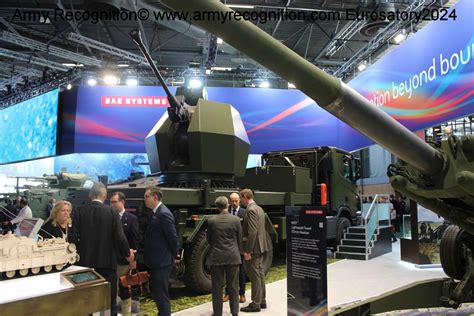
Complementing the 4×4 vehicle is a 6×6 tactical truck mounted with the BAE Systems Tridon Mk2 turret, incorporating the powerful Bofors 40 Mk4 cannon. This higher-caliber system uses programmable 3P (Pre-fragmented, Programmable, Proximity-fuzed) munitions, granting it the ability to create controlled airbursts within a drone swarm. The Tridon Mk2 includes advanced electro-optical cameras, radar systems, and a digitally integrated fire control system, enabling rapid and automated engagement sequences even in poor visibility or electronic warfare environments.
Live-Fire Successes Validate Automated Kill Chain
During operational trials, these vehicles demonstrated the ability to detect, track, and destroy hostile drones in mere seconds. Using a combination of active and passive sensors, the platforms were able to establish and maintain continuous situational awareness. This allowed the automated fire control systems to cue weapons for engagement in near real-time—an essential trait in countering swarm attacks, where hesitation can be fatal.
One of the most striking aspects of the demonstration was how effectively the system operated under conscript-level crew conditions. Thanks to a simplified user interface and AI-enhanced targeting logic, operators with only a few weeks of training were able to engage and neutralize drones that would otherwise evade traditional defense systems.
From Doctrine to Deployment: Strategic and Economic Edge
Beyond its tactical utility, the economic efficiency of cannon-based counter-drone systems cannot be overstated. Legacy missile-based air defense platforms such as NASAMS or Patriot are exceptionally capable but are designed for high-value targets like aircraft, ballistic missiles, or cruise missiles—not $500 drones. With munitions sometimes exceeding $100,000 per shot, their use against mass-produced UAS is economically unsustainable.
By contrast, 30mm and 40mm autocannons firing programmable ammunition provide a cost-effective method for area denial and persistent airspace defense. The use of airburst rounds increases the probability of kill per shot, reducing the number of rounds needed to clear incoming drone threats. This not only saves money but also conserves valuable resources for high-intensity conflict scenarios.
The mobility of these platforms further enhances their strategic value. Unlike fixed air defense batteries, these vehicles can deploy alongside mechanized units, defend temporary forward operating bases, or rapidly reinforce vulnerable air corridors. The Swedish Army’s emphasis on modularity and rapid deployment reflects an evolving understanding of how warfare is changing in the age of autonomous threats.
Industry Collaboration and Domestic Innovation
Operation Gute is as much a technological achievement as it is a case study in efficient military procurement. The partnership between the Swedish Armed Forces, FMV, and domestic defense contractors like Saab and BAE Systems Bofors allowed for agile development and integration of proven subsystems into a new operational concept.
Rather than develop bespoke systems from scratch, Sweden wisely selected field-tested technologies and fused them through an automated C2 (Command and Control) infrastructure, allowing them to capitalize on existing industrial strengths. The Trackfire and Tridon systems, both developed by Swedish companies, represent the country’s long-standing expertise in scalable weapon systems, battlefield automation, and high-performance targeting.
Scalable Solutions for NATO and European Defense
While tailored to Sweden’s national defense doctrine, these systems have clear potential as exportable, scalable counter-UAS solutions for NATO and European allies. As Russia, Iran, and non-state actors increasingly deploy drone warfare in contested areas, the demand for affordable, effective countermeasures has grown exponentially. Sweden’s rapid prototyping and deployment serve as a model for agile military innovation.
European defense ministries are under pressure to shore up vulnerabilities in their airspace, especially around critical infrastructure, supply depots, and command nodes. The Swedish approach offers a realistic path forward: modular platforms, quickly integrated, financially viable, and effective against real-world drone threats. The emphasis on conscript-ready systems also opens the door to wider adoption among nations that rely on mixed volunteer and reserve forces.
Looking Forward: Sweden’s Place in the Drone Defense Race
The successful live-fire trials under Operation Gute have elevated Sweden’s standing in the global drone defense arena. At a time when conventional threats blend with asymmetrical tactics, the ability to respond swiftly and affordably to drone incursions is critical to operational success. With these mobile cannon platforms, the Swedish Army now has a deployable shield against the skies’ most ubiquitous and unpredictable threats.
Future development will likely focus on enhanced integration with battlefield networks, expanded munition types, and AI-assisted threat classification, ensuring the platforms remain relevant as UAS technology evolves. Sweden’s defense industry, having already proven its capability to deliver under pressure, will be instrumental in adapting the next generation of counter-UAS systems.
In a security climate defined by speed, automation, and innovation, Sweden’s mobile counter-drone systems offer a blueprint not only for national defense but for the modernization of European military strategy. With the right investments, these platforms could form the cornerstone of an agile, layered air defense architecture across the continent—keeping Europe one step ahead in the age of drone warfare.