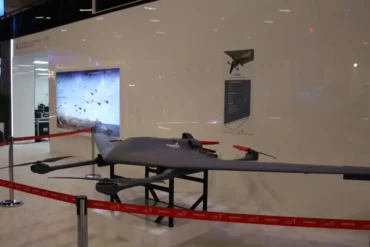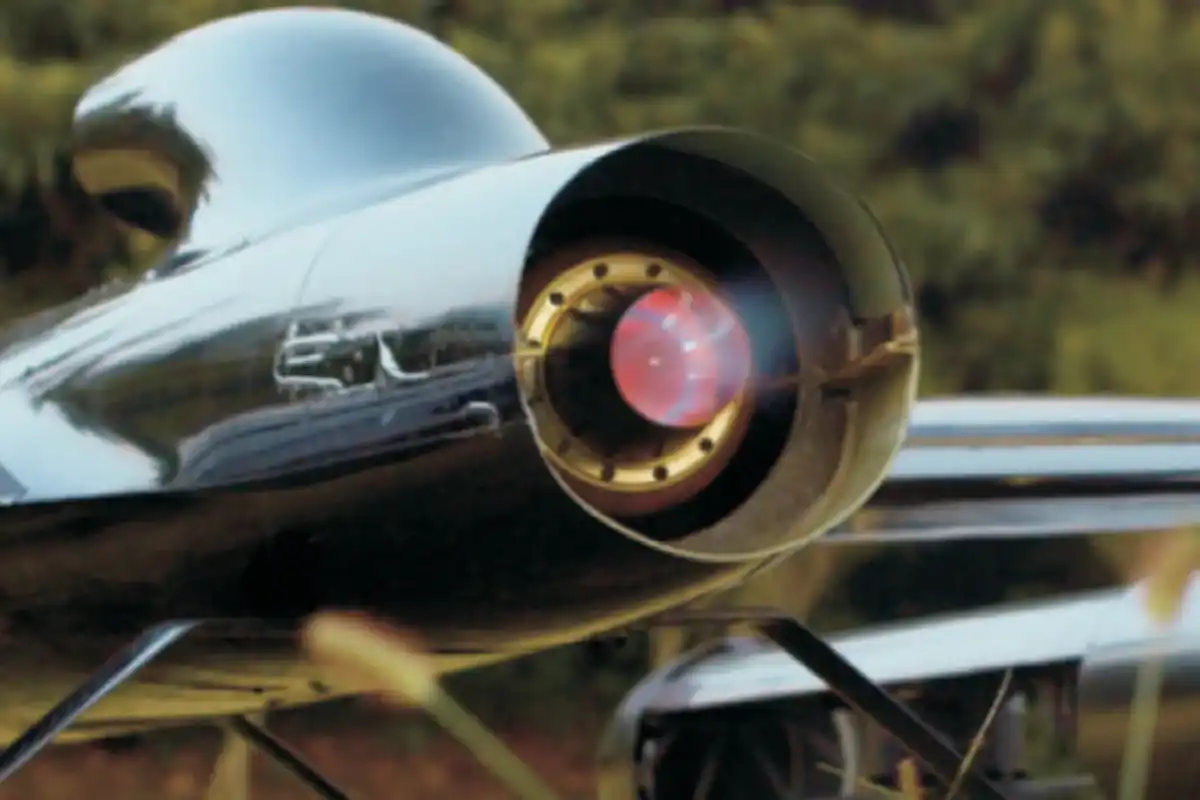
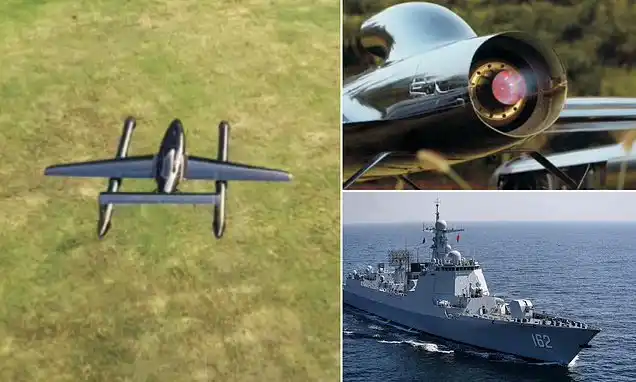
China has officially revealed a jet-powered Vertical Take-Off and Landing (VTOL) drone that aerospace engineers describe as a revolutionary advancement in military aviation. Unlike conventional unmanned systems that rely on long runways or specialized carrier decks, this drone can launch vertically from virtually any naval vessel, turning ordinary warships into makeshift strike platforms. The innovation, developed by Beihang University scientists, marks a milestone in China’s effort to expand the People’s Liberation Army Navy (PLAN) into a truly global force.
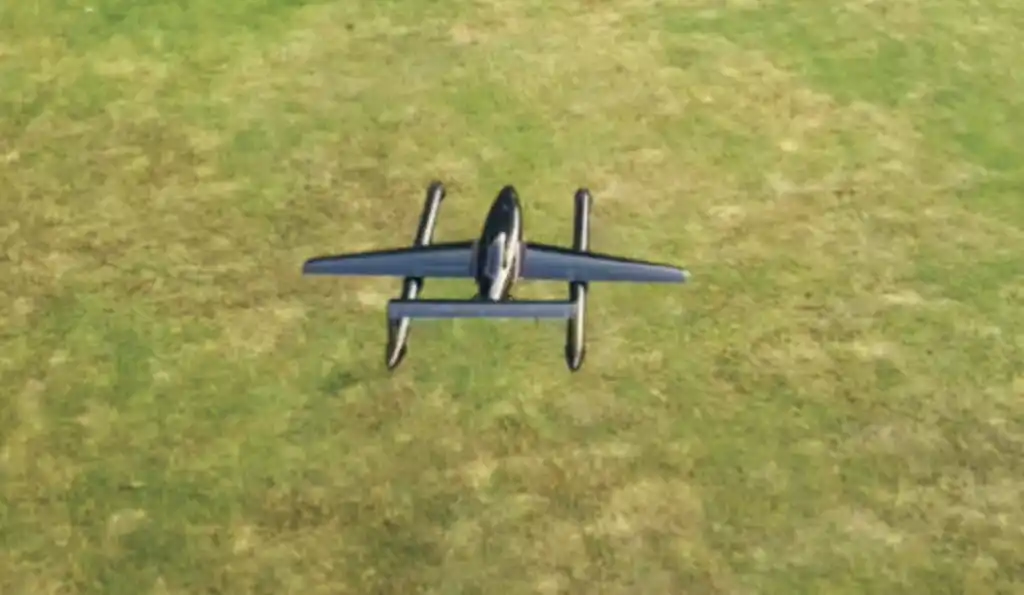
The drone, described as the world’s first operational jet-powered VTOL platform, has been in development for over a decade under the leadership of associate professors Wang Yaokun and Qiu Yuting. The design combines rotary lift for vertical take-off with turbojet propulsion for high-speed cruise, creating an aircraft that blends the flexibility of a helicopter with the speed of a jet-powered drone.
A Breakthrough in Naval Drone Warfare
Traditional carrier-based drones such as the U.S. XQ-58A Valkyrie require runways or specialized launch systems. China’s new platform diverges from this model, enabling seamless vertical take-off even in rough sea conditions and transitioning to long-range cruise flight without the infrastructure of an aircraft carrier. This capability would allow frigates, destroyers, and amphibious ships to deploy advanced reconnaissance and strike drones, effectively multiplying China’s naval aviation assets without building more carriers.
According to a peer-reviewed paper published in the Chinese-language journal Aero Weaponry, the drone’s speed and adaptability place it far ahead of competing VTOL drones currently in service. By contrast, the U.S. is still refining its own concepts under programs such as DARPA’s ANCILLARY initiative, which aims to create small, carrier-capable VTOL drones by 2026. While America’s X-47B program laid the groundwork for naval UCAVs, China’s new drone appears to be the first of its kind to integrate jet propulsion with true vertical lift.
A Decade of Research and Development
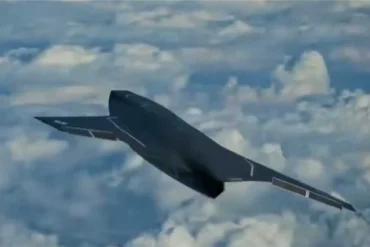
The program reportedly began in 2015, undergoing numerous revisions before stabilizing in 2019. Engineers pursued a unique dual-system design: small rotors provide lift during take-off and landing, while a compact turbojet delivers sustained thrust during forward flight. Once airborne, a retractable fairing system seals the idle rotors to reduce drag by up to 60%, allowing the fuselage to maintain a streamlined, teardrop-shaped profile.
To survive repeated vertical landings and high-speed operations, the airframe was constructed from advanced composites such as T-700-grade carbon fiber reinforced with modified resin matrices. Thermal shielding protects components exposed to exhaust temperatures surpassing 700°C, ensuring structural integrity in demanding naval conditions. Control algorithms manage the delicate transition between vertical lift and forward thrust, a technical feat proven in wind tunnel and flight tests.
During initial trials, a 45-kilogram prototype achieved 230 km/h in level flight. While the system’s payload capacity remains modest compared to long-endurance drones like the Global Hawk, its agility and adaptability make it ideal for surveillance, electronic warfare, and precision strike missions.
Tactical Implications for the PLAN
The arrival of a jet-powered VTOL drone could reshape naval warfare strategies in the Pacific. By deploying such drones across its fleet, China could distribute airpower instead of concentrating it on vulnerable carriers. This decentralization would make it harder for adversaries to cripple Chinese naval aviation by targeting a single high-value vessel.
In potential conflict scenarios—such as a Taiwan Strait crisis or South China Sea confrontation—these drones could be launched in swarms from dispersed ships. Working in coordination with ship-based radars and command systems, they could form an integrated combat network for reconnaissance, strike, and electronic warfare. This swarm capability would be particularly effective for breaching enemy air defenses, conducting time-sensitive surveillance, or delivering rapid strikes against high-value targets.
Additionally, armed variants could be fitted with precision-guided munitions or electronic warfare payloads, enabling the PLAN to carry out jamming, radar suppression, or cyber operations. Such versatility aligns with China’s broader goal of achieving anti-access/area denial (A2/AD) dominance in contested waters.
Comparison With U.S. Programs
The U.S. continues to invest heavily in carrier-based UAVs, with DARPA’s ANCILLARY program and past successes like the X-47B UCAS-D. However, none of these platforms currently combine VTOL capability with jet-powered high-speed performance in an operationally ready system. While American prototypes focus on autonomy and infrastructure-less launch, China’s breakthrough suggests it may have taken the lead in fielding a practical design.
That said, compromises exist. The enclosed rotors, though streamlined in cruise mode, remain a structural burden during flight, reducing efficiency and endurance compared to pure jet UAVs. Likewise, the modest payload limits its use to reconnaissance, EW, and limited strike missions rather than heavy ordnance delivery.
Despite these drawbacks, the drone’s unique blend of speed, agility, and versatility ensures it will remain a formidable force multiplier for the PLAN.
Strategic Impact on Asia-Pacific Security
The unveiling of this drone signals a paradigm shift in naval aviation. By equipping its fleet with compact, jet-powered VTOL drones, China can extend surveillance and strike capabilities deep into the Pacific and Indian oceans. This development strengthens Beijing’s ability to project power beyond the first island chain, complicating the defense strategies of rivals such as the United States, Japan, and Australia.
If mass-produced, these drones could allow China to maintain persistent aerial coverage across contested waters, enhancing its ability to enforce blockades, monitor sea lanes, and deter intervention in regional conflicts. They could also serve as key assets in a Taiwan contingency, providing fast, flexible airpower without exposing vulnerable aircraft carriers.
Conclusion: A Game-Changer in Modern Warfare
China’s new jet-powered VTOL drone represents a genuine leap forward in military aviation. Combining vertical take-off ability with jet propulsion, it offers an unprecedented level of flexibility to the PLAN. While its payload and endurance remain limited compared to larger UAVs, its ability to operate from almost any ship provides a strategic advantage that could alter the balance of naval power in the Asia-Pacific.
As Beijing continues its march toward a fully realized blue-water navy, the development of this drone highlights a shift toward distributed, flexible, and resilient airpower. Whether in reconnaissance, electronic warfare, or limited strike roles, this platform may prove to be one of the most consequential innovations in naval warfare in recent decades.