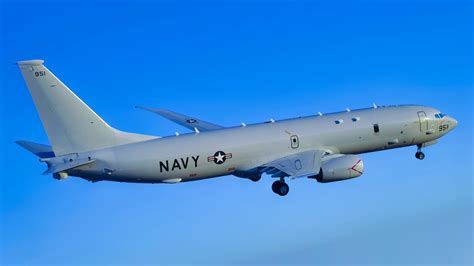
On July 2, 2025, the United States Navy took a significant leap in its undersea warfare capabilities with the announcement of a $61.2 million contract modification awarded to Boeing. This deal focuses on scaling the production of the High Altitude Anti-Submarine Warfare Weapon Capability (HAAWC) — a transformative upgrade that redefines the P-8A Poseidon from a traditional maritime patrol aircraft into a long-range, precision strike platform capable of deploying torpedoes from high altitude.
The strategic value of this development cannot be overstated. As adversaries enhance the stealth, range, and depth capabilities of their submarine fleets, the U.S. Navy is doubling down on technological innovations that extend engagement ranges while preserving aircraft survivability. The HAAWC system achieves exactly that.
From Low-Level Threat Detection to High-Altitude Strike
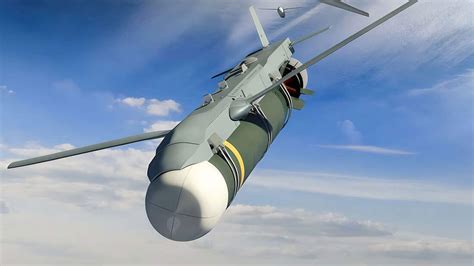
Historically, the U.S. Navy’s anti-submarine operations depended on low-altitude flight profiles to deploy the Mark 54 lightweight torpedo, exposing aircraft to radar detection, surface-to-air threats, and increased fuel burn. The HAAWC revolutionizes this by turning the Mark 54 into a glide-capable, precision-delivered weapon. By leveraging foldable wings and advanced guidance units, the system allows the P-8A Poseidon to maintain high-altitude patrols while launching torpedoes accurately into target waters.
Drawing inspiration from combat-proven systems like the Joint Direct Attack Munition (JDAM) and SLAM-ER, HAAWC ensures that the torpedo can glide along a controlled descent path. Once it reaches its programmed drop zone, a small parachute deploys to decelerate the weapon for smooth water entry — preserving the weapon’s integrity and trajectory.
This means that Poseidons no longer have to dive to vulnerable altitudes, significantly reducing airframe fatigue, exposure to anti-air defenses, and loiter time limitations in contested areas. In effect, the P-8A has gained a stand-off submarine strike capability, an attribute once exclusive to heavily armed warships.
A Technological Evolution Rooted in Combat Experience
The HAAWC concept builds upon decades of undersea warfare evolution. The Mark 54 torpedo, introduced in 2004, was itself a hybrid — combining the cost-efficiency of the older Mark 46 with the advanced littoral warfare features of the Mark 50. It was a response to the growing complexity of near-shore and deep-ocean combat.
Now, HAAWC pushes this lineage further by unlocking aerial torpedo deployment at optimal cruising altitudes. This capability ensures fuel efficiency, improved stealth through reduced radar cross-section, and the ability to cover wider maritime patrol zones without compromising firepower.
Strategic Impact on Global Maritime Security
As tensions rise across global maritime hotspots — particularly the Indo-Pacific, North Atlantic, and Arctic regions — the ability to deliver undersea firepower from a distance becomes a game-changer. The U.S. Navy’s investment in HAAWC reflects an acute awareness of shifting threat dynamics, particularly from nations investing in quiet diesel-electric submarines and advanced nuclear-powered platforms.
The Poseidon’s enhanced operational radius thanks to HAAWC enables it to patrol chokepoints, deep ocean transit lanes, and territorial waters of U.S. allies without needing to engage in risky maneuvers. It supports rapid-reaction scenarios under the AUKUS framework, contributes to NATO readiness, and sends a clear message to potential adversaries about America’s undersea strike reach.
This also aligns with broader Pentagon strategy to maintain multi-domain dominance. As aerial and space-based ISR assets work in tandem with underwater drones and manned platforms, HAAWC-armed Poseidons provide a crucial airborne link capable of neutralizing submarine threats in contested zones within minutes.
Production, Integration, and Future Adaptability
The contract stipulates production and integration work across Boeing’s St. Charles facility in Missouri, with support from facilities in Utah and additional Missouri locations. The program’s expected completion timeline stretches to January 2028, allowing for the full outfitting of the Navy’s expanding P-8A fleet.
While the primary recipient is the U.S. Navy, the modularity of the HAAWC system — much like JDAMs before it — opens the door for foreign military sales (FMS). Countries operating the P-8A Poseidon, such as Australia, India, Norway, and the United Kingdom, are closely watching its deployment success. However, some nations like the UK have opted for different torpedo systems such as Sting Ray Mod 1, citing local integration and industry preferences.
Engineering a Glide Path to Dominance
The HAAWC wing kit includes:
- Glide wing assembly: Stabilized flight surface allowing long-range descent
- Tail section guidance module: Uses GPS/INS navigation for high-precision targeting
- Parachute deployer: Softens water entry, ensures correct torpedo depth deployment
This system works in conjunction with the P-8A’s onboard Acoustic Sensor System, Multi-Static Active Coherent sonar (MAC), and sonobuoy networks to track, identify, and engage enemy submarines with minimal reaction time. The pairing of real-time target acquisition and high-altitude launch reduces the decision-to-strike window to mere minutes.
Reducing Operational Risk While Enhancing Reach
Older low-altitude drop techniques demanded tight, risky maneuvering over hostile waters, especially when evading enemy radar, infrared tracking, or surface-launched air defense systems. HAAWC’s glide-based trajectory allows aircraft to stay safely above the threat envelope. This reduces mission risk and enables multi-target tracking in expansive maritime environments.
Moreover, the new deployment profile increases the Poseidon’s ability to carry additional mission payloads, including electronic surveillance, communications relays, and decoy systems. With fuel savings and airframe preservation, the aircraft’s mean time between overhaul (MTBO) and long-term maintenance costs improve dramatically.
Future Implications and Speculative Enhancements
There are growing discussions around whether the HAAWC system could eventually be adapted for use with other platforms. The RUM-139C VL-ASROC, a vertical launch anti-submarine missile deployed from ship-based launchers, could theoretically benefit from similar glide-wing extensions for increased range. While currently speculative, the possibility reflects a growing appetite for networked, standoff anti-submarine warfare.
Other future enhancements may include AI-assisted flight planning, enhanced autonomous targeting capabilities, and integration into the Navy’s next-generation MQ-25 Stingray UAV for unmanned torpedo launches. This trajectory signals a coming era where manned and unmanned systems work seamlessly to hunt and neutralize undersea threats.

Conclusion: Redefining Maritime Power Projection
The U.S. Navy’s contract with Boeing represents more than just an upgrade — it is a strategic overhaul of undersea warfare doctrine. The P-8A Poseidon, already a premier maritime patrol aircraft, now gains the ability to strike silently from the skies with deadly precision. HAAWC’s influence reaches beyond its wings — it redefines what maritime patrol aviation can achieve in the 21st century.
As Boeing fulfills this new contract and scales production, the Poseidon transforms from a sub-hunter into a persistent, high-altitude strike sentinel, capable of reshaping the undersea battlespace with minimal risk and maximum precision. This evolution ensures that American sea power remains lethal, agile, and far-reaching — securing the depths with weapons launched from the sky.