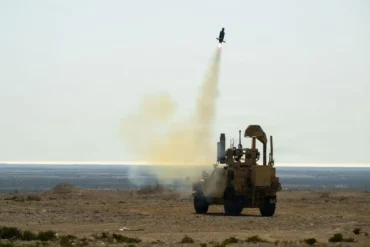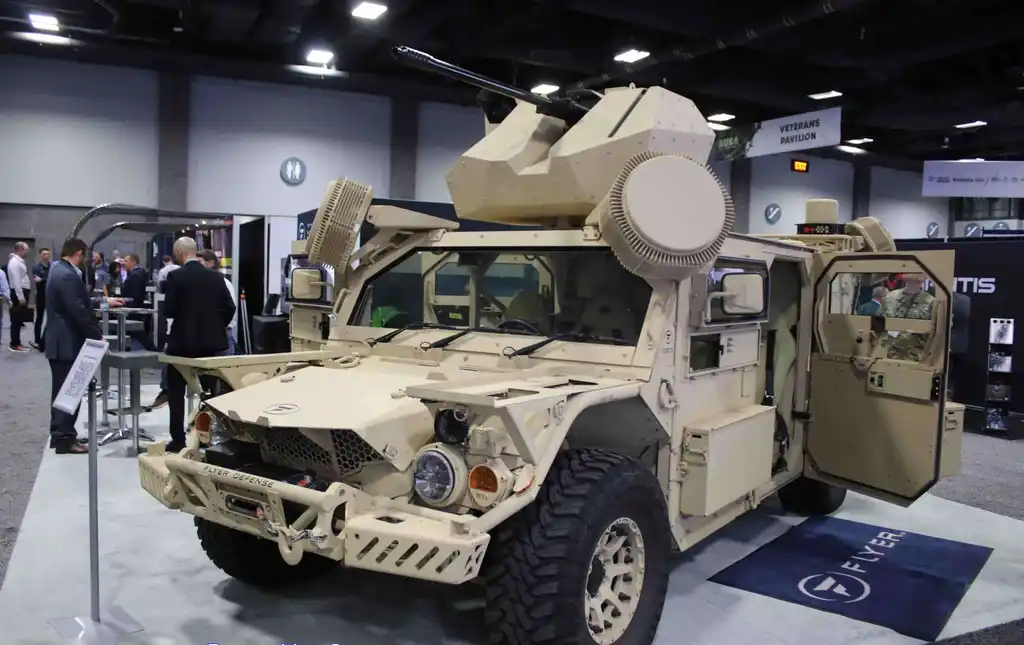
At AUSA 2025 in Washington, Flyer Defense took a significant step forward in mobile counter-drone warfare with the debut of the Flyer 72-HD (Heavy Duty), a next-generation 4×4 tactical vehicle purpose-built to counter unmanned aerial threats in dynamic, expeditionary environments. Integrating Rafael’s C-UAS Force Protection System, the Flyer 72-HD merges sensors, electronic warfare capabilities, and kinetic firepower into a single, highly mobile platform designed for maneuver forces that cannot afford to slow down.
The unveiling of this vehicle marks a decisive move in modernizing how military units respond to small drone threats—offering a complete kill chain solution that detects, tracks, and neutralizes aerial targets while on the move. By fusing radar, EO/IR sensors, SIGINT, and EW jamming with a 30×113 mm remote weapon station, Flyer Defense positions the Flyer 72-HD as one of the most advanced expeditionary counter-UAS vehicles ever fielded.
Engineering a Next-Generation Counter-Drone Platform
The Flyer 72-HD embodies a new generation of mobile defense technology, purpose-built for missions that demand agility and resilience. Maintaining the hallmark versatility of the Flyer family, the HD variant enhances performance parameters while adding the ability to host complex sensor and effector suites.
At its core, the Flyer 72-HD is powered by a 2.0-liter twin-turbo diesel engine generating approximately 220 horsepower, paired with a six-speed automatic transmission. This drivetrain enables speeds of up to 95 mph and a range of 300 miles in standard conditions—or up to 500 miles on smooth terrain. Its 36 cm ground clearance, combined with an optimized suspension system, allows the vehicle to navigate rugged terrain, steep inclines, and water crossings up to 76 cm deep, ensuring that no mission environment is off limits.
The engineering team focused on ensuring the platform remains both light and durable. Weighing roughly 7,300 pounds, it can carry 5,700 pounds of payload and tow another 6,500 pounds, allowing for flexible mission configurations. Reinforced by a tubular steel frame and integrated rollover protection, the Flyer 72-HD can withstand harsh impacts, while optional armor kits and run-flat off-road tires enhance crew survivability in hostile environments.
Integrated Kill Chain: From Detection to Defeat
What truly sets the Flyer 72-HD apart is its integration of the Rafael C-UAS Force Protection System, which packages a full-spectrum kill chain onto a mobile 4×4. The vehicle combines Leonardo DRS’s RPS-42 Multi-Mission Hemispheric Radar, Controp’s SIGHT-25HD EO/IR turret, and Rafael’s Spectrum Dome RF jammer to detect, identify, and neutralize drones in real time. The system is capable of engaging threats both autonomously and under operator control, compressing the sensor-to-shooter timeline dramatically.
This modular approach enables multi-layered defense:
- Radar Layer: RPS-42 provides hemispheric coverage for on-the-move detection of rotary and fixed-wing UAVs.
- Electro-Optical Layer: SIGHT-25HD EO/IR turret allows positive visual identification and tracking.
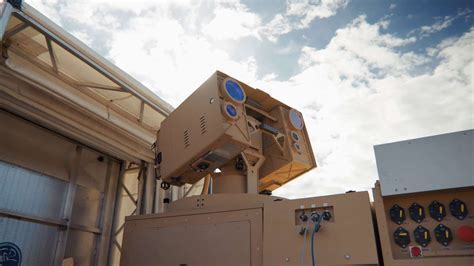
- Electronic Warfare Layer: Spectrum Dome disrupts drone communication and navigation links using directed RF jamming.
- Kinetic Layer: A Rafael SAMSON RCWS30L turret with the M230LF 30×113 mm chain gun delivers precision hard-kill effects, complemented by door-mounted machine guns for crew defense.
This combination delivers a seamless detect-to-defeat process, allowing operators to maintain forward momentum while neutralizing airborne threats—a critical capability in modern dispersed operations.
Mobility Meets Modularity
While larger counter-UAS platforms—such as truck-mounted systems and SHORAD carriers—offer greater payloads, they often lack the agility needed for fast-moving expeditionary units. The Flyer 72-HD bridges this gap. It is air-transportable via CH-47 and CH-53 helicopters and can be rolled into C-130 or C-17 aircraft for rapid deployment. It even supports low-velocity air-drop operations, making it ideal for quick insertion missions.
The Flyer 72-HD is built on the same mission modularity philosophy that defines the broader Flyer vehicle family. Each unit can be reconfigured rapidly depending on the operational environment and threat profile. Commanders can swap out counter-UAS kits, integrate new sensors, or add weapons packages without overhauling the base vehicle—maximizing operational flexibility and lifecycle efficiency.
Designed for Expeditionary and Mobile Defense Roles
The Flyer 72-HD addresses a growing operational gap in modern warfare: the need for mobile, on-the-move counter-UAS protection for convoys, forward-deployed troops, and rapid reaction forces. Traditional static systems protect bases and fixed assets effectively but struggle to cover dispersed and mobile formations. The Flyer 72-HD changes that dynamic.
Deployed in convoy escort, patrol defense, or rapid reinforcement missions, the vehicle brings counter-drone firepower to the front lines. It can accompany maneuver elements, secure perimeters, or fill gaps in air-defense coverage for expeditionary bases. The result is a force protection multiplier that keeps pace with high-mobility operations.
Comparison with Existing C-UAS Platforms
In the global counter-drone ecosystem, the Flyer 72-HD positions itself between ultra-light side-by-sides and heavy truck-based systems. Side-by-side vehicles offer speed but lack payload capacity, power generation, and armament options. On the other hand, JLTV-class C-UAS or Stryker-based M-SHORAD platforms provide superior firepower but sacrifice expeditionary mobility.
The Flyer 72-HD achieves a rare equilibrium—retaining the Flyer’s high-speed agility while integrating a powerful kinetic and electronic defense suite. This makes it particularly valuable for airborne units, special operations forces, and rapid deployment task forces that require independent air-defense capability.
Operational Philosophy: Layered, Mobile, and Modular
Strategically, the Flyer 72-HD reflects a shift in how armed forces conceptualize drone defense. Small unmanned systems—ranging from commercial quadcopters to FPV kamikaze drones—have proliferated across all theaters. The vehicle’s design acknowledges three intersecting trends:
- Proliferation of small UAS in both reconnaissance and attack roles.
- Need for mobile defense assets capable of protecting dispersed, moving forces.
- Emphasis on rapid-deployment capability compatible with helicopter or tactical airlift.
By integrating soft- and hard-kill systems into a single expeditionary vehicle, the Flyer 72-HD empowers forces to counter UAS threats at the point of contact, without waiting for centralized air-defense assets. In coalition contexts, its use of standardized sensors and effectors simplifies interoperability, maintenance, and logistics.
Power and Crew Systems for Demanding Missions
Inside, the Flyer 72-HD maintains a crew-centric design philosophy. Ergonomics, visibility, and systems management are optimized for combat crews operating in harsh environments. Its dual-voltage (12/28V) electrical network supports a wide range of mission equipment, from communication arrays to electronic countermeasure modules. The vehicle’s HVAC system is robust enough for arctic or desert climates, ensuring crew performance during extended operations.
Safety remains paramount: integrated rollover structures, modular armor, and advanced braking systems ensure survivability under duress. Crew stations feature touchscreen control interfaces for managing sensors and weapons, allowing coordinated operation between driver, commander, and gunner.