For decades, buying a new widebody aircraft meant choosing much more than an airframe. Airlines could select an aircraft from Airbus or Boeing and then evaluate competing engines from General Electric, Rolls-Royce, or Pratt & Whitney. That flexibility gave carriers another layer of control over fuel efficiency, maintenance costs, reliability, spare-parts support, and fleet commonality. Today, however, that freedom is rapidly disappearing.
The Airbus A350 and Boeing 777X represent the clearest examples of this transformation. An airline ordering an A350 is effectively choosing a Rolls-Royce-powered aircraft, while a 777X customer is committing to General Electric’s GE9X. Airbus and Boeing have not formally eliminated engine competition across the entire industry, but their newest flagship widebodies have made the traditional multi-engine-supplier model increasingly rare.
That change is easy for passengers to overlook because the engine decision happens long before an aircraft enters commercial service. From the cabin, an A350 remains an A350 and a 777X remains a 777X. Behind the scenes, however, the disappearance of engine choice represents a major shift in how modern aircraft are designed, sold, maintained, and supported for decades.
The End of the Multi-Engine Widebody Era
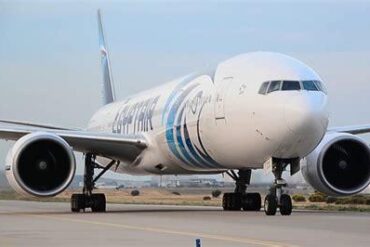
The classic Boeing 777 provides a useful illustration of how dramatically the market has changed. Depending on the variant and customer, airlines could select engines from General Electric, Rolls-Royce, or Pratt & Whitney. The 777-200 and 777-300 families could therefore be tailored to an airline’s existing fleet, maintenance infrastructure, and commercial priorities.
That flexibility was strategically valuable. If an airline already operated large numbers of GE-powered aircraft, selecting another GE engine could simplify maintenance and spare-parts logistics. A carrier with extensive Rolls-Royce expertise could make a similar argument for Trent-powered aircraft. Engine manufacturers consequently had to compete directly for airline contracts, rather than relying on the aircraft manufacturer to dictate the answer.
The same philosophy survived into the Boeing 787 Dreamliner, which became the last major widebody program to offer meaningful engine competition. Boeing designed the 787 so that airlines could select either the General Electric GEnx-1B or Rolls-Royce Trent 1000. The aircraft’s architecture accommodated both powerplants, allowing customers to consider performance, reliability, maintenance agreements, and fleet commonality when placing orders.
The decision looks increasingly unusual today because Boeing’s newer 777X took the opposite approach. Airbus had already moved toward exclusive engine partnerships with the A350 and A330neo, and Boeing followed with the GE9X-powered 777X family. In effect, the industry’s two largest airframe manufacturers gradually turned the engine selection process from a three-way or two-way competition into a single-supplier decision.
Why Airbus Chose Rolls-Royce for the A350
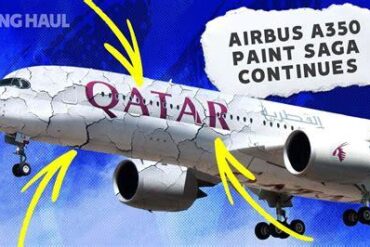
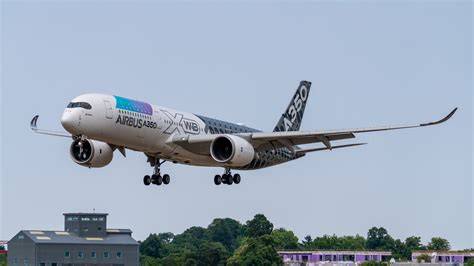
The Airbus A350 is perhaps the strongest example of how closely an airframe and engine can be integrated. Rather than designing the aircraft to accept several competing engines, Airbus developed the A350 around Rolls-Royce’s Trent XWB.
That decision was not simply about choosing a supplier. Modern turbofan engines are enormous, complex systems that interact with almost every major aspect of an aircraft’s design. The wing, pylon, nacelle, landing gear, electrical systems, fuel systems, flight controls, and aerodynamic characteristics all have to work together.
Designing an aircraft around one engine therefore provides a considerable engineering advantage. Airbus does not need to create compromises that allow several engines with different dimensions, weights, thrust characteristics, airflow requirements, and control systems to fit the same wing.
The A350-900 uses the Trent XWB-84, while the larger A350-1000 uses the Trent XWB-97. Both engines belong to the same Trent XWB family, allowing Airbus and Rolls-Royce to maintain a high degree of commonality while tailoring thrust and performance to different aircraft sizes.
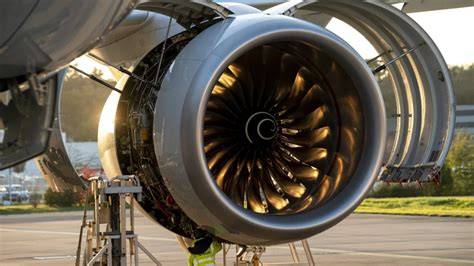
The result is an aircraft-engine combination that was developed as a unified product rather than two independent technologies forced to work together. That approach can deliver aerodynamic and propulsion efficiencies that would be more difficult to achieve with multiple engine suppliers.
But there is a trade-off. Once an airline buys an A350, it cannot simply decide later that it would prefer a GE or Pratt & Whitney engine. There is no alternative A350 engine supplier waiting in the catalog. The airline has effectively selected Rolls-Royce at the same time it selected Airbus.
The A330neo Took the Same Path
Airbus’ strategy becomes even more striking when the A330neo is examined alongside its predecessor.
The original Airbus A330 could be equipped with engines from three major manufacturers: General Electric, Pratt & Whitney, and Rolls-Royce. Airlines could therefore evaluate different powerplants for essentially the same airframe family.
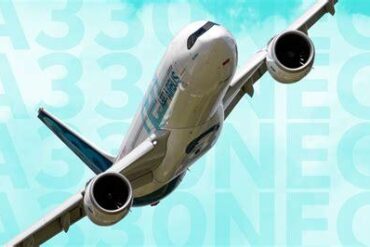
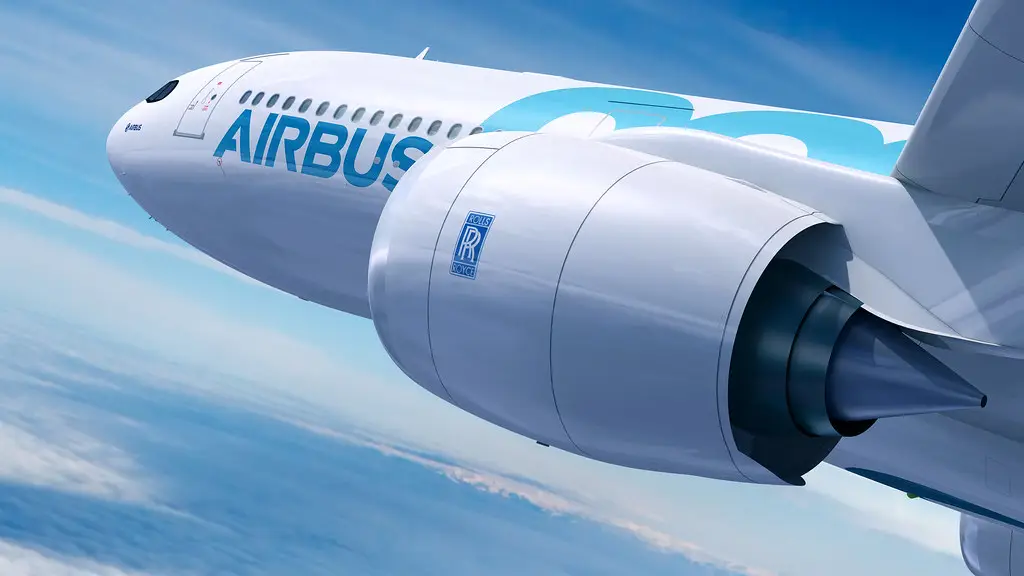
The A330neo changed that equation. Airbus developed the modernized aircraft around the Rolls-Royce Trent 7000, rather than retaining the previous three-way engine competition.
The Trent 7000 was specifically developed for the A330neo and incorporates technologies derived from the Trent 1000 TEN used on the 787. Its large 112-inch fan and approximately 10:1 bypass ratio were designed to provide a major efficiency improvement over earlier-generation propulsion.
Airbus’ larger wingspan, aerodynamic refinements, and updated wingtip devices were developed alongside the new engine. The result was a tightly integrated package intended to reduce fuel consumption and operating costs while extending the useful life of an aircraft family that had already become a major part of the global long-haul fleet.
For airlines, however, the commercial implication is straightforward. Choosing the A330neo also means choosing the Trent 7000.
Boeing’s 777X Makes GE the Sole Choice
Boeing followed a similar philosophy with its next-generation flagship widebody.
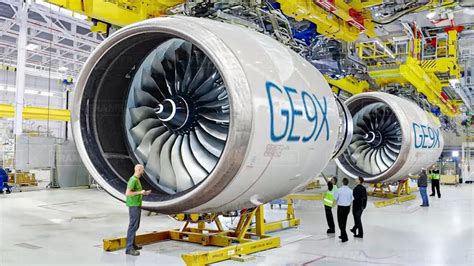
The Boeing 777X family, including the 777-8, 777-9, and 777-8 Freighter, is designed around the General Electric GE9X. Unlike the original 777, customers cannot select between GE, Rolls-Royce, and Pratt & Whitney.
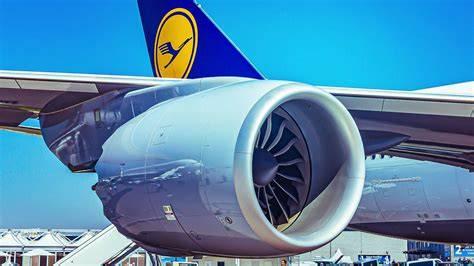
The GE9X is one of the largest and most advanced commercial turbofan engines ever developed. It produces approximately 110,000 pounds of thrust, while Boeing and GE have emphasized improvements in fuel efficiency compared with earlier 777 powerplants.
The engine is also deeply integrated into the 777X’s design. The aircraft’s enormous composite wing, folding wingtips, aerodynamic systems, and propulsion architecture were developed around the requirements of the GE9X.
That integration can produce meaningful advantages. Boeing does not have to engineer the aircraft around several engines with different characteristics. GE, meanwhile, can optimize the GE9X specifically for one airframe rather than developing a more generalized product capable of fitting several aircraft.
The downside is familiar: an airline purchasing a 777X has no engine manufacturer to choose from.
Why Single-Source Engines Can Actually Make Sense
It would be misleading to portray the disappearance of engine choice as purely negative. There is a strong technical argument behind the industry’s move toward single-source propulsion.
Aircraft engines have become extraordinarily sophisticated. A modern turbofan is not simply a device attached to the underside of a wing. Its performance affects the aircraft’s aerodynamics, fuel burn, thermal management, electrical generation, noise characteristics, emissions, and maintenance requirements.
When an engine is selected early in the design process, the manufacturer can optimize the surrounding aircraft specifically for it. The pylon can be shaped around the engine. The nacelle can be optimized for airflow. The wing can be designed around the engine’s weight and thrust. Systems can be calibrated specifically for its operating characteristics.
That integration can produce a more efficient aircraft than attempting to accommodate multiple competing engines.
There is also a financial argument. Supporting several engine variants adds engineering complexity, certification costs, production requirements, training needs, spare-parts inventories, and maintenance documentation. If an airframe manufacturer can build one aircraft configuration around one engine, it can simplify production and potentially reduce development expenses.
For airlines, the efficiency gains can be more valuable than theoretical supplier competition. Saving fuel on thousands of long-haul flights over two decades can easily outweigh the negotiating advantage created by having two or three engine manufacturers competing for the same aircraft order.
But Airlines Lose a Powerful Negotiating Tool
The problem is that engine choice was never only about engineering.
It was also about commercial leverage.
When three engine manufacturers could compete for an aircraft contract, airlines had options. A carrier could negotiate pricing, maintenance agreements, warranties, spare-engine arrangements, overhaul intervals, and support packages with multiple suppliers.
A sole-source aircraft removes much of that leverage.
An airline that operates the A350 cannot respond to dissatisfaction with Rolls-Royce by ordering a competing A350 powered by another manufacturer. Likewise, a 777X operator cannot switch to a Pratt & Whitney or Rolls-Royce version of the same aircraft.
This creates an unusually long relationship. Widebody aircraft routinely remain in service for 20 years or more, and engines can remain connected to the same airline’s maintenance ecosystem for much of that period.
That makes the initial engine decision considerably more consequential than it appears on an aircraft order sheet.
The A220 Shows What Can Go Wrong
The concern becomes easier to understand when looking beyond widebody aircraft.
The Airbus A220 has only one engine option: Pratt & Whitney’s geared turbofan. Problems involving accelerated engine deterioration and maintenance requirements have resulted in aircraft being grounded across the global fleet.
The underlying issue is not that the Pratt & Whitney engine is inherently unsuitable for the aircraft. Rather, the example demonstrates the vulnerability created when an aircraft family has no alternative propulsion system.
If an aircraft has two certified engine families, an airline facing persistent problems with one supplier may have the option of shifting future orders toward the competing engine. Depending on the aircraft design and certification status, a second engine can also provide a long-term strategic alternative.
With a sole-source aircraft, that escape route does not exist.
The airline can negotiate harder, wait for technical improvements, adjust its fleet plans, or reconsider future aircraft purchases. But it cannot simply select another engine for the same airframe.
United’s A350 Dispute Illustrates the Stakes
The relationship between an airline and its engine supplier can become especially important when commercial disagreements emerge.
United Airlines provides a striking example involving the A350. The airline had planned to introduce Airbus A350-900s as part of its long-term widebody fleet strategy, but later canceled an order for up to 45 A350-900s amid a reported dispute with Rolls-Royce involving approximately $175 million.
The significance of the episode extends beyond one airline order. Because the A350 does not have another certified engine option, there was no alternative powerplant supplier United could select while retaining the same aircraft.
That distinction matters.
If an airline is unhappy with an engine supplier on an aircraft that has multiple engine choices, it may have greater flexibility when negotiating future purchases. With a sole-source aircraft, changing the engine relationship effectively means reconsidering the aircraft itself.
In United’s case, the dispute therefore became intertwined with the future of an entire aircraft program within the airline’s fleet strategy.
Why Airbus and Boeing Are Moving in the Same Direction
The fact that Airbus and Boeing have independently embraced similar strategies is important. This is not simply one manufacturer’s preference.
The economics of modern aircraft development increasingly favor deep integration.
New widebody aircraft are more expensive and technically demanding to develop than previous generations. Composite structures, advanced aerodynamics, sophisticated electrical systems, digital flight controls, and highly efficient engines all need to function as one tightly coordinated system.
The more complex the aircraft becomes, the more attractive it is to optimize every component around a defined configuration.
That creates a feedback loop. Better integration can produce better efficiency. Better efficiency can make the aircraft more commercially attractive. And once airlines begin demanding maximum fuel efficiency, manufacturers have even more incentive to eliminate design compromises associated with multiple engines.
The result is that engine competition is gradually being sacrificed for system optimization.
What This Means for the Future of Widebody Aircraft
The next generation of commercial aircraft is unlikely to reverse this trend. If anything, emerging propulsion technologies could make single-source relationships even more common.
Future aircraft may depend on engines that are substantially more integrated with their wings, electrical systems, thermal-management architecture, and digital control systems. Hybrid-electric concepts, open-fan propulsion, advanced geared architectures, and other technologies could require aircraft manufacturers and engine companies to work together from the earliest stages of development.
In such an environment, designing one aircraft around three unrelated engine families becomes increasingly difficult.
That does not necessarily mean airlines will lose all bargaining power. Large carriers can still negotiate aggressively over purchase prices, maintenance contracts, spare engines, performance guarantees, and support packages. Engine manufacturers will also continue competing fiercely for the programs that do exist.
But the nature of that competition is changing.
Instead of competing to sell different engines for the same aircraft, manufacturers increasingly compete to become the engine behind the aircraft program itself.
The Passenger Will Barely Notice — Airlines Certainly Will
For passengers, the disappearance of engine choice is almost invisible. A traveler sitting aboard an A350 is unlikely to know or care that the aircraft’s Trent XWB engines were selected before the aircraft entered production. A passenger on a 777X will probably think even less about the fact that the aircraft was designed around the GE9X.
The consequences are mostly behind the scenes.
They appear in maintenance contracts, engine overhaul schedules, spare-engine inventories, technician training, reliability statistics, fuel bills, and long-term fleet planning. They become particularly important when an airline encounters a serious technical or commercial problem with its sole engine supplier.
The modern widebody has therefore changed the meaning of an aircraft purchase. Airlines are no longer simply buying an airframe and selecting an engine afterward. Increasingly, they are buying an integrated aircraft-engine system.
The A350 and 777X make that reality unmistakable. The A330neo reinforces it, while the 787 now stands as something of a transitional aircraft between two eras.
The old model offered airlines three engine manufacturers and substantial flexibility. The new model offers tighter engineering integration and potentially greater efficiency, but at the cost of choice.
For Airbus and Boeing, that trade can make perfect business and engineering sense. For airlines, it means that a decision made during a fleet procurement campaign can shape their maintenance and operational relationships for decades.
And that is perhaps the quietest part of the transformation: the engine choice has not disappeared because engines became less important. It has disappeared because they became so important that the airframe and powerplant increasingly have to be designed as one.