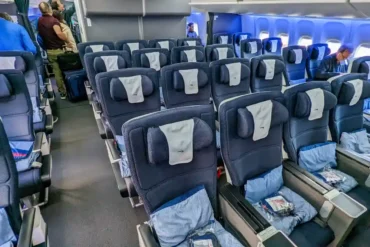
Premium economy has become one of the most compelling ways to cross the Atlantic. We get more personal space, better seats, improved meals, and a more relaxed cabin environment without paying the often dramatic premium required for a lie-flat business-class seat. For overnight flights between North America and Europe, that middle ground can be especially valuable.
The strongest premium economy products are no longer simply economy seats with an extra few inches of legroom. Airlines are increasingly treating the cabin as a distinct product, investing in wider seats, improved recline, better entertainment systems, charging ports, upgraded bedding, and more sophisticated food and beverage service. The result is a cabin that can feel substantially different from economy while remaining considerably less expensive than business class.
That distinction matters on a transatlantic flight. A six- to eight-hour journey can be long enough for an ordinary economy seat to become uncomfortable, particularly overnight, but not every traveler needs or wants to spend thousands more for a fully flat bed. Premium economy fills that gap particularly well, giving us a practical upgrade when comfort matters but value still matters too.
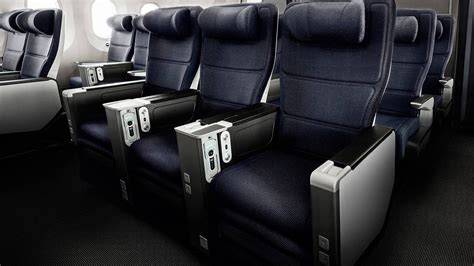
The airlines below stand out because they approach premium economy from slightly different directions. Lufthansa emphasizes unusually wide seats on selected aircraft, Air France has strengthened its dining and service proposition, and United Airlines has introduced a technology-rich Premium Plus experience. Emirates combines generous personal space with high-quality hospitality, while Virgin Atlantic has built one of the strongest overall premium economy experiences through catering and service.
5. Lufthansa Premium Economy: Wide Seats on the Airbus A350
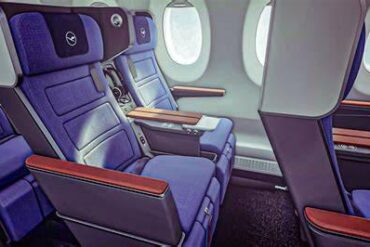
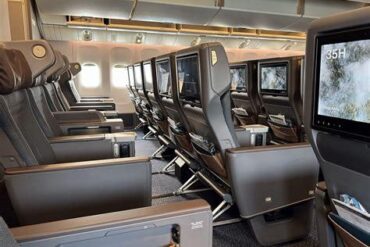
Lufthansa’s premium economy product is generally straightforward, but its Airbus A350 configuration makes the German carrier particularly interesting for travelers who place a high value on seat width. The airline uses ZIMmagic premium economy seats on much of its long-haul fleet, generally providing around 38 inches of pitch, which is broadly consistent with the premium economy standard.
The important difference appears on Lufthansa’s A350-900. Rather than placing eight premium economy seats across the aircraft, Lufthansa uses a seven-abreast configuration. That seemingly small decision has a major effect on personal space because there is only one middle seat in each row. The seats are approximately 19 inches wide, compared with the roughly 18.5-inch width common elsewhere.
On a long transatlantic flight, those extra fractions of an inch become surprisingly meaningful. Wider armrests and more shoulder room can make it easier to settle into the seat for several hours, while the reduced number of middle seats improves the overall cabin experience. Lufthansa also provides wider aisles in this section of its A350s, creating a less cramped environment when passengers or crew move through the cabin.
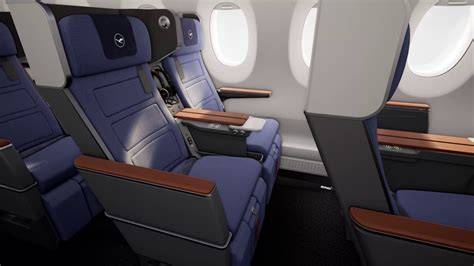
The newer Allegris interiors continue this philosophy. Lufthansa’s A350 premium economy cabin retains the seven-abreast arrangement and introduces the ZIMPrivacy PC-02 fixed-shell seat. Depending on aircraft configuration, the seat can provide around 19.5 inches of width, placing it among the widest premium economy seats available.
The newer seat also brings meaningful technology improvements, including larger 4K entertainment screens and USB-C charging. Privacy has received attention as well, making the cabin feel more distinct from standard economy. For travelers choosing a transatlantic flight, however, aircraft assignment remains crucial because Lufthansa’s premium economy experience varies according to the aircraft and interior installed.
4. Air France Premium Economy: Better Dining and French-Style Service
Air France takes a different route to premium economy excellence. Its seats are not necessarily the widest or most technologically advanced in the market, but the airline has increasingly focused on the soft product, particularly food, beverages, bedding, and service.
Air France operates premium economy across its widebody fleet, although the exact seat varies according to aircraft. The airline uses fixed-shell seats on several aircraft, including selected Airbus A330s, Boeing 777-300ERs, and Boeing 787-9s. Other aircraft use Recaro or Collins Aerospace recliner designs. Most configurations provide approximately 38 inches of pitch.
The fixed-shell concept is worth noting because it changes the way the seat reclines. Instead of simply tilting the entire seatback backward into the passenger behind, the shell moves forward as the passenger reclines. Some travelers appreciate this because it preserves personal space for the person behind, while others prefer the more conventional feel of a traditional recliner.
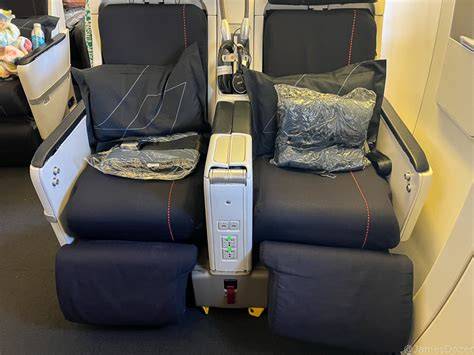
Where Air France has made a particularly noticeable improvement is the dining experience. The airline has moved beyond the idea of simply presenting an economy meal on better tableware. Its premium economy catering now incorporates menus developed with French chef Frédéric Simonin, along with upgraded presentation, metal cutlery, and a stronger emphasis on French culinary identity.
The beverage program adds another layer. Premium economy passengers can receive champagne and a broader wine selection, while bedding and amenity kits contribute to the overnight experience. These details become important on transatlantic services because premium economy is not judged solely by seat dimensions. A comfortable seat is valuable, but the experience surrounding that seat determines whether the upgrade feels worthwhile.
Air France therefore makes the strongest case for travelers who see premium economy as an overall hospitality product rather than simply a larger chair. Its seat technology may not lead every category, but its combination of French dining, attentive service, bedding, and beverages makes the cabin considerably more appealing.
3. United Airlines Premium Plus: A Technology-Focused Premium Economy Cabin
United Airlines has positioned Premium Plus as a genuine premium cabin rather than simply a slightly roomier version of economy. Its Collins Aerospace MiQ seats generally provide around 38 inches of pitch, but the technology integrated into the latest versions helps distinguish the product.
One of the most notable features is the large 16-inch 4K OLED entertainment screen. The display supports Bluetooth connectivity, allowing passengers to use compatible wireless headphones, while USB-C charging and a wireless charging pad make it easier to keep personal electronics powered during a long flight.
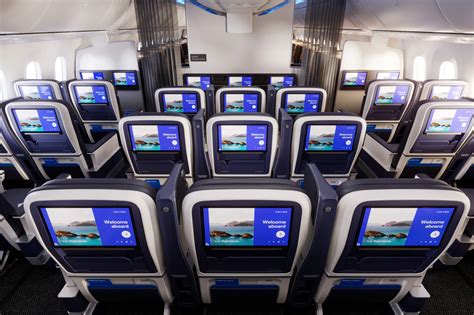
United has also taken an interesting approach to privacy. Rather than relying solely on small headrest wings, the Premium Plus seat incorporates a full-height privacy divider. That creates a stronger sense of separation between passengers and gives the cabin a more premium visual character.
There are smaller details, too. Dedicated water-bottle holders are integrated into the seating area, while an individual reading light adds convenience for passengers who want to read without illuminating the surrounding space. These may sound like minor additions, but thoughtful storage and lighting become surprisingly important during overnight transatlantic flights.
The new Elevated Interior Boeing 787-9s represent the next stage of United’s Premium Plus strategy. These aircraft are being introduced with updated interiors and a premium-heavy configuration. The airline has indicated that the new 787-9 configuration, identified as 78L, will expand over time, replacing some of the premium-focused Boeing 767 aircraft currently serving high-demand international routes.
For travelers flying from the United States to Europe, this makes United particularly interesting because the airline is investing in premium capacity on exactly the routes where premium economy demand is strongest. The biggest caveat is that the experience can vary by aircraft, so checking the aircraft type and seat map before booking remains essential.
2. Emirates Premium Economy: Space, Dining and Exceptional Finishing
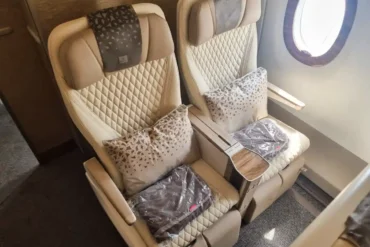
Emirates entered the premium economy market relatively recently, but it quickly became one of the most highly regarded products in the category. Its original premium economy seat already stood out through generous spacing, with approximately 40 inches of pitch rather than the more typical 38 inches.
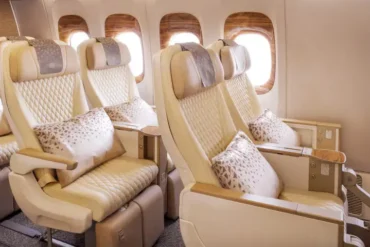
The airline also gives the cabin a more luxurious character through its materials, service, dining, and overall presentation. On aircraft such as the Airbus A350, Emirates has used a seven-abreast layout, allowing premium economy seats to reach approximately 19.5 inches in width. That is a meaningful advantage for travelers spending an entire night in the cabin.
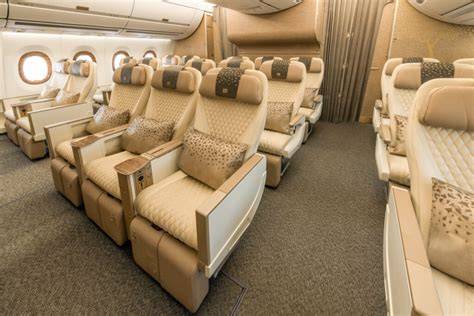
Emirates has now pushed the concept further. Its latest A350 premium economy seat introduces electric adjustment, cradle-style reclining, wireless charging, USB-C connectivity, a 13.3-inch 4K screen, and an adjustable privacy divider. The new cabin uses a 2-3-2 configuration with 28 seats, while individual seats measure about 20 inches wide and offer up to 39 inches of pitch.
The privacy divider is particularly significant because it brings a feature more commonly associated with business class into premium economy. Emirates has also incorporated an adjustable U-Dream headrest, lounge and meal modes, and a phone holder within the tray table. These additions demonstrate how quickly the premium economy category is evolving.
Food remains another major strength. Emirates serves multi-course meals with regional themes, complemented by an extensive complimentary beverage selection. The airline’s premium economy presentation has traditionally drawn inspiration from its business-class service, helping the cabin feel more like a distinct premium experience rather than an upgraded economy meal.
The main drawback is price. Emirates premium economy can be among the more expensive products in the category, meaning its value depends heavily on the fare difference from business class and economy. Nevertheless, when the priority is personal space, presentation, catering, and service, Emirates has established one of the strongest premium economy products available.
1. Virgin Atlantic Premium Economy: The Transatlantic Standout
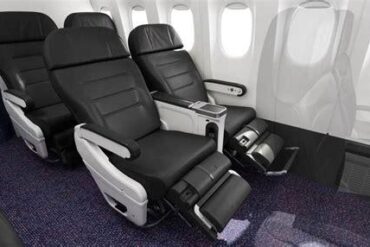
For travelers specifically focused on the transatlantic market, Virgin Atlantic remains one of the most compelling choices. The airline’s premium economy seat itself is not necessarily the most revolutionary in the industry. Its Airbus A350 and A330neo aircraft use Collins Aerospace MiQ seats, while older A330-300 and Boeing 787-9 aircraft feature earlier-generation seats.
The standard pitch is approximately 38 inches, and the cabin configuration varies between aircraft. Virgin Atlantic’s A330 and 787 operate with seven seats across in premium economy, while the A350 uses eight-abreast seating. On paper, therefore, the product may not immediately appear superior to every competitor.
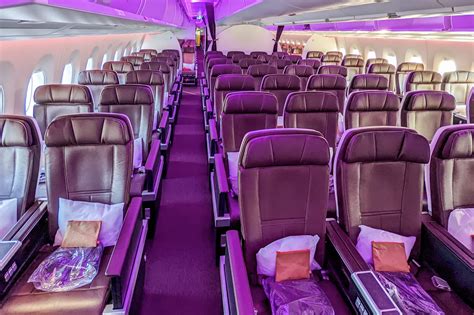
Yet premium economy is about considerably more than measurements. Virgin Atlantic has consistently excelled in the parts of the experience passengers remember after landing: food, drinks, service, atmosphere, and attention to detail.
That strength is reflected in the 2025 Skytrax World Airline Awards, where Virgin Atlantic was ranked the world’s best premium economy airline and also won the award for best premium economy onboard catering. The recognition is particularly relevant to transatlantic travelers because Virgin Atlantic’s network is heavily centered on connecting the United Kingdom with North America.
The airline’s catering is known for substantial portions and a broad drinks selection, while cabin crew are widely recognized for delivering an engaging and attentive style of service. That combination gives Virgin Atlantic premium economy a personality that many technically impressive seats lack.
The fleet is also moving toward a more consistent future product. Virgin Atlantic has been retiring older A330-300 aircraft and plans to retrofit its Boeing 787-9s with new interiors from 2028 through 2030. As the older cabins disappear, the airline should have a more consistent premium economy proposition across its long-haul fleet.
Why These Five Premium Economy Cabins Stand Out
The biggest lesson from these five airlines is that there is no single definition of a superior premium economy seat. Lufthansa wins through width and cabin density, Air France through hospitality and cuisine, United through technology and functionality, Emirates through space and luxury, and Virgin Atlantic through the complete onboard experience.
For transatlantic travelers, the aircraft operating the flight can be just as important as the airline itself. Premium economy products frequently differ between aircraft generations, and the difference between an older recliner and a new-generation seat can be substantial.
We should therefore look beyond the fare label when choosing a ticket. A 38-inch seat on one aircraft can feel very different from a 38-inch seat on another because width, recline mechanism, cushioning, privacy, storage, entertainment, and cabin density all influence comfort.
Premium economy is ultimately successful because it does not attempt to become business class. Instead, its best products focus on making the long-haul journey noticeably more comfortable, more civilized, and more enjoyable than economy without requiring the enormous financial commitment of a lie-flat seat.
That makes the category particularly attractive across the Atlantic. When we combine a wider seat with better food, stronger service, modern entertainment, charging facilities, and additional personal space, the premium economy upgrade can transform an otherwise tiring overnight flight into a much more manageable journey.