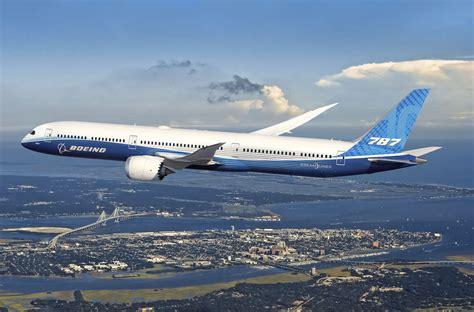
The Boeing 787-10 Dreamliner was never designed to match the Airbus A350 on range. That distinction has always been central to the aircraft’s identity. The A350 family was built to carry substantial payloads across very long distances, while the 787 family was engineered around a different philosophy: combine advanced materials, efficient engines, and relatively low operating weight to make long-haul flying economical across a broad range of missions. Yet the market is changing, and the 787-10 is quietly moving into territory that once looked much more favorable to the A350.
That shift has become more noticeable as Boeing has increased the aircraft’s certified maximum takeoff weight. The change does not suddenly transform the 787-10 into an ultra-long-range aircraft, nor does it erase the A350’s considerable payload and range advantages. Instead, it improves the 787-10 in exactly the area where airlines need flexibility most: payload-range performance on long-haul routes. A few hundred additional nautical miles can make the difference between an aircraft being commercially marginal and being an attractive replacement for an older widebody.
The result is a fascinating change in the competitive landscape. Airlines do not necessarily have to choose between the 787-10 and A350-900 as direct substitutes. Instead, they can use each aircraft where its strengths make the most economic sense. But as the 787-10 becomes more capable, some routes that previously demanded an A350—or at least made an A350 particularly attractive—can now be considered for Boeing’s stretched Dreamliner.
Boeing 787-10 and Airbus A350: Different Aircraft With Increasingly Overlapping Roles
The Boeing 787 and Airbus A350 families occupy an unusual position in the widebody market. They are contemporaries and frequently appear in the same airline fleet, but their individual variants do not line up neatly against one another. The 787-8 and 787-9 are smaller than the A350-900, while the 787-10 is physically longer than the A350-900 but has substantially less range. The A350-1000 sits above both in size, payload capability, and range.
This makes the aircraft families more important than the individual variants when examining their competitive relationship. An airline evaluating a new fleet does not simply ask whether a 787-10 is better than an A350-900. It considers which combination of aircraft can serve its network most efficiently. A carrier with strong demand between major international hubs may value the 787-10’s relatively low operating costs and passenger capacity, while another airline serving thin but extremely long routes may prefer the A350’s additional fuel and payload capability.
The 787-10’s fundamental advantage is its weight. It can carry a large number of passengers without carrying the structural and fuel capacity associated with a much longer-range aircraft. That translates into attractive economics on routes where an airline does not need 8,000 or 9,000 nautical miles of capability. The A350, meanwhile, gives airlines considerably more flexibility when routes stretch toward the limits of the network.
That distinction is becoming less absolute.
The 787-10’s 2026 Weight Increase Changes Its Long-Haul Potential
In March 2026, the FAA certified higher maximum takeoff weights for the Boeing 787-9 and 787-10. The 787-9’s MTOW increased from approximately 254.7 metric tons to 259.2 tons, while the 787-10 rose from roughly 254 tons to 260.4 tons. Those changes may look modest when viewed on paper, but they have meaningful consequences for an aircraft whose biggest weakness has traditionally been range.
The 787-9 gained approximately 310 nautical miles of additional range, while the 787-10 gained around 430 nautical miles. For the 787-10, that pushes typical-payload range to roughly 6,760 nautical miles, or 12,519 kilometers. That remains well below the A350-900’s approximately 8,500-nautical-mile capability, but airlines do not operate every route at the maximum range of an aircraft.
More importantly, extra takeoff weight can provide airlines with additional operational flexibility. The benefit does not always have to appear as extra range. On a particular route, an airline might use the additional capability to carry more cargo, maintain payload during unfavorable winds, or operate a route that previously sat just beyond the aircraft’s practical limits.
That flexibility is precisely why the development matters.
Why the Boeing 787-10 Can Be So Attractive Against the A350-900
The 787-10’s most compelling argument is not maximum range. It is efficiency at the middle of the long-haul market.
The aircraft can accommodate more passengers than a typical A350-900 configuration while maintaining a lower structural weight. Despite its larger passenger capacity, the 787-10 can burn roughly the same amount of fuel as, or in some circumstances less fuel than, the A350-900. That creates a powerful economic proposition on routes where the A350’s additional range and payload capacity are not required.
This is particularly important because fuel is only one component of airline economics. An aircraft that carries a large passenger load efficiently can be extremely valuable on dense international routes. The 787-10 can also offer substantial floor and cargo space, although the A350 retains an important advantage in maximum payload capability.
The numbers illustrate the distinction. The 787-10 has an MTOW of around 260 tons, compared with approximately 283 tons for the A350-900. The A350 therefore has considerably more weight available for fuel and payload. But that additional capability comes with an aircraft that is designed to travel farther and carry more.
If the airline does not need that extra capability, paying for it may not make economic sense.
This is where the 787-10 can quietly take business away from the A350. It does not have to outperform the Airbus on every metric. It only needs to be good enough on range while offering attractive economics on the specific route.
From Chicago-Tokyo to a Wider Long-Haul Network
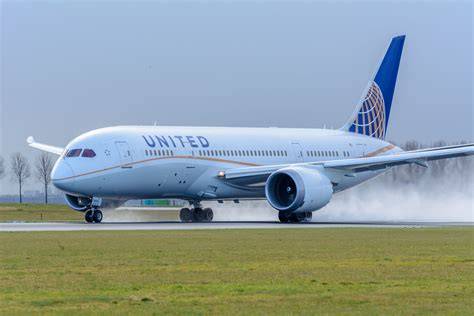
The existing route between Chicago and Tokyo is a useful illustration of how far the 787-10 can already stretch. United Airlines has operated the type on this long transpacific service, demonstrating that the aircraft is capable of handling demanding international sectors when payload and operational conditions are carefully managed.
The higher MTOW gives United additional options. It could potentially use the increased capability to carry more cargo, improve payload margins, or consider other routes with similar distance characteristics. Seoul, for example, becomes more plausible from Chicago, although the aircraft still does not become a universal solution for the longest US-Asia missions.
That limitation is important. The new capability should not be exaggerated.
A 430-nautical-mile increase is significant, but it does not turn the 787-10 into an A350-900 with a Boeing badge. Routes from Chicago to many destinations in China, for instance, can still present challenges that the A350 is better equipped to handle. Headwinds, payload requirements, airport elevation, temperature, and cargo demand can all influence whether a route is commercially viable.
The real change is that the number of routes sitting just outside the 787-10’s practical operating envelope has become smaller.
American Airlines Has a Particularly Interesting Decision Ahead
The implications could be especially significant for airlines considering replacements for older widebody fleets. American Airlines, for example, has been evaluating options for replacing portions of its Boeing 777-200ER fleet. The 787-10 was already an obvious candidate for dense transatlantic flying, but its previous range limitations made certain missions less straightforward.
Consider a route such as Dallas/Fort Worth to Athens. A larger aircraft such as the 777-300ER can provide substantial capacity and range, but a modern 787-10 could offer a different economic balance if its payload-range capabilities are sufficient for the mission.
The increased MTOW strengthens that argument. The 787-10 can now cover essentially the entire US-Europe market under appropriate operating conditions, giving airlines greater freedom to consider it for routes that previously looked better suited to larger aircraft.
That does not mean every 777 route should become a 787-10 route. Nor does it mean the A350 suddenly loses its advantage. Rather, Boeing has made the 787-10 a more credible widebody replacement candidate for airlines that want high passenger capacity without committing to a heavier aircraft.
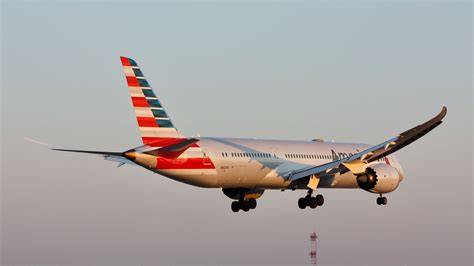
The Airbus A350 Still Holds the High Ground on Range and Payload
For all the attention surrounding the 787-10, Airbus has not stood still.
The Airbus A350-900 currently offers around 8,500 nautical miles of range and an MTOW of approximately 283 tons, while the A350-1000 reaches roughly 9,000 nautical miles and has an MTOW around 322 tons. Those figures put the A350 family firmly ahead when an airline needs substantial payload over extreme distances.
The A350 has also benefited from continuous technical improvements. Airbus has incorporated developments from the A350-900ULR into the standard A350-900, including aerodynamic improvements involving the wing and sharklets. A new production standard introduced in late 2022 also brought changes intended to reduce weight and improve cabin efficiency.
Rolls-Royce has continued developing the Trent XWB engine family as well. The latest enhanced-performance version of the XWB-84 has reportedly delivered a larger fuel-burn improvement than initially promised, further strengthening the A350’s economics.
In other words, the 787-10’s improved range does not exist in a vacuum. Airbus is simultaneously making the A350 more efficient, meaning the competitive gap is narrowing in some areas while remaining substantial in others.
Airlines Are Increasingly Happy to Operate Both
Perhaps the strongest evidence that the 787 and A350 are not simply enemies is the growing number of airlines operating or ordering both aircraft families. More than 30 airlines and leasing companies have ordered both types, demonstrating that carriers increasingly see value in combining their capabilities.
The logic is straightforward. The 787 can act as an efficient replacement for aircraft such as the A330 on many medium- and long-haul missions, while the A350 can replace larger aircraft such as the 777 on routes demanding more range and payload.
That creates a natural division of labor.
Philippine Airlines, for instance, has positioned the 787-10 toward intra-Asia and Australian operations while its A350-1000 fleet serves longer North American routes. Delta Air Lines provides another interesting example, with its A350 fleet playing an important role on transpacific services while the airline has ordered 787-10s for transatlantic flying.
This strategy makes more sense as the 787-10 gains range. Airlines do not necessarily need to replace their A350s. They can simply use the Boeing on routes where its lower weight and passenger capacity produce better economics.
The 787-10 Is Following an Old Widebody Pattern
There is a useful historical parallel with the relationship between the Airbus A330-300 and Boeing 777-200ER. The A330-300 was smaller and less capable in range, but its efficiency made it highly attractive on routes that did not require the 777’s extra capability. As Airbus improved the A330, it became increasingly capable of taking over missions once associated with the larger Boeing.
The 787-10 is following a similar, though not identical, path.
The difference is that the fuel-burn gap between the A350 and 787 is considerably smaller than the historical gap between the A330 and early 777 variants. The A350 is already an exceptionally efficient aircraft. Its additional payload capability can offset its higher fuel consumption on many demanding missions, particularly when cargo revenue matters.
That is why the 787-10 is unlikely to replace the A350 outright. Instead, it is expanding the portion of the market where airlines can seriously consider it.
Why the 787-10’s Future Could Be More Important Than Its Range Figures Suggest
The most interesting aspect of the 787-10’s improvement is not the headline number of 430 additional nautical miles. It is what that number does to airline fleet planning.
An aircraft becomes considerably more useful when it can operate a wider variety of routes without sacrificing too much payload. Airlines value flexibility because networks change constantly. A route that works today may require additional capacity tomorrow, while seasonal demand can turn an aircraft’s ideal mission into something quite different during another part of the year.
The higher-weight 787-10 gives carriers more room to adapt.
EVA Air’s use of the type across the Pacific demonstrates that the 787-10 can already operate beyond the relatively short-haul missions for which some observers once considered it best suited. Air New Zealand, meanwhile, represents another potentially important customer as it brings the aircraft into its fleet. The additional range could make the type useful for shorter US services, particularly on the West Coast, where its economics could complement larger aircraft.
That is the real story behind the 787-10’s quiet advance.
The Boeing 787-10 Is Not Replacing the Airbus A350—It Is Redrawing the Boundary
The Airbus A350 remains the stronger aircraft when an airline needs maximum payload, long-range capability, and ultra-long-haul flexibility. The A350-900 and A350-1000 occupy an important part of the market that the 787-10 simply cannot fully reach.
But the 787-10 no longer needs to reach it.
By increasing the aircraft’s MTOW and extending its practical range, Boeing has strengthened the Dreamliner’s position in a part of the market where airlines increasingly care about passenger capacity, fuel efficiency, and route economics rather than maximum theoretical range. The 787-10 can now take on more long-haul missions while preserving the basic efficiency advantage that made the Dreamliner family so successful.
That makes its advance easy to miss. There is no dramatic moment when an A350 route suddenly becomes a 787-10 route. Instead, airlines gain another option during fleet planning, another aircraft becomes viable for a marginal route, and a network manager discovers that a mission once requiring a larger widebody can now be flown efficiently by a smaller-weight machine.
The Boeing 787-10’s growing role is therefore less about defeating the Airbus A350 than about shrinking the number of routes where the A350 is the obvious answer. As Boeing continues refining the Dreamliner and airlines seek maximum flexibility from their fleets, that boundary will likely continue moving. And in commercial aviation, quietly moving the boundary can be far more consequential than winning a headline-grabbing specification battle.