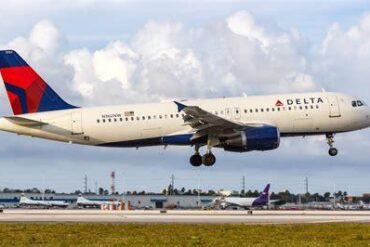
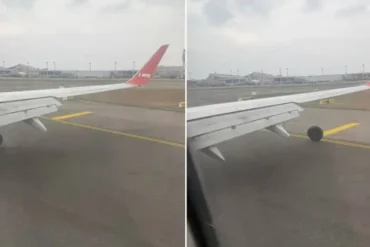
Two Delta Air Lines flights experienced cabin fume or odor incidents within roughly 48 hours, prompting two different emergency responses as crews prioritized passenger safety and sought immediate assistance from air traffic control. Delta flight 1035, traveling from Jacksonville International Airport to New York’s John F. Kennedy International Airport, diverted to Raleigh-Durham International Airport on Monday after fumes were detected in the cabin. The following day, Delta flight 1390 from New York LaGuardia to Chicago O’Hare encountered fumes while approaching Chicago and declared an emergency.
Both aircraft landed safely, and passengers were able to leave normally at the gates. The incidents involved the same aircraft type, the Airbus A220, but there is currently no indication that the two events were connected. Delta has emphasized that smoke, fumes, and odor events are rare, while stressing that every occurrence is treated seriously through its safety management system and subsequent maintenance procedures.

Delta Flight 1035 Diverts to Raleigh-Durham
The first incident occurred aboard Delta flight 1035, which departed Jacksonville for New York on Monday. During the flight, the crew detected fumes inside the cabin and elected to divert to Raleigh-Durham rather than continue toward JFK. Flight-tracking data showed the A220 proceeding safely to RDU, where it landed without a reported emergency landing accident.
Delta said the crew declared an emergency to obtain priority handling from air traffic control. Such a declaration does not necessarily mean that an aircraft has suffered a catastrophic failure or lost control. Instead, it gives pilots access to expedited assistance when circumstances warrant immediate attention.
There were 113 people aboard flight 1035, and everyone deplaned normally at the gate after landing in Raleigh-Durham. Delta subsequently arranged alternative transportation for passengers continuing to New York. The diversion therefore represented a precautionary operational decision designed to remove uncertainty surrounding the cabin-air issue rather than a response to an uncontrolled aircraft emergency.
Second A220 Fume Incident Hits Delta Flight 1390
Approximately a day later, another Delta A220 experienced a cabin-fume event. Flight 1390, operating from LaGuardia Airport to Chicago O’Hare, encountered fumes while approaching ORD. The flight crew declared an emergency, allowing the aircraft to receive priority handling as it completed its arrival.
The aircraft landed safely, and all 130 people aboard exited normally at the gate. Unlike flight 1035, the aircraft was subsequently removed from service by Delta’s maintenance teams for evaluation. Publicly available flight-tracking information confirms that the aircraft operated the LaGuardia-Chicago sector, but it does not establish what caused the fumes.

Delta confirmed the occurrence and reiterated its broader safety approach, describing smoke, fumes, and odor events as rare but serious matters. The airline’s safety management system is intended to identify potential hazards, investigate their causes, and ensure appropriate corrective action rather than treating an isolated event simply as an inconvenience.
Why Cabin Fumes Can Trigger an Emergency
Cabin odors can originate from numerous sources, making them particularly challenging for flight crews to assess immediately. A smell that initially appears minor could potentially indicate a mechanical problem involving engine oil seals, ventilation equipment, bearings, or other aircraft systems. Because crews may not immediately know the composition or source of an odor, precautionary action can be appropriate.
Modern aircraft ventilation systems are designed to maintain cabin-air quality during normal operations and reasonably foreseeable failures. The FAA notes that transport aircraft generally use a combination of fresh and recirculated air, with many aircraft using HEPA filtration for the recirculated portion. Research cited by the agency has found normal aircraft cabin air quality comparable to or better than that of many public buildings.
That does not mean every fume event is harmless. FAA research has examined possible exposure during contaminated-bleed-air events to substances such as carbon monoxide, carbon dioxide, volatile organic compounds, and airborne particles. The potential health impact can be difficult to establish because the chemical composition and concentration of fumes can vary significantly between incidents.
Delta’s Two Incidents Remain Separate Events
The close timing of the two incidents naturally raises questions because both involved Delta A220 aircraft. However, there is no publicly established connection between flight 1035 and flight 1390. Different mechanical, environmental, or operational factors can produce similar odors, and determining the precise source requires technical inspection rather than relying solely on the smell reported inside the cabin.
The safe outcomes also demonstrate why crews treat unexplained fumes conservatively. A diversion or emergency declaration can appear dramatic to passengers, yet these measures give pilots greater flexibility to land quickly, obtain emergency services if needed, and have maintenance personnel inspect the aircraft.
For passengers, the two Delta incidents are a reminder that an aircraft cabin is a highly controlled environment where unusual smoke, fumes, or odors are not simply dismissed. Even when an aircraft remains fully controllable, rapid crew assessment and precautionary decision-making can prevent a developing technical issue from becoming a more serious safety event.