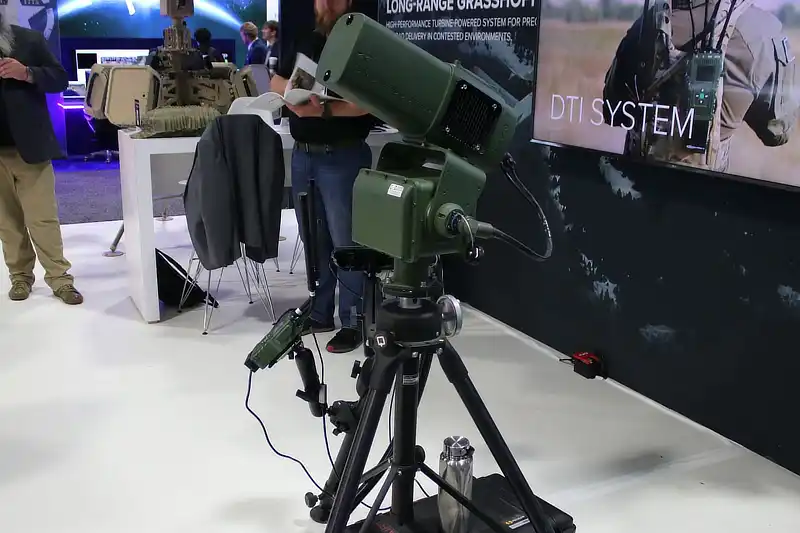
DZYNE Technologies has used the stage of the AUSA 2025 Annual Meeting in Washington, D.C. to reveal a major evolution in its counter-UAS architecture — the Dronebuster Vehicle Kits, engineered to bring mobile, layered drone defense to convoys, patrols, and forward operating bases. The debut marks a significant milestone for DZYNE’s counter-drone ecosystem, extending the capabilities of its proven handheld Dronebuster systems and fixed-site solutions to the vehicle-mounted domain, where protection must move as fast as the threat.
With an installed base exceeding 2,500 systems in more than 50 countries, DZYNE is positioning the new kits for rapid deployment across allied and partner networks. The introduction underscores the company’s strategy to transform counter-UAS operations from static protection zones to fluid, networked coverage, aligning with modern battlefield realities where UAS threats evolve dynamically across terrain and tempo.
Expanding the Counter-UAS Frontier: From Handheld to Mobile Defense
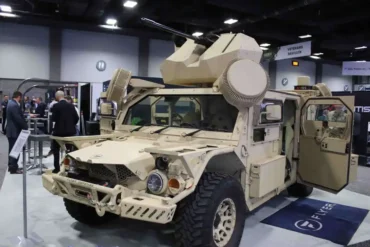
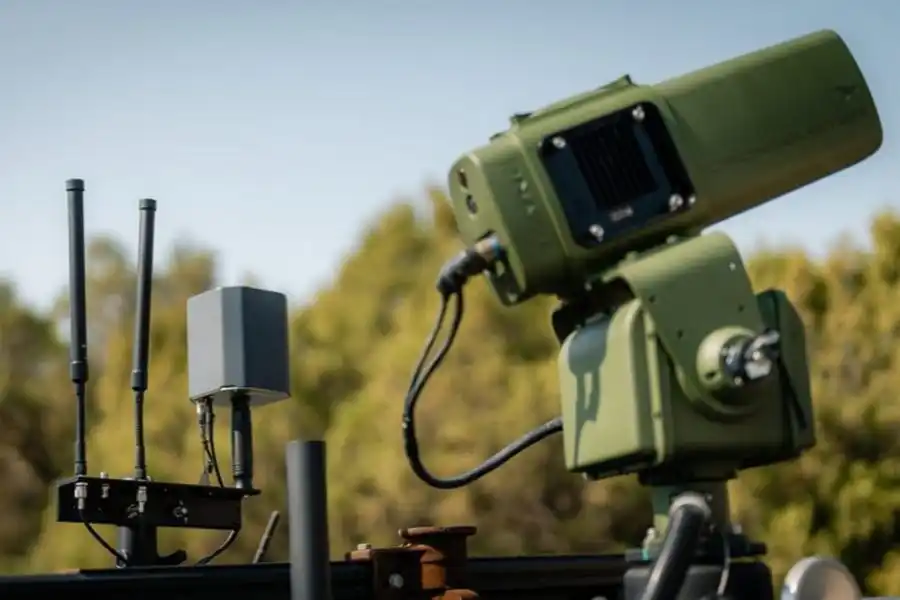
At the heart of the Dronebuster Vehicle Kit lies the fusion of DZYNE’s Dronebuster 4 Fixed Site system, a DTI passive sensor suite, and TAK-enabled control nodes, creating a modular system capable of detecting, identifying, and neutralizing hostile drones while on the move. Two configurations cater to distinct mission profiles — autonomous mounted operations and rapid-response hybrid use.
The first path integrates the Dronebuster 4 Fixed Site onto a pan-tilt gimbal mount, paired with a DTI sensor array and an in-vehicle control station. Operators can leverage a point-and-click interface to cue sensors, select countermeasures, or delegate engagement to AI-driven automation, using a continuously updated threat database to distinguish between friend and foe. The second configuration targets mobile intervention teams, equipping vehicles with DTI-mounted sensors and onboard TAK displays for situational awareness, while providing handheld Dronebuster 4 units for direct engagement when visual contact occurs.
Both configurations prioritize speed of response and continuity of awareness, bridging the gap between autonomous surveillance and operator discretion — a balance crucial for convoy escort, urban patrol, or perimeter defense missions where drone activity can shift from benign to hostile within seconds.
Technical Edge: Silent Detection and Adaptive Countermeasures
The DTI sensor suite, a core component of DZYNE’s vehicle kits, exemplifies stealth detection in contested electromagnetic environments. The passive sensor design emits no energy, ensuring a zero-signature profile while still tracking up to 30 drones at ranges beyond 7 kilometers. Using AI and machine learning, it classifies drones by type, communication band, and controller association, assigning unique digital fingerprints to enable friend-or-foe distinction — a critical factor for coalition interoperability.
Operating across a 400 MHz to 6 GHz bandwidth, the DTI seamlessly integrates into mesh networks and TAK systems, providing a shared picture for all connected elements. The Dronebuster 4 Fixed Site complements this with an array of electronic countermeasures, including GNSS spoofing and broadband jamming against control and navigation links. Operators can dynamically select between non-emissive tracking, spoofing, or high-power disruption, aligning with rules of engagement and electromagnetic deconfliction protocols in dense or coalition environments.
Tactical and Operational Relevance: Layered Defense on the Move
The operational value of DZYNE’s Vehicle Kits lies not only in their hardware sophistication but in their tactical adaptability. In convoy protection or mobile site security, the ability to maintain constant detection coverage without halting movement fundamentally changes defensive postures. Crews can operate in autonomous surveillance mode during transit, switching to handheld engagement during sudden drone incursions — all while remaining connected through TAK-based networks that fuse feeds from multiple vehicles or dismounted elements.
This continuity of coverage mitigates one of the most persistent weaknesses of traditional counter-UAS operations: the static nature of legacy systems. By embedding detection and mitigation tools directly into vehicles, DZYNE effectively turns every convoy element into a moving node in a distributed air defense network, enabling corridor-wide protection without fixed emplacements.
Such adaptability is particularly critical in urban warfare, peacekeeping, and critical infrastructure security, where forces must balance deterrence with spectrum discipline and avoid electromagnetic interference with civilian or friendly systems.
Industrial Momentum and Strategic Context
DZYNE’s expansion into vehicle-mounted counter-UAS solutions coincides with a broader defense industry trend: the mobility and networking of air defense layers. The company’s announcement that it doubled its Portland workforce in 2025 highlights not just industrial growth but also strategic scaling to meet recurring procurement patterns across NATO and allied markets.
The AUSA 2025 debut also signals the U.S. Army’s increasing interest in systems that integrate seamlessly into existing C2 architectures, such as TAK networks and joint electromagnetic operations. For many forces, interoperability and emissions control are now as crucial as range and power, particularly as coalition operations in contested zones demand synchronized electronic warfare postures.
Shaping the Future of Mobile Counter-UAS Doctrine
The unveiling of DZYNE’s Dronebuster Vehicle Kits represents more than a new product — it reflects a doctrinal shift in how militaries conceptualize drone defense mobility. As commercial and tactical drones proliferate across every conflict theater, the line between airspace surveillance, electronic warfare, and active protection continues to blur. DZYNE’s approach — combining AI-driven detection, mesh-networked communication, and modular mobility — provides a glimpse into how layered, distributed counter-UAS architectures may evolve over the next decade.
Adoption will depend heavily on national jamming regulations, coalition spectrum harmonization, and field doctrine, but for now, DZYNE’s system provides a ready-to-field solution for forces seeking convoy-level air defense without static installations. In an era where drones can appear anywhere, from deserts to downtown corridors, that mobility could define the next phase of tactical air defense.