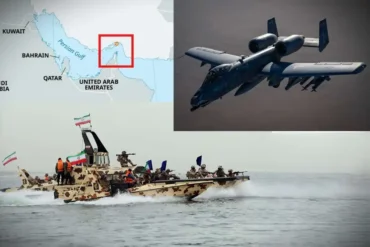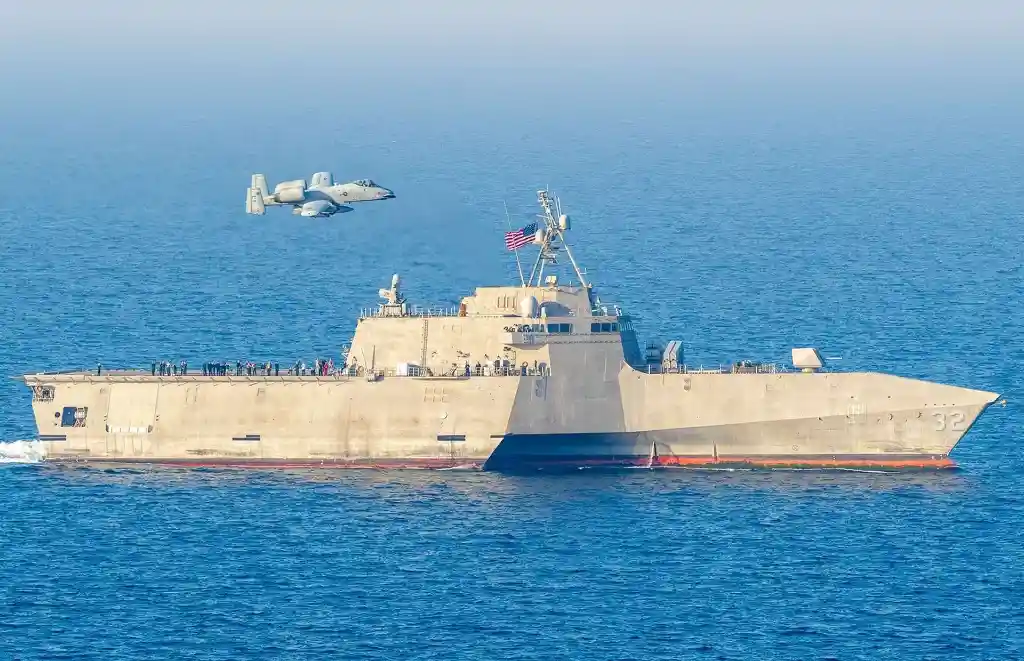
The deployment of U.S. Air Force A-10C Thunderbolt II aircraft to support U.S. Navy mine countermeasure operations in the Arabian Gulf signals a deliberate shift toward integrated, multi-domain deterrence in one of the world’s most strategically sensitive waterways. The mission centers on providing armed overwatch for naval forces conducting mine-hunting operations, particularly near the Strait of Hormuz, a narrow maritime corridor through which a significant portion of global oil shipments transit daily. The pairing of a legacy close air support aircraft with modern unmanned naval mine-hunting systems demonstrates how the Pentagon continues to merge proven firepower with advanced sensing and automation to maintain freedom of navigation under contested conditions.
The Arabian Gulf presents a uniquely compressed battlespace. Geography, dense shipping traffic, and proximity to potential adversary coastlines drastically reduce reaction time during crises. Threats can emerge rapidly from fast attack craft, unmanned surface vessels, shore-based missile batteries, and aerial drones. In such an environment, mine countermeasure ships operate as high-value assets, not because of offensive capability, but because they enable the safe movement of naval and commercial traffic. Protecting these ships is therefore a strategic necessity, and the A-10C Warthog, despite its Cold War origins, remains uniquely suited to persistent, low-altitude surveillance and precision strike operations.
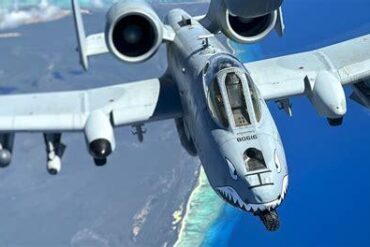
The presence of A-10C aircraft flying protective patterns alongside USS Santa Barbara (LCS 32) during a U.S. Central Command exercise represents more than routine joint training. It sends a visible operational message: mine-clearing forces will operate under continuous air protection if tensions escalate. The A-10’s ability to loiter for extended periods, identify threats visually and electronically, and engage rapidly makes it particularly effective against asymmetric maritime threats, especially swarming small craft and low-cost drones.
The Strategic Logic of Pairing Legacy Airpower With Modern Mine Warfare
The integration of A-10C aircraft into mine warfare escort roles reflects evolving threat realities rather than nostalgia. Modern conflicts increasingly involve inexpensive but dangerous platforms such as explosive-laden fast boats and unmanned vessels. These threats require rapid detection and highly controlled precision engagement rather than large-scale bombardment. The A-10C’s updated avionics and targeting systems allow it to function as a networked strike platform, capable of sharing targeting data and coordinating with naval assets in real time.
Loadout configurations observed during CENTCOM operations highlight this adaptation. Aircraft were equipped with 500-pound Joint Direct Attack Munitions (JDAMs) for precision strikes against hardened or high-value targets. The addition of a LITENING targeting pod enables high-resolution surveillance, laser designation, and real-time video transmission. Complementing these capabilities are rocket pods loaded with Advanced Precision Kill Weapon System II (APKWS II) laser-guided rockets, offering a cost-effective and high-volume precision engagement option ideal for countering swarm tactics.
A large centerline fuel tank further enhances the aircraft’s operational endurance. This allows A-10s to maintain protective presence for extended periods, ensuring mine countermeasure vessels remain covered throughout sensitive phases of detection and neutralization operations.
GAU-8 Avenger Cannon: Persistent Firepower for Maritime Security
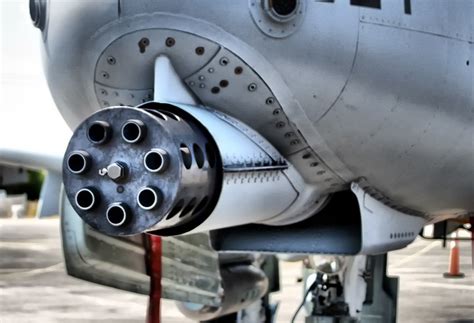
At the core of the A-10’s battlefield identity remains the GAU-8/A 30mm rotary cannon, one of the most specialized aircraft weapons in modern service. With a firing rate of approximately 3,900 rounds per minute, the weapon provides unmatched close-range destructive capability. Its ammunition mix includes high-explosive incendiary rounds for soft targets and armor-piercing incendiary rounds designed to penetrate hardened surfaces before detonating.
In maritime security operations, this translates into highly controlled bursts capable of disabling small vessels, engines, or mounted weapons systems without excessive collateral damage. Unlike missile-based engagements, the cannon allows pilots to apply graduated force quickly and repeatedly, a crucial factor in politically sensitive environments where escalation control is essential.
USS Santa Barbara and the Evolution of Naval Mine Countermeasures
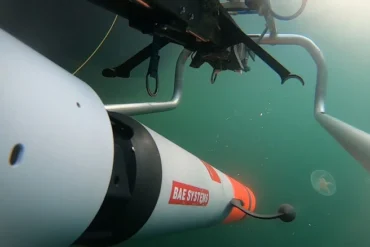
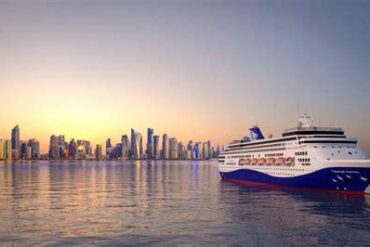
USS Santa Barbara represents the Navy’s transition away from legacy dedicated mine countermeasure ships toward modular, unmanned-enabled systems. The Independence-variant Littoral Combat Ship configured with the Mine Countermeasures Mission Package acts as a mobile command hub for a network of remote sensors and neutralization tools.
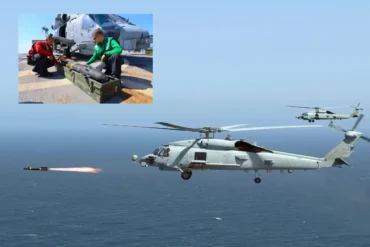
This system pushes detection and engagement tasks outward using unmanned surface vehicles and airborne assets such as the MH-60S helicopter. Forward-looking and side-scan sonar systems create layered underwater mapping capability, while electro-optical identification systems help confirm mine types before neutralization.
The strategic advantage is clear: sailors can remain further from mine danger zones while still maintaining high detection accuracy. However, this distributed approach makes the mothership itself critically important. If the command platform is threatened or forced to withdraw, the entire mine-clearing chain could be disrupted, potentially closing vital shipping lanes.
Countering Hybrid Threats Near the Strait of Hormuz
Regional tensions and historical precedent make mine warfare a persistent concern in the Arabian Gulf. Naval mines remain one of the most cost-effective methods of disrupting maritime trade and military operations. Even limited mine deployment can create disproportionate economic and strategic impact by forcing shipping reroutes or halting transit entirely.
Iran and affiliated proxy groups have historically emphasized asymmetric maritime tactics. These include fast attack craft swarms, unmanned explosive boats, and layered coastal defense missile systems. The integration of A-10 escort capability directly addresses this hybrid threat environment by adding persistent airborne surveillance and immediate precision strike options.
The relatively low cost and high carriage capacity of APKWS rockets make them particularly effective against massed small targets. An A-10 can carry dozens of guided rockets, allowing multiple engagements during a single sortie. This capability dramatically increases defensive coverage for slow-moving or stationary mine countermeasure vessels.
Network Connectivity and Modern Battlefield Integration
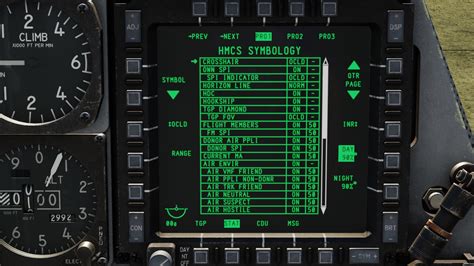
The modernization of select A-10C aircraft with Link 16 tactical data networking marks a major leap in interoperability. This system allows aircraft to share real-time battlefield information with naval vessels, airborne early warning aircraft, and coalition forces.
This connectivity transforms the A-10 from a traditional close air support platform into an integrated sensor and strike node. The aircraft can receive targeting data from naval radars, unmanned systems, or command aircraft, allowing faster engagement cycles. In a dense electronic warfare environment, shared situational awareness can determine whether mine countermeasure forces complete their mission safely.
Deterrence Through Visible Joint Force Integration
Beyond tactical benefits, the deployment carries clear strategic messaging. The visible pairing of airpower and mine warfare assets signals readiness to maintain open sea lanes under contested conditions. Maintaining free navigation through the Strait of Hormuz remains a core priority for global economic stability and allied security.
The A-10’s continued operational relevance highlights an important defense planning reality. Platforms originally designed for one type of conflict can evolve to meet new threat environments when supported by modernization, new weapons integration, and network connectivity upgrades. The result is a hybrid capability blending proven survivability, precision engagement, and long-endurance presence.
This deployment ultimately illustrates a broader transformation in U.S. joint force doctrine. Rather than relying solely on high-end stealth or long-range strike systems, planners are increasingly combining legacy survivability, unmanned sensing, and network-enabled targeting. In contested maritime choke points where escalation can unfold rapidly, persistent armed overwatch may prove just as decisive as advanced stealth penetration.
The Arabian Gulf remains a region where minutes matter, visibility matters, and deterrence must be both credible and constant. The A-10C Warthog, once designed to counter armored divisions in Europe, now helps protect the invisible battle against naval mines. That evolution captures the adaptive nature of modern military strategy, where success often depends less on replacing old tools and more on finding new ways to use them effectively.