The story of American aviation is written not only in archives and museums but also across the active runways of airports that have survived a century of innovation, war, commercial growth, and urban transformation. These historic airfields are more than simple infrastructure. They are living witnesses to the Wright era, the dawn of airmail, the Golden Age of barnstorming, and the jet age that redefined mobility. Exploring the nation’s ten oldest continuously operating airports reveals how early aviation shaped local communities, military strategy, economic development, and the cultural identity of entire regions.
Albert Whitted Airport: A Waterfront Gateway To Early Florida Aviation
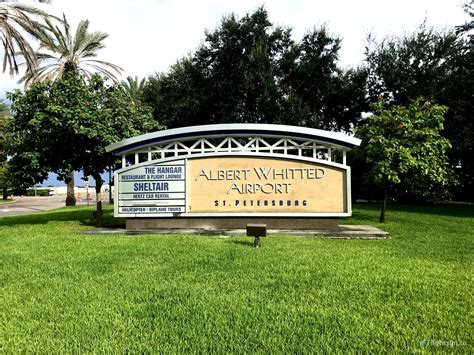
Albert Whitted Airport, opened in 1929, stands as a testament to St. Petersburg’s unusually deep aviation roots. The city famously launched the world’s first scheduled airline service in 1914, and the airport emerged on reclaimed waterfront land as a natural extension of that pioneering spirit. Named for Lt. James Albert Whitted, a naval aviator, the field quickly became home to blimps, flying boats, and early airline operations that connected Florida to a growing national aviation network. For decades, the airport has weathered redevelopment pressures, with community advocates ensuring that its historic presence remains intact. Modern upgrades in the 2000s strengthened its role as a vibrant center for flight training, air tourism, and light aviation, all within one of America’s most scenic downtown waterfronts.
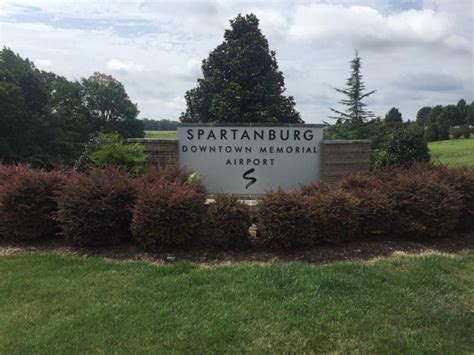
Spartanburg Downtown Memorial Airport: A Carolina Outpost Of Airmail And Early Prestige
When Spartanburg Downtown Memorial Airport began operations in 1927, it entered the aviation landscape not as a minor regional stop but as a recognized airmail field. Its early importance is illustrated by Charles Lindbergh’s appearance there during his national tour following his transatlantic triumph. The airport soon became a familiar waypoint for general aviation, training flights, and airshows that drew crowds from across South Carolina. Over time, the field incorporated memorials honoring local aviators and veterans, creating a civic space that intertwined aviation with community identity. Today the airport thrives as a general aviation hub known for its steady business traffic, aviation education, and deep historical continuity.
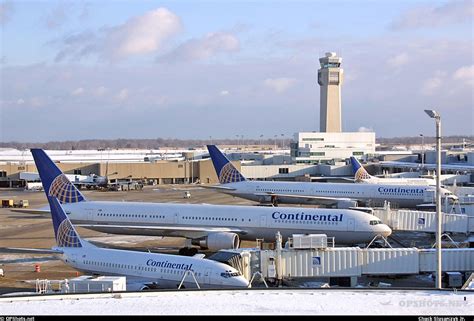
Cleveland Hopkins International Airport: A Pioneer Of Airport Infrastructure
Opened in 1925, Cleveland Hopkins International Airport was one of the first municipally owned airports in the country and an early incubator of the systems that now define global aviation. This airport introduced America’s first radio-equipped control tower, championed advanced airfield lighting for nighttime flight, and developed one of the earliest integrated rail-to-terminal links. Through the mid-20th century, Hopkins became a bustling center of air commerce, hosting major carriers and serving as a venue for air races that captured public imagination. Modern Hopkins continues that legacy with terminal redevelopment, cargo expansion, and sustainability programs that position it as an essential Midwest aviation corridor.
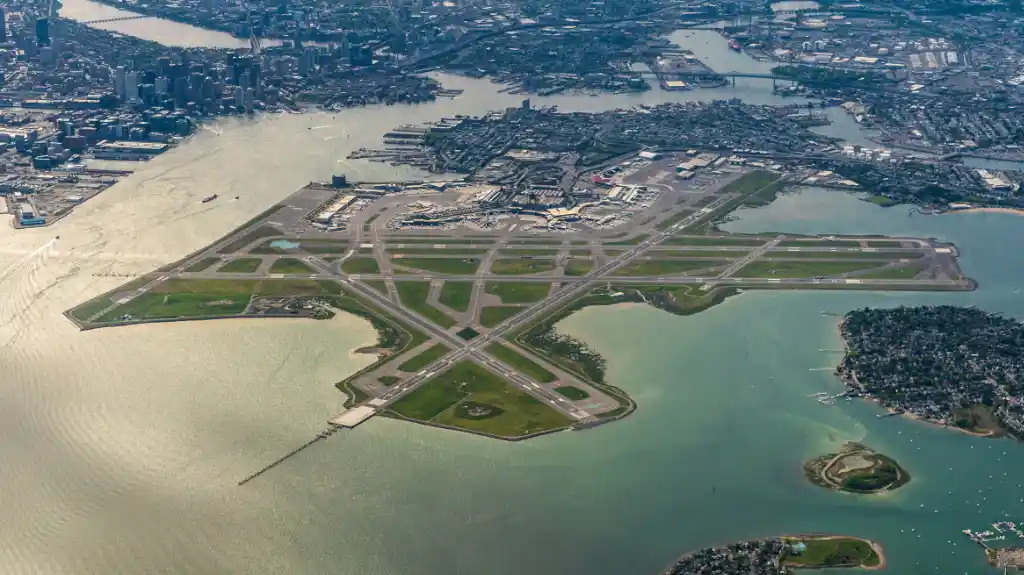
Logan International Airport: Boston’s Harbor-Born Global Gateway
Logan International Airport traces its origins to 1923, when it emerged on what were then harbor flats transformed through early 20th-century land reclamation. The field served military training missions and airmail routes before commercial passenger services expanded dramatically. Logan’s growth over the decades required bold engineering, including adding thousands of acres to the reclaimed harbor area to support jet-age runways and modern terminals. The airport’s Blue Line transit connection further cemented its role as New England’s international gateway. Today Logan handles significant transatlantic and long-haul service and continues adapting to environmental demands posed by its coastal footprint.
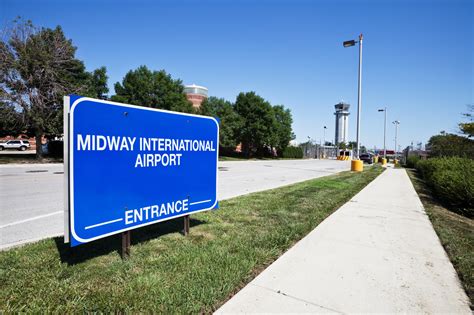
Midway International Airport: Chicago’s Early Aviation Powerhouse
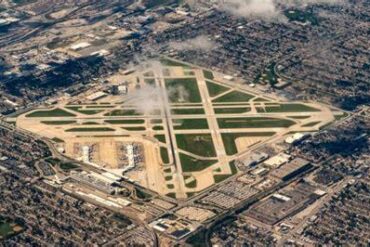
Midway International Airport launched in 1923 as Chicago Air Park, later becoming Chicago Municipal Airport before its postwar renaming. In the late 1940s, Midway gained worldwide distinction as the busiest airport on Earth, its square-shaped airfield serving as a model of compact urban aviation design. The airport helped define early commercial airline networks and hosted pioneering nighttime operations made possible by runway lighting innovations. While O’Hare eventually became Chicago’s primary hub, Midway retained a strong identity, evolving into a high-efficiency, short-haul oriented airport with one of the most convenient metropolitan locations in the United States.
Long Beach Airport: A California Classic Of Flight Schools And Aircraft Manufacturing
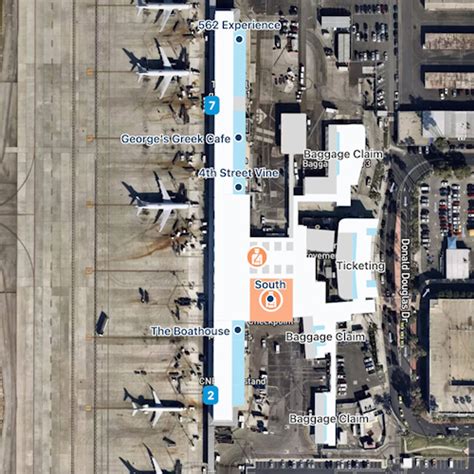
Long Beach Airport’s formal founding in 1923 was preceded by one of aviation history’s landmark moments: Cal Rodgers ending the first transcontinental flight on the nearby beach in 1911. From those humble beginnings, Long Beach became home to early flight schools, barnstorming exhibitions, and later one of the nation’s most important aircraft manufacturing centers, with Douglas Aircraft—and eventually McDonnell Douglas and Boeing—building iconic airframes on adjacent sites. The airport’s Streamline Moderne terminal remains an architectural jewel from the Golden Age of flight. Today Long Beach blends commercial service, general aviation, and proximity to aerospace industry talent, all while preserving its century-old heritage.
Minneapolis–St. Paul International Airport: From Speedway Field To A Global Hub
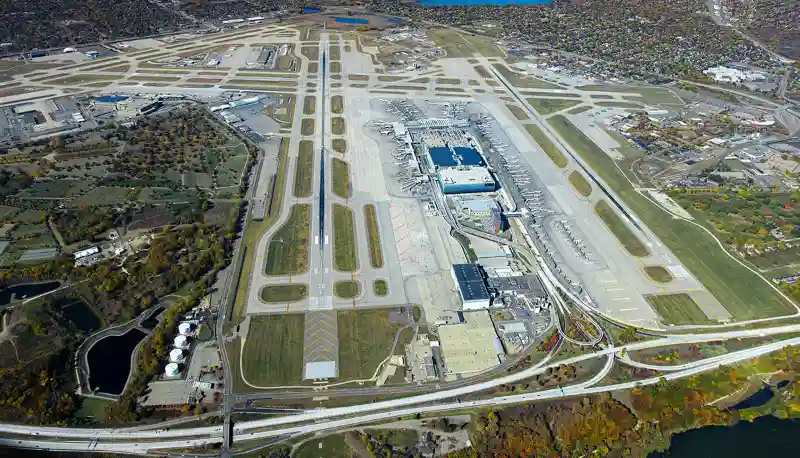
The Minneapolis–St. Paul International Airport began as Speedway Field in 1920, built on the grounds of a bankrupt racetrack. Its first wooden hangar served airmail operations before the field expanded to accommodate passenger services. Rechristened Wold-Chamberlain Field and later MSP, the airport became an essential base for Northwest Airlines, whose presence shaped the region’s aviation identity for decades. Today, MSP ranks among the nation’s most capable international airports, offering extensive domestic and transatlantic service while maintaining cargo, maintenance, and military operations. Its evolution from improvised racetrack airstrip to world-class hub captures the improvisational origins of early American airfields.
Stinson Municipal Airport: A Texas Home Of Aviation Pioneers
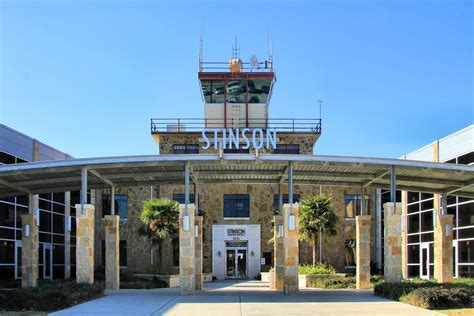
Stinson Municipal Airport opened in 1915 under the leadership of Marjorie, Katherine, and Eddie Stinson, whose flying school quickly became a magnet for trainees, exhibition pilots, and early municipal aviation services. It is widely known as the second-oldest continuously operating airport in the United States and the oldest west of the Mississippi. Throughout World War I and beyond, Stinson supported military training, barnstorming culture, and the growth of civil aviation in Texas. Today the airport serves as a vital general aviation asset for San Antonio, its historic terminal and runways preserved as part of an aviation heritage site listed on the National Register of Historic Places.
Pearson Field: A Century-Old Airfield With Global Connections
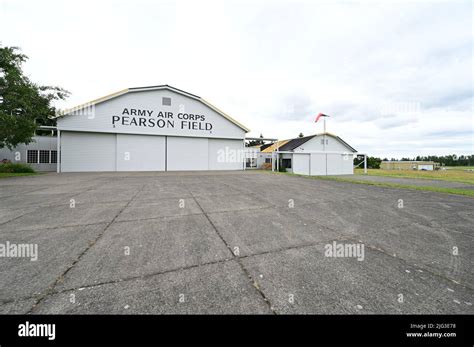
Pearson Field’s roots stretch back to 1905, when a dirigible touched down on the polo grounds of the Vancouver Barracks. Its first recorded fixed-wing flights in 1911 placed it at the forefront of American aviation history. The airport gained international attention in 1937 when Soviet aviator Valery Chkalov completed a groundbreaking transpolar flight from Moscow to Pearson Field, arriving in a Tupolev ANT-25. Through the decades, Pearson has retained its character as a military-linked, community-focused airfield. The adjoining Pearson Air Museum preserves rare artifacts from the early days of flight, while today’s pilots use the runway for training, events, and general aviation.
College Park Airport: The World’s Oldest Airport Still In Continuous Operation
Established in 1909, College Park Airport holds the distinction of being the oldest continuously operating airport in the world. The US Army Signal Corps invited Wilbur Wright to train military pilots there, embedding the field in aviation history from day one. Over the following decades, College Park hosted landmark experiments in radio navigation, early helicopter tests, and the nation’s first long-running airmail operations. Civilian flying began in 1911, and since then the airport has nurtured community aviation and education. Its museum, founded in 1981, chronicles more than a century of innovation. The single-runway airport remains active today, serving general aviation while preserving the birthplace of America’s earliest flight training.
Preserving The Nation’s Aeronautical Time Capsules
These ten airports form a living chronicle of American innovation, resilience, and cultural evolution. Some have grown into international gateways, others remain intimate general aviation fields, yet all share the distinction of uninterrupted operation through war, economic shifts, and sweeping technological change. They anchor their local communities in a heritage that continues to inspire pilots, travelers, and aviation enthusiasts. Their runways remain active not only in a practical sense but also as pathways into the origins of our modern aerial world.