Canada’s aviation story did not begin with gleaming terminals or intercontinental jet routes. It began with rough fields, frozen lakes, and a handful of daring pilots who saw opportunity where others saw wilderness. Long before aviation became routine, these early airfields stitched together a country defined by vast distances and challenging terrain. Today, a select few airports remain in continuous operation from those formative years, quietly carrying forward a legacy that predates modern infrastructure itself.
These airports are more than transit points. They are living artifacts—places where history has not been preserved behind glass, but continues to unfold on active runways. Each one reflects a different chapter in Canada’s development: border expansion, wartime mobilization, northern exploration, and the rise of commercial aviation. Together, they form a narrative of resilience and adaptation that spans nearly a century.
What makes these airports remarkable is not simply their age, but their continuity. They have endured economic downturns, technological revolutions, global conflicts, and even the temporary collapse of air travel during a pandemic. Through all of it, they remained operational—sometimes evolving dramatically, sometimes barely changing at all.
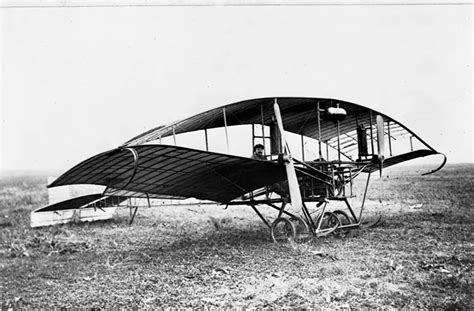
Windsor International Airport (YQG): A Border Gateway Born in Ambition
Windsor International Airport opened on September 8, 1928, at a time when the city itself was redefining its identity as a cross-border powerhouse. Originally named Walker Airport, after the influential Hiram Walker family, its inauguration drew an astonishing crowd of 20,000 spectators—an early sign that aviation was already capturing the public imagination.
This was no isolated development. Windsor was simultaneously constructing the Ambassador Bridge and the Detroit-Windsor Tunnel, positioning itself as a critical link between Canada and the United States. The airport fit seamlessly into that vision, offering a new dimension of connectivity that extended beyond roads and rails.
The Second World War reshaped its purpose almost overnight. In 1940, the Royal Canadian Air Force took control, transforming the airfield into No. 7 Elementary Flying Training School under the British Commonwealth Air Training Plan. The quiet optimism of civilian aviation gave way to the urgency of wartime training, as pilots prepared for combat in Europe.
After the war, Windsor transitioned back to civilian operations, but it carried forward the infrastructure and experience gained during those intense years. Over time, it expanded to include a 9,000-foot runway, one of the longest in Ontario, enabling it to handle larger aircraft and more diverse operations.
Today, Windsor International maintains a unique identity shaped by its geography. Its proximity to Detroit Metropolitan Wayne County Airport creates a cross-border dynamic rarely seen elsewhere. It serves as both a regional passenger hub and a cargo center, with FedEx Express maintaining a significant presence. It may not dominate headlines, but its strategic importance remains quietly undeniable.
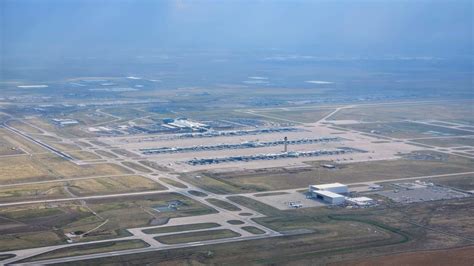
Ottawa Macdonald–Cartier International Airport (YOW): From Muddy Field to National Hub
Ottawa’s primary airport traces its roots back to a modest, almost accidental beginning. In the early 1920s, pilots began using a rough patch of land known as Hunt Club Field, a far cry from the structured airports of today. Its defining moment came on July 2, 1927, when Charles Lindbergh landed his Spirit of St. Louis before a crowd of 60,000 spectators during Canada’s Diamond Jubilee celebrations.
The event transformed the site overnight. Renamed Lindbergh Field, it quickly gained national attention, though the celebration was marked by tragedy when an escort pilot lost his life during the approach. This duality—innovation shadowed by risk—was characteristic of early aviation.
By 1928, the Ottawa Flying Club formalized operations, and the site became Uplands Aerodrome. However, financial challenges soon shifted control to the federal government, setting the stage for its next transformation. During the Second World War, Uplands became a cornerstone of the British Commonwealth Air Training Plan, hosting extensive pilot and navigation training programs.
By the 1950s, it had evolved into one of the busiest airfields in Canada, handling an extraordinary volume of aircraft movements. This growth culminated in its official designation as Ottawa International Airport in 1964, accompanied by a new terminal—famously delayed after a USAF F-104 Starfighter shattered its windows during a supersonic flyby.
Renamed in 1993 to honor Sir John A. Macdonald and George-Étienne Cartier, the airport now stands as Canada’s sixth-busiest, handling millions of passengers annually. Despite its modern scale, it retains a connection to its military past, sharing its airfield with the RCAF’s 412 Transport Squadron. It is a place where diplomacy, defense, and daily travel intersect.
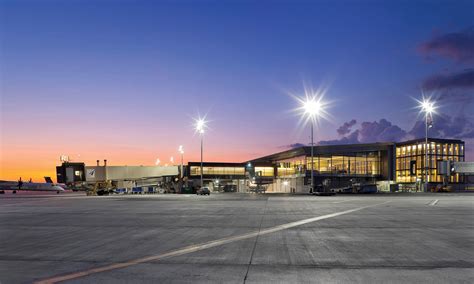
Winnipeg Richardson International Airport (YWG): The Prairie Powerhouse
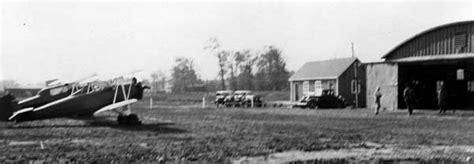
In May 1928, a group of aviation enthusiasts established an airfield on a stretch of prairie land outside Winnipeg. Named Stevenson Aerodrome after Captain Fred Stevenson, it began with minimal infrastructure: a small cabin, a modest hangar, and runways carved directly into the earth.
Yet within just three years, it achieved a milestone unmatched in Canada at the time. In 1931, it became the country’s first international airport, launching passenger and mail service to North Dakota. This early international connection hinted at its future importance.
Winnipeg’s central location made it indispensable during the Second World War. The federal government assumed control in 1940, turning it into the headquarters of the British Commonwealth Air Training Plan. The scale of operations was immense, with thousands of pilots trained and an unprecedented volume of military traffic passing through.
The airport’s significance did not diminish after the war. During the Cold War, it became home to the largest NATO air training facility in Canada. By the 1950s, it ranked among the nation’s busiest airports, a remarkable evolution from its humble beginnings.
Renamed Winnipeg Richardson International Airport in 2006, it now features a modern terminal inspired by the surrounding prairie landscape. Designed by César Pelli, the facility became the first airport terminal in Canada to achieve LEED certification, reflecting a commitment to sustainability.
Despite its growth, the airport remains rooted—both physically and symbolically—in the same prairie soil where it began. That continuity is part of its enduring identity.
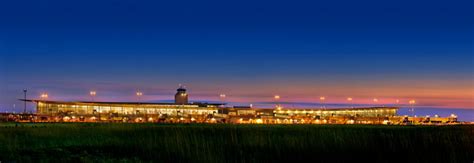
Montreal Metropolitan Airport (YUL): From Airships to a Modern Revival
Montreal Metropolitan Airport, long known as Saint-Hubert Airport, occupies a unique place in aviation history. Established in 1927 as part of the Imperial Airship Scheme, it was initially designed to support transatlantic dirigible travel—a concept that now feels almost fantastical.
Its early years were marked by a landmark event: the arrival of the British airship R100 in 1930, completing one of the first non-stop transatlantic passenger flights to Canada. This achievement cemented the airport’s reputation as a gateway for innovation.
For a time, Saint-Hubert served as Montreal’s primary commercial airport. However, the opening of Dorval Airport in 1941 shifted its role toward military operations. During the war, it hosted No. 13 Service Flying Training School, contributing to the Allied effort.
In the decades that followed, the airport settled into a quieter existence. It supported general aviation, flight training, and aerospace maintenance, including operations by Pratt & Whitney. While larger airports captured public attention, Saint-Hubert continued operating steadily, accumulating decades of uninterrupted service.
A major transformation is now underway. Rebranded as Montreal Metropolitan Airport, it is preparing for a new era with a modern passenger terminal scheduled to open in 2026. Developed in partnership with Porter Airlines, the facility will handle millions of passengers annually, offering a streamlined alternative to Montreal’s primary airport.
The design pays homage to its origins, incorporating elements inspired by airships. It is a rare example of an airport simultaneously honoring its past while actively reinventing its future.

Edmonton / Cooking Lake Airport: The Untamed Spirit of Bush Flying
If most airports are products of planning and policy, Cooking Lake Airport is the exception that proves the rule. Its origin story reads less like infrastructure development and more like frontier improvisation.
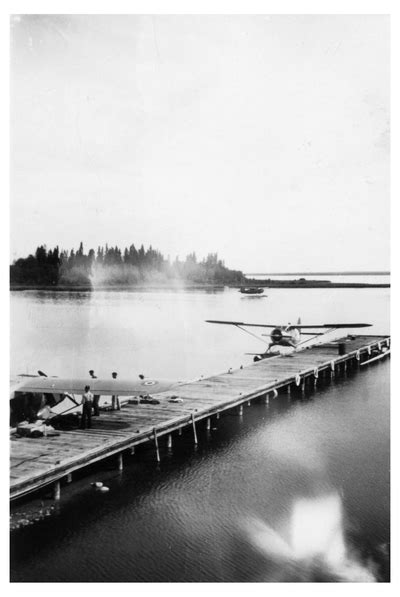
In 1926, a Vickers Viking IV amphibian aircraft landed on Cooking Lake during a search for a lost gold mine. The pilots, undeterred by the absence of formal permissions, established docks, fuel supplies, and operational facilities on the spot. Without official approval or even a runway, an airport was born.
This unconventional beginning did not prevent it from becoming a vital hub for northern aviation. Word spread quickly among bush pilots, and Cooking Lake became a staging ground for flights into remote regions. Legendary aviators such as Wop May, Punch Dickens, and Max Ward all operated from this base.
During the Second World War, it played a crucial role in supporting the construction of the Alaska Highway, serving as a logistical link for aircraft moving through the region. Its importance was not defined by passenger numbers or infrastructure, but by its operational utility in some of the most challenging conditions imaginable.
Remarkably, Cooking Lake has changed very little over the decades. It remains a functioning seaplane base, still tied to the same lake that gave it life. There are no grand terminals or international routes—just a continuity of purpose that reflects the essence of early Canadian aviation.
It stands as a reminder that not all progress requires transformation. Sometimes, endurance itself is the achievement.
A Legacy That Refuses to Fade
These five airports are not relics frozen in time. They are active participants in modern aviation, each adapting in its own way while preserving a direct connection to the past. From Windsor’s cross-border operations to Ottawa’s dual civil-military role, from Winnipeg’s prairie prominence to Montreal’s reinvention, and Cooking Lake’s steadfast simplicity, each tells a different story about what it means to endure.
Their continued operation challenges the notion that infrastructure must constantly reinvent itself to remain relevant. Instead, they demonstrate that resilience, adaptability, and a clear sense of purpose can carry even the oldest institutions into the future.
In a country as vast and varied as Canada, these airports are more than transportation hubs. They are landmarks of human ingenuity—proof that even in the earliest, most uncertain days of flight, the foundations of something lasting were already being built.