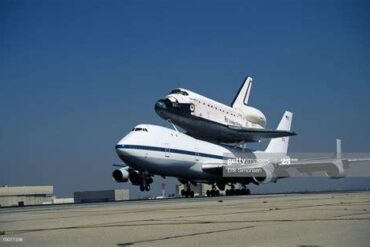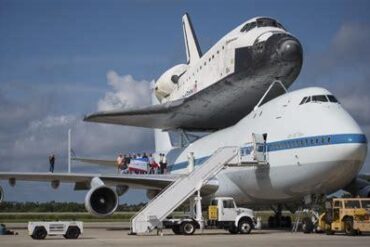
The Space Shuttle Endeavour, a symbol of American ingenuity and exploration, has finally found a permanent home — and it’s nothing short of spectacular. Nestled in the heart of Los Angeles’ Exposition Park, the Samuel Oschin Air and Space Center is a gleaming, visionary testament to both past achievements and the future of space education.
A Monumental New Era for the Endeavour
After 14 years of retirement, Endeavour now rests in one of the most architecturally and scientifically ambitious museum installations ever attempted. The California Science Center, just steps away from the Los Angeles Memorial Coliseum, is finalizing construction of the $425 million facility, scheduled to open by late summer 2025. Spanning an additional 200,000 square feet, this project isn’t just about display — it’s about reimagining how we experience spaceflight.
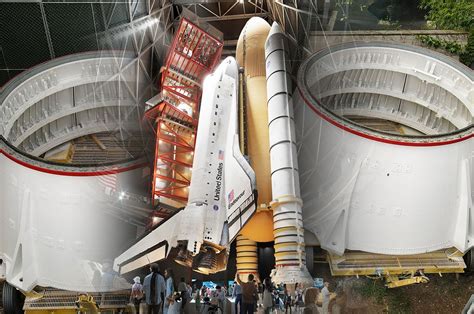
What sets the building apart is its futuristic, curved stainless steel design, which draws direct inspiration from the aerodynamic geometry of the shuttle itself — including its fuselage, wings, and vertical stabilizer. This design choice blurs the line between structure and spacecraft, evoking a sense of seamlessness between architecture and aerospace.
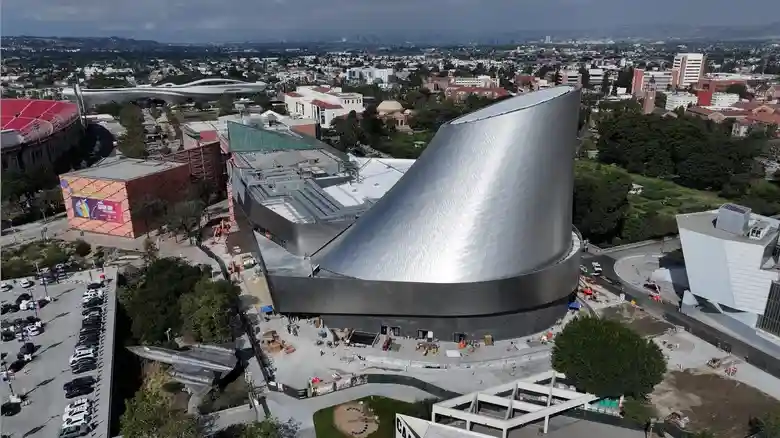
The structure rises an astonishing 20 stories and utilizes a diagrid structural system, composed of intersecting diagonal steel beams. This not only provides the strength to support the immense mass of the shuttle system but does so without interior columns, offering unobstructed views of Endeavour from multiple vantage points and levels. This approach to spatial engineering mirrors the elegance of orbital mechanics — functional, yet deeply aesthetic.
Go for Stack: A Historic Feat of Engineering
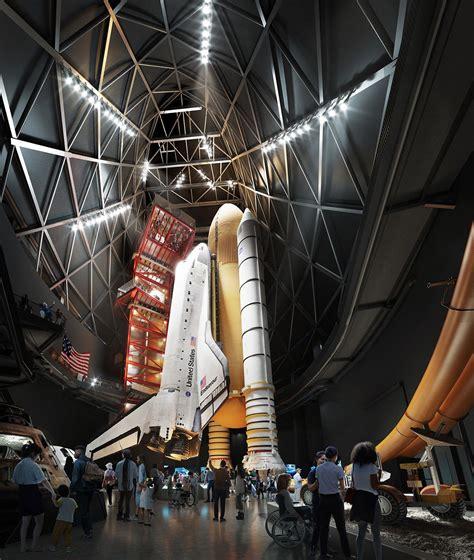
One of the most revolutionary engineering milestones in the history of museum exhibits occurred on January 30, 2024, with the commencement of the “Go for Stack” process. This extraordinary six-month undertaking marks the first time a complete Space Shuttle System has been vertically assembled outside of a NASA facility.
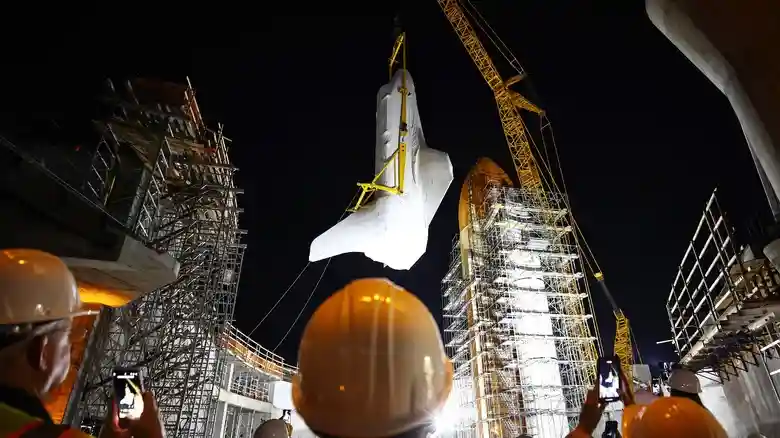
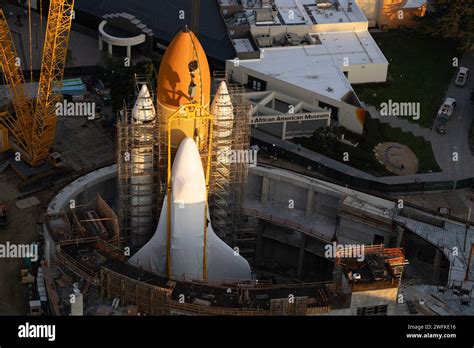
Engineers began by securing the aft skirts — critical base components — onto a concrete pad resting on seismic isolators, designed to withstand California’s seismic volatility. With this sturdy foundation in place, teams constructed the two Solid Rocket Boosters, attaching solid rocket motors and nose cones, culminating in the shuttle’s iconic tall, white towers.
Next, the ET-94 External Tank, a vibrant orange and colossal in scale, was hoisted into position and mated with the boosters. The finale? A breathtaking operation in which cranes delicately elevated the Endeavour orbiter, aligning and securing it into its final vertical stance. The result is the only authentic, full Space Shuttle stack on display globally — a towering, awe-inspiring totem to space exploration.
A Multi-Level Journey Through Air and Space
Once complete, the Samuel Oschin Air and Space Center will host three interwoven, multi-level galleries, designed to immerse guests in both aviation and space exploration. These include:
- The Samuel Oschin Shuttle Gallery
- The Korean Air Aviation Gallery
- The Kent Kresa Space Gallery
These exhibits span four floors, offering vertical access to history, quite literally. Visitors will be able to gaze up the full 20 stories of the Space Shuttle Endeavour and take a gantry elevator ride to nearly 200 feet, reaching the top of the orbiter for a bird’s-eye view of this technological marvel.
For those seeking a thrill, the facility features a 45-foot spiral slide connecting the second floor to the ground, offering not just fun but also symbolic descent from the heights of human innovation.
The Samuel Oschin Shuttle Gallery: A Centerpiece of Inspiration
This central gallery, dedicated exclusively to the Space Shuttle Endeavour, is the heart of the new facility. From ground level to sky-high viewing decks, visitors will trace the shuttle’s history, its missions, and its meaning.
The vertical stack configuration will allow for unprecedented spatial storytelling. Each level contextualizes a different phase of the shuttle’s operation — from launch pad, to ascent, orbit, re-entry, and landing. As the only exhibit of its kind, it offers an immersive journey through the shuttle era.
The Korean Air Aviation Gallery: A Flight Through Time
Dedicated to the wonders of aviation, this gallery showcases approximately 20 authentic aircraft, positioned both on the museum floor and suspended mid-air for dynamic viewing. The presentation spans decades of flight history, with each aircraft meticulously restored and presented within its historical context.
Aircraft types range from early 20th-century pioneers to cutting-edge jet technology, offering visitors a comprehensive view of human progress in flight. Through interactive exhibits and historical narratives, guests gain insight into the aerodynamic principles, technological hurdles, and strategic milestones that defined the evolution of modern aviation.
The Kent Kresa Space Gallery: A Timeline of Spaceflight
Equally captivating is the Kent Kresa Space Gallery, which provides a broad chronological exhibit of American space missions, featuring:
- Mercury MR-2 (featuring Ham the Astrochimp)
- Gemini 11 (part of the vital Gemini Program)
- Apollo-Soyuz Test Project Capsule (marking U.S.–Soviet cooperation)
This gallery is enriched by over 100 authentic artifacts from various NASA missions and an additional 100 interactive, hands-on exhibits that bridge the gap between history and education.
Visitors can engage in mission simulators, experiment with gravity-defying physics, and explore touchscreen reconstructions of mission data. This interactive approach transforms static exhibits into dynamic learning environments, especially compelling for younger audiences and aspiring engineers.
Architectural Innovation and Urban Impact
The Samuel Oschin Center isn’t just a shrine to aerospace — it’s a critical piece in the urban revitalization of Exposition Park. It joins the $1 billion Lucas Museum of Narrative Art, helping transform the area into a cultural and scientific epicenter. The synergy between these institutions is likely to redefine Los Angeles’ educational and museum landscape, bringing global attention and local engagement.
Importantly, general admission will be free, making this extraordinary facility accessible to all. This commitment to public education and outreach ensures that the dreams once kindled by Endeavour’s missions will continue to inspire millions of visitors, educators, and students for decades to come.
A New Launchpad for Imagination and Discovery
The relocation of Endeavour into a vertical launch configuration, paired with the innovative exhibit strategy of the Samuel Oschin Air and Space Center, offers a rare and powerful convergence of history, technology, and architecture. This is not merely a display — it is a living tribute to exploration, a structure designed not to house the past, but to ignite the future.
With its opening on the horizon, the Endeavour’s new home stands as a beacon of educational excellence, architectural ambition, and human curiosity. The final frontier is closer than ever — and it’s waiting in Los Angeles.