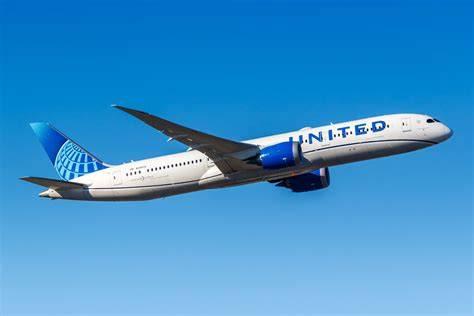
United Airlines has made a significant expansion of its long-haul network in September, introducing two major nonstop international routes from Newark Liberty International Airport within just four days. The rapid sequence began with the launch of Newark–Seoul on September 4 and was followed by the return of Newark–Tel Aviv on September 8, giving the airline another important link between its New York-area hub and the Middle East.
The timing is notable because United already operates more daily long-haul flights than any other US airline. Across the world’s scheduled passenger carriers, United is currently the leading operator by average daily long-haul departures, with approximately 161 departures per day in September. Emirates ranks second, followed by Delta Air Lines, Qatar Airways, and British Airways.
United’s strength is particularly visible across international regions. Among US carriers, it leads in long-haul flying to Africa, Asia, Australasia, Europe, and the Middle East, although American Airlines remains ahead in South America. The breadth of this network explains why United continues to look beyond its traditional hubs and why the carrier’s leadership has even discussed the possibility of establishing a major Florida hub.
United Airlines Launches 16-Hour Newark–Seoul Route
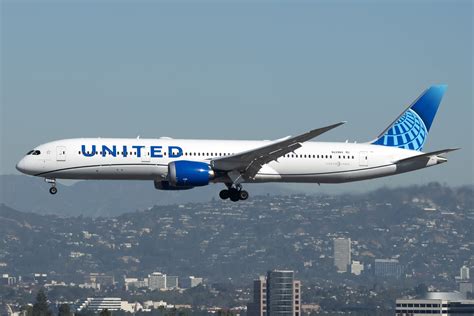
The first of the two new or returning long-haul services began on September 4, when United operated its inaugural nonstop flight between Newark and Seoul Incheon International Airport. The route gives United a second nonstop connection between the United States and Seoul, complementing its established service from San Francisco International Airport, the airline’s principal Pacific hub.
Newark–Seoul is an exceptionally long operation. The great-circle distance between the two airports is approximately 5,992 nautical miles (11,097 kilometers). That figure represents the shortest theoretical distance between the airports rather than the actual track flown. Real-world flight paths can be considerably different, particularly because aircraft may need to avoid restricted or unavailable airspace.
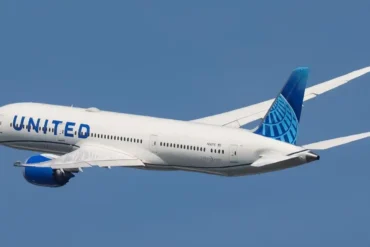
United is operating the route daily with the 257-seat Boeing 787-9, a configuration designed to carry substantially more passengers than the airline’s more premium-oriented 787-9 layouts. The cabin contains 48 Polaris business-class seats in a 1-2-1 configuration, followed by 21 Premium Plus seats in a 2-3-2 arrangement. Premium Plus passengers receive a 38-inch seat pitch, while the 39 Economy Plus seats offer 34 inches. The remaining 149 seats are standard economy seats arranged 3-3-3 with a 31-inch pitch.
The westbound journey is particularly demanding. United flight UA285 leaves Newark at 10:35 a.m. and arrives in Seoul at 3:20 p.m. the following day, with a scheduled flying time of 15 hours and 45 minutes. The return, UA286, is scheduled for 13 hours and 45 minutes because prevailing winds and the route structure produce a substantial difference between the two directions.
Newark–Seoul Gains a Second Nonstop Airline
United’s arrival also changes the competitive landscape at Newark. For the first time, two airlines are operating nonstop between Newark and Seoul, with United joining South Korean hybrid carrier Air Premia.
Air Premia has served the New York area since 2023 and has established Newark as an important gateway for its North American network. The airline has previously highlighted the strength of Seoul as a local market from Newark, noting that demand to Seoul exceeds the combined local traffic to Tokyo Haneda and Tokyo Narita.
That competition has an important impact on pricing. With two airlines serving the market nonstop, average fares from Newark to Seoul are significantly lower than those from New York’s John F. Kennedy International Airport. For passengers, that creates additional choice, but for airlines it also means the route may produce lower yields despite strong demand.
United’s decision to use a relatively high-capacity 787-9 therefore makes strategic sense. The airline can spread the substantial costs of a nearly 16-hour flight across more passengers while still offering its full Polaris and Premium Plus products.
United Restores Newark–Tel Aviv After War-Induced Suspension
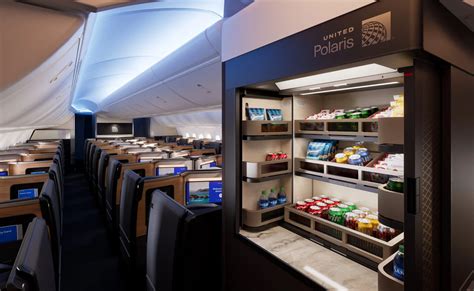
Only four days after launching Newark–Seoul, United made another major international move. On September 8, the airline resumed nonstop service between Newark and Tel Aviv Ben Gurion Airport after suspending the route because of the war.
The restart followed Delta Air Lines’ return to Israel from New York JFK two days earlier. American Airlines remained the major US carrier yet to resume its Israel service, although it was scheduled to return to the market in March 2027 unless circumstances change.
United currently operates two daily flights between Newark and Tel Aviv, using the 313-seat Boeing 787-10. The route covers approximately 4,946 nautical miles (9,160 kilometers) on a great-circle basis, making it the airline’s second-longest 787-10 operation. Only United’s Chicago O’Hare–Tokyo Haneda service is longer this month.
The Newark–Tel Aviv market is also much larger than the route’s suspension might suggest. OAG Traffic Analyzer data for the 12 months through July 2026 recorded approximately 418,000 round-trip passengers between the two airports. That made Newark–Tel Aviv the second-largest US-Israel market.
United and El Al dominate nonstop traffic, with approximately 94% of passengers using the two nonstop airlines. Connecting alternatives include Vienna through Austrian Airlines, Dubai through Emirates, and Warsaw through LOT Polish Airlines.
Three Daily Newark–Tel Aviv Flights Planned for November
United is not merely restoring its previous presence on the route. The airline plans to increase capacity further from November 2, when Newark–Tel Aviv is scheduled to reach as many as three daily flights.
The additional operation will use the 257-seat Boeing 787-9, while the existing services continue with the 787-10. This gives United flexibility to match aircraft capacity with demand across different departure times.
The scheduled flights also illustrate how dramatically direction affects long-haul flying times. Newark–Tel Aviv services are scheduled to take around 10 hours and 25 minutes westbound, while the return journey can take approximately 12 hours and 5 minutes. The difference reflects prevailing winds and the operational realities of long-distance flights between North America and the Middle East.
United’s Wider Middle East Network Is Still Being Rebuilt
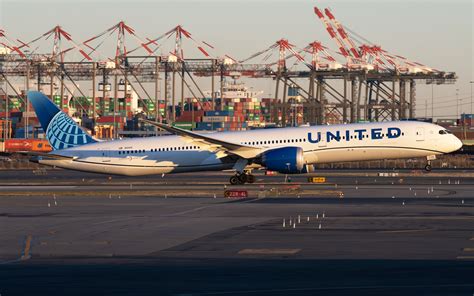
The two September developments form part of a much broader reconstruction of United’s international network. The airline has scheduled five routes serving two Middle Eastern airports between October 2026 and July 2027, although the timetable remains subject to geopolitical developments.
Newark–Tel Aviv is already operating with up to 18 weekly 787-9 and 787-10 flights. United is scheduled to restart Chicago O’Hare–Tel Aviv on October 24 with four weekly Boeing 787-8 flights. The following day, Washington Dulles–Tel Aviv is expected to return with three weekly 787-8 flights.
On October 28, United is scheduled to resume San Francisco–Tel Aviv with three weekly 787-9 flights. The network will then expand again in March 2027, when Newark–Dubai is scheduled to return with daily Boeing 777-300ER service.
That Dubai route is particularly significant because United has not operated it since the outbreak of the war in February 2026. The service is planned in cooperation with Emirates, building on the partnership between the two carriers that includes codesharing and reciprocal loyalty and lounge benefits.
Two Long-Haul Launches Show United’s International Strategy
United’s decision to introduce Newark–Seoul and restore Newark–Tel Aviv only four days apart demonstrates the importance of Newark as a long-haul gateway. The airport gives United direct access to one of the largest metropolitan markets in the United States while providing connections throughout the carrier’s domestic network.
The Seoul launch strengthens United’s position in Asia and creates another nonstop option for passengers traveling between the New York region and South Korea. The Tel Aviv restoration, meanwhile, reestablishes a strategically important Middle Eastern connection after a prolonged interruption caused by geopolitical instability.
Together, the two routes highlight a central feature of United’s international strategy: the airline is willing to deploy some of its largest and longest-range aircraft on markets where demand can support nonstop service. The 15-hour-45-minute Newark–Seoul flight is the clearest example, while the return of Newark–Tel Aviv shows how quickly network plans can change when geopolitical conditions improve.
United’s international schedule remains exposed to further changes, particularly across the Middle East. But with Seoul now operating nonstop from Newark and Tel Aviv back in the schedule, the airline has taken two substantial steps toward rebuilding and expanding its long-haul network in just four days.