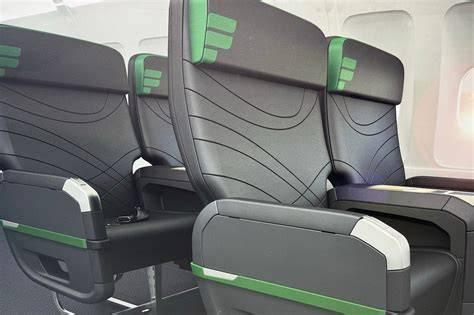
Frontier Airlines is officially moving beyond its long-standing reputation as a no-frills ultra-low-cost carrier. The airline has confirmed that retrofitting work on its fleet begins this month, with the first of its new First Class cabins scheduled to enter service on March 5, 2027. The move marks one of the most significant product overhauls in Frontier’s history, pairing eight premium seats per aircraft with in-seat power outlets and Starlink WiFi across the Airbus A320 family fleet. Details of the rollout were first surfaced in a leaked internal document obtained by View From The Wing, outlining both the physical retrofit timeline and the commercial strategy Frontier will use to fill those seats before the official launch.
8 First Class Seats Arrive in a Two-by-Two Layout
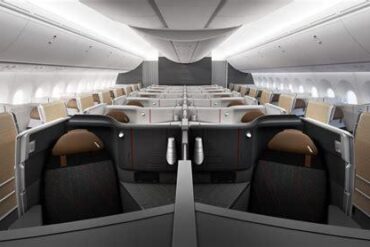
Every aircraft in Frontier’s fleet belongs to the Airbus A320 series, and the carrier has been steadily taking delivery of newer A320neo and A321neo jets. Under the retrofit plan, each plane will receive eight new First Class seats arranged in a two-by-two configuration occupying the first two rows of the cabin. The seats are being supplied by Italian manufacturer Geven, which Frontier selected for its Comoda model — a 21-inch-wide premium seat first showcased at the annual Aircraft Interiors Expo in Hamburg, Germany. The name Comoda translates from Italian as “comfortable,” a fitting label for a product designed to shift Frontier’s front cabin away from economy with a blocked middle seat toward something genuinely premium.
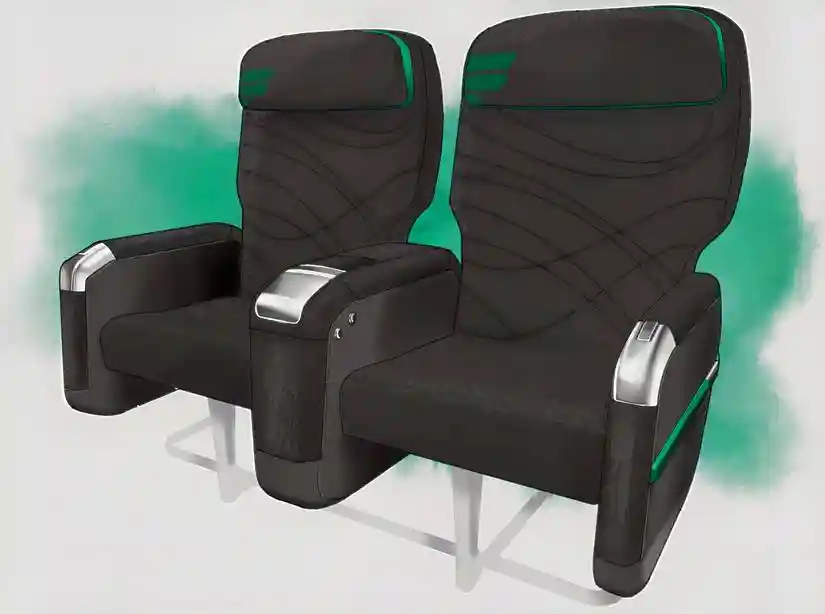
Frontier leadership has already hinted that the eight-seat figure may not be the ceiling. On a July earnings call, the airline indicated it could expand beyond eight seats in First Class on certain aircraft types, particularly as larger A321neo jets join the fleet. That flexibility suggests the initial configuration is a baseline rather than a final design, giving Frontier room to scale premium capacity if demand proves strong on longer domestic routes where the carrier competes directly with Southwest, Spirit’s successor networks, and the legacy majors.
UpFront Plus Bridges the Gap Before March 2027
Between the start of retrofits and the official First Class launch, Frontier will sell the newly installed seats as UpFront Plus, giving passengers early access to the hardware before the full product goes live. Critically, no cabin service changes will accompany those bookings until the official rollout date, meaning early adopters get the seat, the extra space, and access to the new amenities but not the finalized premium experience. The internal messaging makes clear that UpFront Plus as a product will become a thing of the past once First Class launches, retiring the old model of a standard economy row with extra legroom and a blocked middle seat — a setup comparable to the “Euro-biz” product flown by several European carriers.
To prevent confusion during the transition, Frontier’s seating page will tell passengers exactly which version they are booking, flagging whether the seats up front are the new First Class or the legacy UpFront Plus configuration. That transparency matters on a carrier where travelers are accustomed to paying separately for carry-on bags, checked luggage, and onboard refreshments, and where product expectations are set low by design.
Starlink WiFi and Power Outlets Reach Every Seat
The headline amenity alongside First Class is Starlink WiFi, which promises high-speed data and video streaming across the fleet — a capability that could reset expectations for a budget carrier. Frontier has not announced Starlink pricing, and passengers should anticipate a fee unless the airline makes a dramatic departure from the ancillary revenue model that underpins its low base fares. For context, Southwest Airlines and United Airlines both offer Starlink free to members of their frequent flyer programs through sponsorship arrangements, a benchmark Frontier may eventually be pressured to match.
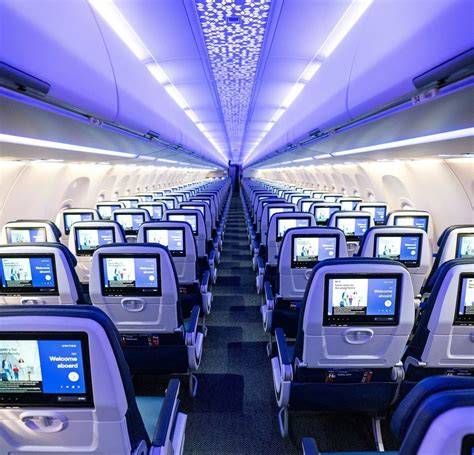
In-seat power outlets will be installed at every seat as part of the same retrofit, though the memo did not specify whether Frontier will use traditional AC outlets, USB-A, or USB-C ports. Either choice represents a meaningful upgrade for passengers on longer segments who currently travel without any charging option. The memo also left open what the broader “cabin refresh” entails beyond First Class — possibilities include all-new seating, larger overhead bins, and updated cabin lighting. Frontier’s NEO aircraft already feature larger bins and Airbus “Airspace” lighting, so the carrier could bring older planes up to that standard for fleet-wide consistency.
A Delayed Launch With Real Competitive Upside
Frontier originally announced a new First Class in 2024 with a planned 2025 debut, a timeline that has since slipped to the March 2027 date now on the calendar. The delay gave the airline time to finalize seat selection and sequence retrofits around an active delivery schedule that also includes its first ex-Spirit A321neo, one of ten nearly-new jets transferring between the former ultra-low-cost rivals. That incoming metal adds capacity and, potentially, a faster path to outfitting more aircraft with the premium cabin.
The strategic opportunity extends beyond the eight seats themselves. Frontier has not yet announced whether drinks and snacks will be included in First Class, and for now the product appears to rest on a wider, more comfortable seat paired with power and connectivity. Yet Starlink WiFi could pull in travelers across every cabin who previously dismissed Frontier outright, converting connectivity into a reason to book rather than an afterthought. If Frontier layers genuine service improvements onto the hardware, the retrofit could reposition the airline in a segment where passengers increasingly expect premium touches even at low fares.