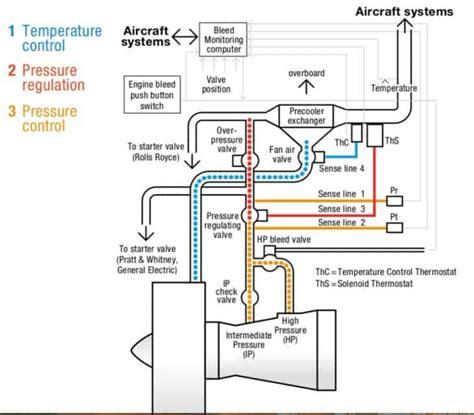
Modern jet engines cannot simply be started by pressing a button. They require a substantial volume of compressed air to begin rotating the engine’s core components before introducing fuel and ignition. This airflow—referred to as bleed air—is typically provided by the aircraft’s Auxiliary Power Unit (APU) or, in some cases, a ground-based air cart. The bleed air spins the engine’s compressor section, allowing the ignition system to introduce fuel in a controlled and stable burn.
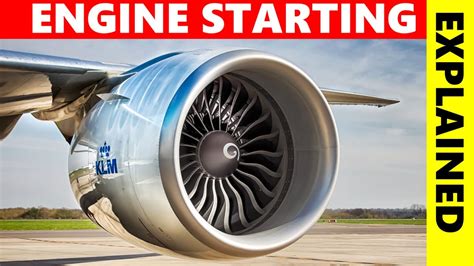
Once one engine is operational, it produces enough bleed air to initiate the start sequence for the other engine through a cross-bleed line—a system of pneumatic ducts and valves designed to route high-pressure air. The process avoids the need to reengage external support equipment or restart the APU, thus saving time and reducing fuel consumption. However, the dynamics of a cross-bleed start necessitate careful consideration of thrust levels and location.
What Happens When the APU Is Inoperative?
In ideal conditions, the APU handles all starting duties while the aircraft is still at the gate. But if the APU fails or is inoperative—whether due to maintenance restrictions, fuel savings, or airport regulations—the aircraft must rely on alternate methods. The most straightforward approach is to use a ground air cart, which forces compressed air into the engine’s start system. However, this too has its limitations.
Airports with high gate density or minimal ground equipment may lack available carts, especially at remote or under-equipped stations. Once the first engine is started—usually #1, the left-hand engine—its bleed air can power the start sequence for the second engine. This is where the cross-bleed start comes into play.
How the Cross-Bleed Start Works in Practice
To perform a cross-bleed start, the aircraft must meet specific preconditions:
- One engine must be fully operational.
- The aircraft must have adequate pneumatic ducting and pressure monitoring systems.
- The running engine must be throttled above idle to generate sufficient bleed air.
Because increased throttle produces significant jetblast, cross-bleed starts are not performed near terminals. Instead, they occur on taxiways or run-up areas designated by Air Traffic Control (ATC). Pilots typically notify ATC during pushback or taxi to coordinate the operation without affecting ground safety or traffic flow.

During the procedure, the flight crew configures the bleed valves to allow air to flow from the operating engine to the starter motor of the second engine. Once the airflow stabilizes, the second engine spools up to the required RPM for fuel introduction. After combustion stabilizes and the engine reaches idle, the bleed valves are returned to their standard configuration, and both engines operate normally.
Passenger Confusion: What It Sounds and Feels Like
From the cabin, a cross-bleed start may seem dramatic. The sound of a single engine spooling up before movement, followed by a sudden increase in noise or vibration partway through taxi, often prompts unease. A public announcement, as in the case of the Boeing 737 departure referenced by the passenger, helps manage expectations, though wording like “it’s not usually normal procedure but today it is” can backfire.

The reality is that this method is certified, documented, and safely executed thousands of times globally each year. Aircraft checklists account for it, and flight crews undergo recurrent training for these non-standard but anticipated scenarios. Once both engines are operational, the flight proceeds exactly as it would under standard two-engine taxi conditions.
Historical Context: Multi-Engine Cross-Starts
Large aircraft such as the Boeing 747 and Douglas DC-8 have long used cross-start methods. These aircraft allow sequential starting of multiple engines using bleed air, beginning with either the APU or a ground cart. Early models of the KC-135 Stratotanker, a military derivative of the Boeing 707, even featured cartridge start systems. These used explosive charges to spin up engines in seconds—an extreme method designed for Cold War-era urgency.
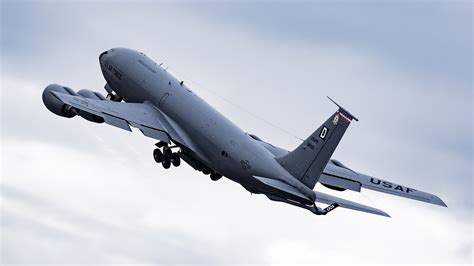
In emergencies or isolated locations, pilots of older aircraft might perform a full four-engine cross-start without any external equipment. Though noisy and inefficient, these procedures were critical for strategic independence in wartime or expeditionary scenarios. Today’s aircraft rely on more refined systems that emphasize efficiency, redundancy, and regulatory compliance.
Technical Details: Why It’s Not Just “Airflow”
The term “airflow” can mislead the layperson into thinking engines are started by slipstream air moving through the nacelle. In reality, the system involves pressurized pneumatic bleed air routed through a network of pipes and valves—not simply air rushing into the intake. These ducts also support other critical systems like cabin pressurization, air conditioning, and wing anti-icing.
Bleed air is extracted from the engine compressor stage, where pressure and temperature are high enough to energize the starter turbine without external force. This process requires precise control, as misrouting bleed air or operating valves out of sequence could lead to temperature spikes, equipment wear, or system imbalances.
Operational Considerations and Limitations
Cross-bleed starts are not without limitations. Asymmetric thrust during single-engine taxi can cause control challenges, particularly in icy, slushy, or contaminated surface conditions. Pilots are trained to avoid cross-bleed starts in such scenarios unless absolutely necessary. Furthermore, the increase in thrust to power the pneumatic system momentarily raises fuel consumption and engine wear, though the overall savings from skipping the APU typically justify the approach.
Some airlines perform single-engine taxi routinely to reduce fuel burn, noise, and carbon emissions. In those cases, the second engine is often started closer to the runway threshold, where alignment and takeoff clearance are imminent. Standard operating procedures vary slightly by airline, aircraft type, and airport layout, but always emphasize predictability and safety.
Conclusion: A Normal Procedure for Abnormal Situations
While the idea of starting one of the engines using air from another may seem exotic to passengers, it is a proven, regulated, and widely practiced method across the aviation industry. Known as the cross-bleed start, this technique provides flight crews with an efficient way to resolve APU outages, conserve ground resources, or streamline operations without compromising safety.
Pilots, mechanics, and dispatchers are trained extensively on these procedures. They coordinate with ATC, adhere to operational checklists, and leverage decades of system redundancy engineering. In the sky and on the ground, there is rarely a single method for achieving an outcome—only the safest, most appropriate method for the conditions at hand.
So the next time a pilot announces a single-engine taxi followed by a cross-bleed start, passengers can rest assured: this is not a sign of trouble, but rather a demonstration of the aircraft’s robust and flexible engineering.