Commercial aircraft braking during landing is a complex, multi-system process that ensures a safe deceleration from high speeds. While many passengers may feel only the jolt of slowing down, beneath the surface lies an intricate network of hydraulic systems, mechanical components, and aerodynamic aids all working in tandem. In this article, we explore how the brakes on commercial aircraft function during landing, detailing the critical systems involved and the engineering behind them.
The Core of Aircraft Braking: Multi-Disc Brake Systems
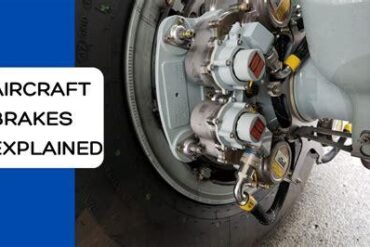
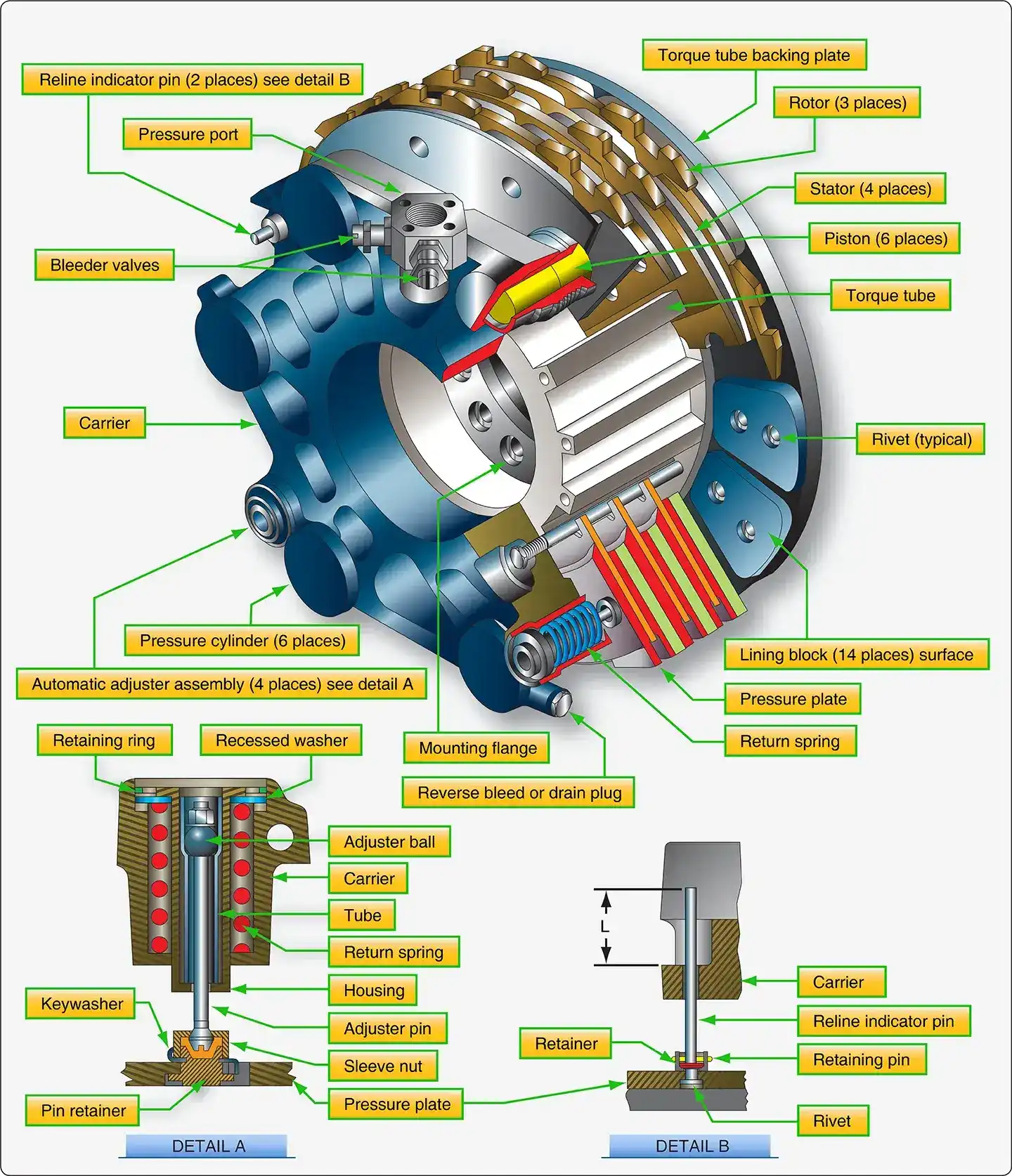
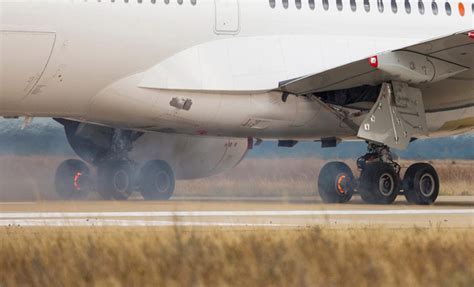
At the heart of an aircraft’s braking system lies a multi-disc carbon brake assembly. Unlike a car’s single-disc brake, commercial aircraft use multiple interleaved discs and stators to handle the enormous energy generated during landing. Each wheel (excluding nose wheels) is equipped with these brakes, designed to convert kinetic energy into heat through friction. The brake assembly typically consists of alternating layers of rotating discs (attached to the wheel) and stationary stators (fixed to the axle). When the pilot applies braking force via the foot pedals, hydraulic pistons compress these layers, creating significant friction to slow the wheel.
This design increases the surface area for heat dissipation and braking force, necessary for stopping a 150,000+ kg aircraft landing at speeds over 150 knots. The materials used, often carbon-carbon composites, withstand extreme temperatures that can exceed 1,000°C during heavy braking events.
Hydraulic Power and Redundancy in Braking Systems
The braking system is powered by multiple redundant hydraulic systems. Each brake is supplied by at least two independent hydraulic sources, ensuring braking capability even in the event of a system failure. The pilot’s brake pedals actuate hydraulic valves controlling the pressure sent to each brake unit. This pressure is modulated automatically by the aircraft’s anti-skid system, which prevents wheel lock-up by rapidly adjusting brake pressure if a skid is detected.
The anti-skid system works similarly to an automobile’s ABS but is tuned for the unique conditions of aircraft operation. By monitoring individual wheel speeds and comparing them to calculated reference speeds, the system ensures optimal braking force without compromising control or tire integrity.
Thrust Reversers: Engine Power Turned Backward
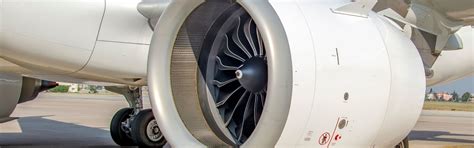
Beyond wheel brakes, commercial jets employ thrust reversers to aid deceleration. Once the aircraft has touched down, pilots deploy mechanisms that redirect the engine’s exhaust forward instead of backward. This redirection of thrust generates a powerful backward force, slowing the aircraft without relying solely on wheel braking.
Not all engines are equipped with thrust reversers, but on those that do, the system is engaged by moving mechanical panels or clamshell doors that guide the airflow. The effectiveness of thrust reversal is greatest at higher speeds and diminishes as the aircraft slows.
Aerodynamic Braking: Spoilers and Airbrakes
In addition to mechanical and engine braking, commercial aircraft utilize aerodynamic braking to slow down. This involves deploying spoilers and airbrakes on the wings—panels that disrupt airflow and increase drag. Upon landing, these spoilers automatically deploy, reducing lift and transferring more weight onto the wheels, thereby improving the effectiveness of wheel braking.
Spoilers also play a critical role in maintaining stability during deceleration, ensuring that the aircraft remains firmly planted on the runway surface. This combined aerodynamic drag significantly reduces the reliance on mechanical braking, prolonging brake life and reducing thermal stress.
Managing Heat: Brake Cooling and Fire Prevention
One of the greatest challenges in aircraft braking is heat management. The kinetic energy converted into heat during landing can push brake temperatures into ranges that glow visibly red. Modern aircraft include brake temperature monitoring systems that alert pilots and ground crews of overheating risks.
In extreme scenarios, such as an aborted takeoff (called Rejected Takeoff or RTO), brakes must absorb even more energy, leading to higher temperatures. Airports are equipped with emergency response teams trained to cool overheated brakes, preventing potential tire or brake fires. Some aircraft are also fitted with brake cooling fans to accelerate cooldown while parked at the gate.
Autobrake and Pilot Controls: Precision Braking Management
Pilots control braking through a combination of manual input and autobrake systems. The autobrake allows pilots to preset a deceleration level before landing, enabling automatic modulation of brake pressure upon touchdown. This system ensures consistent and predictable braking performance while allowing the pilot to focus on other critical landing tasks.
Autobrake settings are usually selectable via a rotary knob with options ranging from low to high deceleration levels. In the event of a rejected takeoff, the RTO mode provides maximum braking force automatically.
Manual braking can override autobrake by pressing the pedals, granting pilots full control when needed. Additionally, pilots can perform differential braking—applying more braking force on one side than the other—to assist with directional control during low-speed taxi or emergency situations.
Safety Considerations and System Redundancy
Aircraft braking systems are engineered with multiple layers of redundancy and fail-safes. Each brake assembly is powered by at least two hydraulic sources; the anti-skid system monitors each wheel independently; the autobrake ensures braking even if pilot input is delayed; and thrust reversers and spoilers provide additional deceleration pathways.
These overlapping systems are critical for safety, especially considering the short runway lengths at some airports and variable weather conditions. Brake wear and temperature are meticulously tracked, with maintenance procedures requiring regular inspection, pad replacement, and system checks to ensure reliability.
In Summary: An Orchestra of Systems Ensuring Safe Deceleration
The braking of a commercial aircraft during landing is far more than simply pressing a pedal. It is an orchestrated effort involving multi-disc friction brakes, thrust reversers, aerodynamic spoilers, hydraulic power, and computerized anti-skid systems. Each component plays a critical role in safely bringing a 100-ton machine from landing speed to taxi speed within a few thousand feet.
Next time you feel the deceleration after touchdown, remember that beneath your feet, these systems are working in concert, engineered for redundancy and precision to ensure every landing ends safely.