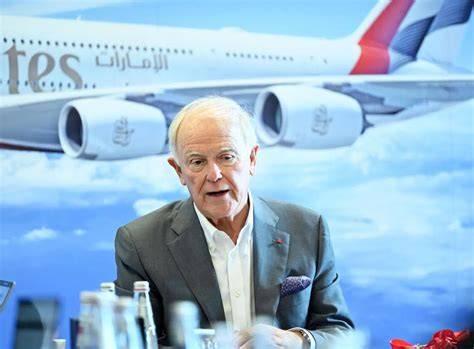
Emirates President Sir Tim Clark has put three American airports on the record as candidates for the airline’s next nonstop route to Dubai, naming Denver International Airport, Detroit Metropolitan Wayne County Airport and Philadelphia International Airport during an interview at Routes World in Frankfurt. None of the three currently has a nonstop link to Dubai International Airport, and the disclosure matters because Emirates has not opened a brand-new US station since it began flying to Miami International Airport in June 2021, replacing its nearby Fort Lauderdale service. The carrier’s American map stands at 12 airports: Boston, Chicago, Dallas, Houston, Los Angeles, Miami, Newark, New York, Orlando, San Francisco, Seattle and Washington, DC. Each of the three named cities would extend that footprint into territory Emirates has studied for years without committing aircraft to it.
Why Denver Is the Most Talked-About Emirates US Route
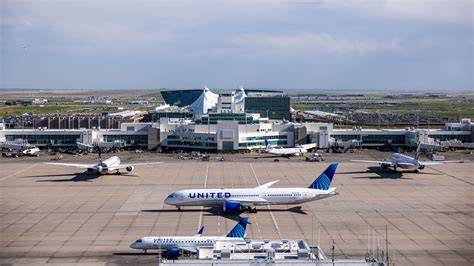
Denver carries the longest paper trail. In spring 2025, then-airport CEO Phil Washington said the airport’s next new route would “likely be Dubai with Emirates,” a statement the carrier answered by insisting it had no official plans to serve the city. The strategic logic is hard to miss: DEN is the only United Airlines hub Emirates does not already serve, while the Dubai airline already flies to six United hubs — Newark, Chicago, Houston, Washington, San Francisco and Los Angeles — and the two carriers have been codeshare partners since 2023. Denver is also the largest US market without any nonstop service to the Gulf region; its longest route is Turkish Airlines’ 6,130-mile (9,865 km) flight to Istanbul Airport, launched in June 2024. With United still absent from its own Newark–Dubai route since February and not planning to return until March 2027, Emirates remains the partnership’s only nonstop bridge between the US and Dubai, sharpening the case for a second United stronghold.
Detroit and Philadelphia: Delta and American Hub Ambitions
Detroit ranks among Delta Air Lines’ largest hubs, giving Emirates a potential anchor in the Midwest that bypasses its existing East Coast gateways. Philadelphia is an American Airlines fortress hub and the carrier’s fifth-largest by flights, functioning as a key transatlantic gateway — and it is the only one of the three already served by a Gulf carrier, with Qatar Airways resuming Doha flights in August shortly after American permanently dropped its own Philadelphia–Doha route in June. That precedent proves local demand while also handing Emirates a rival to undercut. The geographic snag is that Philadelphia sits roughly 80 miles (129 km) from Newark and 94 miles (151 km) from JFK, two airports Emirates already serves. By Great Circle distance, Philadelphia would be the shortest of the three routes at 6,928 miles (11,150 km), followed by Detroit at 7,083 miles (11,400 km) and Denver at 7,758 miles (12,485 km) — long, but still short of Emirates’ longest US link, Los Angeles at 8,326 miles (13,399 km).
Aircraft Deliveries and Capacity Decide Whether These Routes Launch
Clark declined to specify which aircraft would fly any of the three cities, and none of them currently receives year-round Airbus A380 service, though Denver has hosted seasonal A380 flights by Lufthansa over the past two summers. The real constraint is fleet timing. Emirates is still waiting for its first Boeing 777-9, now expected in May or June 2027 — seven years later than originally planned. Until the 777X and A350s arrive, the airline is stretching the lives of its A380s and 777-300ERs through a $5 billion cabin retrofit program, and it now expects to keep A380s flying into the early 2040s. Emirates has also told Boeing it will reject early-production 777X airframes and accept only newly built examples because of the change-incorporation work those jets require. Clark pointed to an order book exceeding 300 Airbus A350s, Boeing 787s and Boeing 777Xs, arguing there are very few cities worldwide the airline could not reach if it chose to.
Emirates’ US Network Adds the A350 as Recovery Nears Full Strength
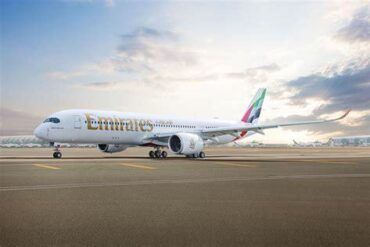
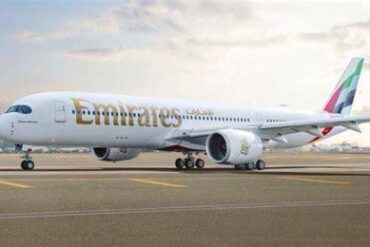
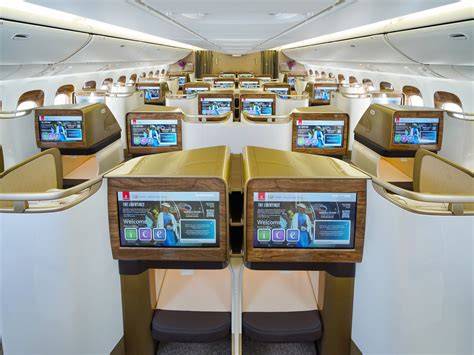
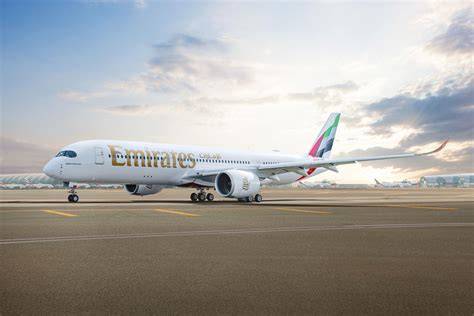
The fleet picture is already changing on existing routes. Emirates is introducing the Airbus A350-900 to its US network from November 1, replacing the 777-300ER to Orlando with 298 seats — 32 business, 28 premium economy and 238 economy. On capacity, Clark said the airline has rebuilt 91% of its pre-crisis capacity, with revenues already ahead of 2025 despite airspace closures and higher fuel costs, and confirmed the carrier remains profitable on strong demand across key markets. Emirates has also gained from international airlines pulling out of Dubai: DXB’s dominant carrier now faces less competition, and United remains one of 17 international carriers yet to resume Dubai flights. That vacuum reinforces Emirates’ leverage at its home hub and gives it room to weigh new US cities once aircraft allow.
What the Three-City Shortlist Means for US Travelers
For travelers, the shortlist signals where nonstop Dubai options could emerge first. Denver would unlock the Mountain West and connect the last major United hub outside Emirates’ map; Detroit would serve Delta loyalists across the industrial Midwest; Philadelphia would add a third Gulf nonstop to a city that just lost American’s Doha link. Each route depends on aircraft deliveries, slot availability and bilateral capacity, and Clark framed the cities as possibilities rather than commitments. Still, the timing is telling: with 777-9s arriving in 2027 and A350s already entering the US network, Emirates is assembling the fleet it needs to end more than half a decade without a new American destination. The three cities named in Frankfurt are the clearest indication yet of where that expansion would begin.