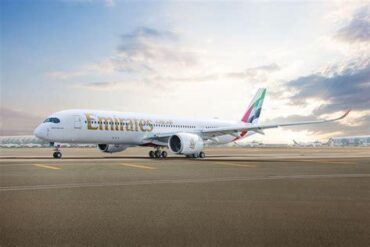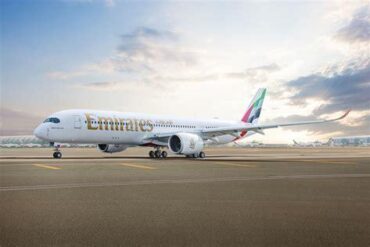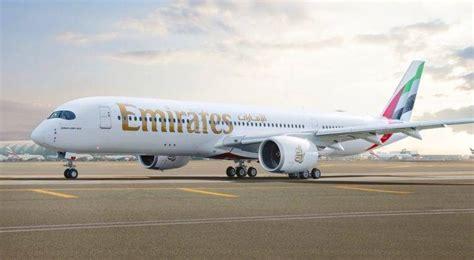
Emirates is making a bold leap in its fleet modernization strategy, announcing the launch of five new nonstop Airbus A350-900 routes—marking a pivotal shift in long-haul service expansion from Dubai. Just a year after the type’s entry into service with the Gulf carrier, the A350 is stepping up its footprint with new assignments to Cape Town, Copenhagen, Phuket, Rome Fiumicino, and Taipei, bolstering Emirates’ competitive edge and refining its premium onboard experience.
Strategic Fleet Modernization Meets Route Optimization
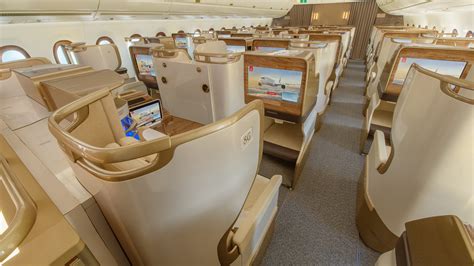
The Airbus A350-900, Emirates’ latest addition, comes equipped with a cutting-edge three-class configuration, featuring Business, Premium Economy, and Economy classes. With seating capacities of either 298 or 312, the A350 is now Emirates’ lowest-capacity widebody—but by no means its least capable. The aircraft’s fuel efficiency, modern cabin features, and quiet engines make it ideal for medium to long-haul operations previously handled by aging Boeing 777-200LRs.
Each of the five new routes represents not only a switch in aircraft but also a strategic recalibration of Emirates’ global network:
- Cape Town: From July 1, the A350 will replace the 777-200LR on one daily flight, joining two existing 777-300ER services. This will be the first time in seven years that Emirates operates three daily flights to the South African city, a vital gateway for tourism and commerce.
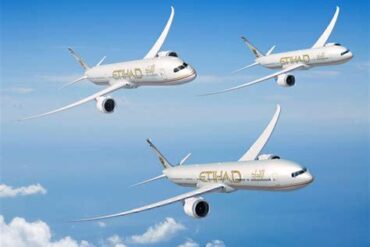
- Copenhagen: Beginning June 1, the new A350-operated flight will complement an existing 777-300ER service, bringing the frequency to twice daily. This fortifies Emirates’ position against Etihad, which recently upgraded its Copenhagen route to a daily 787-9 Dreamliner service.
- Phuket: The ever-popular Thai resort destination will gain a third daily Emirates flight on July 1. With the A350 joining the mix, the island will now see 33% of its Emirates flights operated on the new twinjet—timed perfectly as Etihad escalates its own Phuket expansion.
- Rome Fiumicino: From March 29, one of three daily flights to Rome will switch to the A350, replacing a 777-200LR/300ER. The other two frequencies remain on the A380 and 777-300ER respectively, reinforcing Rome’s importance in the European network.
- Taipei: As of May 1, Emirates will replace the 777-200LR with an A350 for its single daily frequency, making Taipei’s entire Emirates service 100% A350-operated.
The Bigger Picture: 25 A350 Routes and Counting
As of early 2026, Emirates operates 16 A350-900s, and the type is already scheduled to serve 25 airports worldwide. While the current focus includes the five new cities announced, two additional key launches further elevate the A350’s reach:
- Montreal (January 11): Replacing the 777-200LR, this route will feature the 298-seat A350, offering a significant upgrade in cabin experience and fuel efficiency.
- London Gatwick (February 8): The A350 will become part of Emirates’ fourth daily service to Gatwick, pushing the carrier’s London-area frequencies to 12–13 daily flights. Notably, this new Gatwick flight will feature the airline’s latest European departure time—11:55 PM.
Competitive Realignment Across the Gulf
Emirates’ A350 rollout is not happening in a vacuum. The airline’s moves are clearly positioned to counter Etihad Airways, which has been ramping up its own frequencies and modernizing its fleet with the 787-9 and A321LR. The battle for long-haul dominance, particularly in destinations like Copenhagen and Phuket, underscores a region-wide push to refine yield management and passenger experience.
In switching from the fuel-thirsty 777-200LRs, which average nearly 18 years in age, Emirates is taking a forward-looking stance, especially for routes lacking premium economy options. The A350 not only fills that gap but introduces the latest onboard products Emirates has to offer, aligning with global expectations in premium long-haul travel.
What’s Next? Speculations and Fleet Strategy
While not yet confirmed, Seattle has emerged as a possible A350 destination. Emirates recently announced a swap from the 777-300ER to the 777-200LR on the route, a move that reduces capacity by 8%. The shift is widely interpreted as a precursor to A350 deployment, especially given Seattle’s importance and the route’s underwhelming seat load factor.
With a sharp focus on operational efficiency, passenger experience, and fleet renewal, Emirates’ A350 rollout is far from complete. Expect the Gulf giant to continue fine-tuning its network throughout 2026, adapting to market demand and competitive pressures with unmatched agility.
As more A350s join the fleet, Emirates is poised to redefine its long-haul strategy—balancing capacity, comfort, and cost-efficiency across a global network that increasingly favors the sleek, next-generation Airbus.