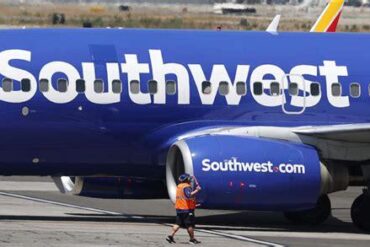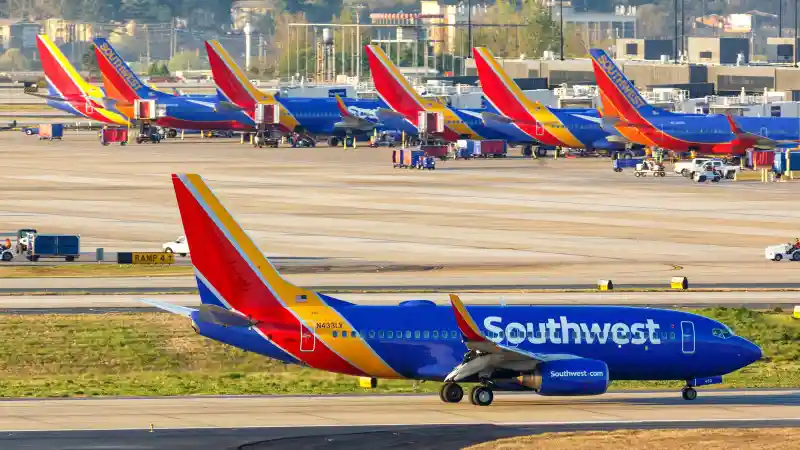
Southwest Airlines has expanded its route map once again, adding five new destinations to its growing network for the third quarter of 2026. The latest expansion brings the carrier’s total network to 120 airports, up from 117 during the same period a year earlier. While the airline’s overall schedule has increased by only 0.3% year over year, the additions highlight a carefully targeted strategy focused on strengthening connectivity, entering underserved markets, and improving aircraft utilization across its all-Boeing 737 fleet.
Operating approximately 3,902 daily flights throughout July, August, and September 2026, Southwest continues to refine its hybrid business model rather than pursue aggressive capacity growth. Instead of dramatically increasing frequencies across every market, the airline has selectively entered airports where demand, network connectivity, and operational efficiency provide long-term opportunities.
The latest network changes include four destinations within the United States—including one in the U.S. Virgin Islands—and one international airport in the Caribbean. At the same time, Southwest has also removed two airports from its network as it consolidates operations around stronger-performing hubs.
Southwest Airlines Adds Five New Airports To Its Route Map
The most significant milestone is Southwest’s long-awaited arrival in Alaska. For the first time in the airline’s 55-year history, passengers can now fly Southwest to Ted Stevens Anchorage International Airport (ANC). Service officially began on May 15, 2026, connecting Anchorage with Denver International Airport and Las Vegas Harry Reid International Airport.
Rather than simply adding another leisure destination, Anchorage represents an important strategic move. Overnight return flights maximize aircraft utilization while allowing passengers from Alaska to connect seamlessly into Southwest’s enormous domestic network through Denver and Las Vegas. The schedule keeps aircraft productive around the clock while opening dozens of one-stop connections throughout the continental United States.
Before Anchorage, Southwest had never served Alaska despite decades of nationwide expansion. The new operation closes one of the few remaining geographic gaps in its domestic network.
The remaining four additions are equally notable. Knoxville, Tennessee, joined the network on March 5, 2026, immediately receiving service to Austin, Baltimore, Dallas, Denver, Nashville, Orlando, and Tampa. The broad range of destinations demonstrates Southwest’s confidence that Knoxville can support both business and leisure traffic while feeding passengers into larger connecting hubs.
Santa Rosa, California, entered the network on April 7, with flights linking the Sonoma County region to Burbank, Denver, Las Vegas, and San Diego. The airport provides another Northern California option beyond the heavily congested San Francisco Bay Area airports.
Southwest also expanded deeper into the Caribbean by launching service to St. Thomas in February and St. Maarten in April. Both destinations currently receive flights from Baltimore and Orlando, strengthening Southwest’s growing presence in warm-weather vacation markets that remain popular throughout the year.
Santa Rosa Emerges As One Of Southwest’s Biggest Growth Stories
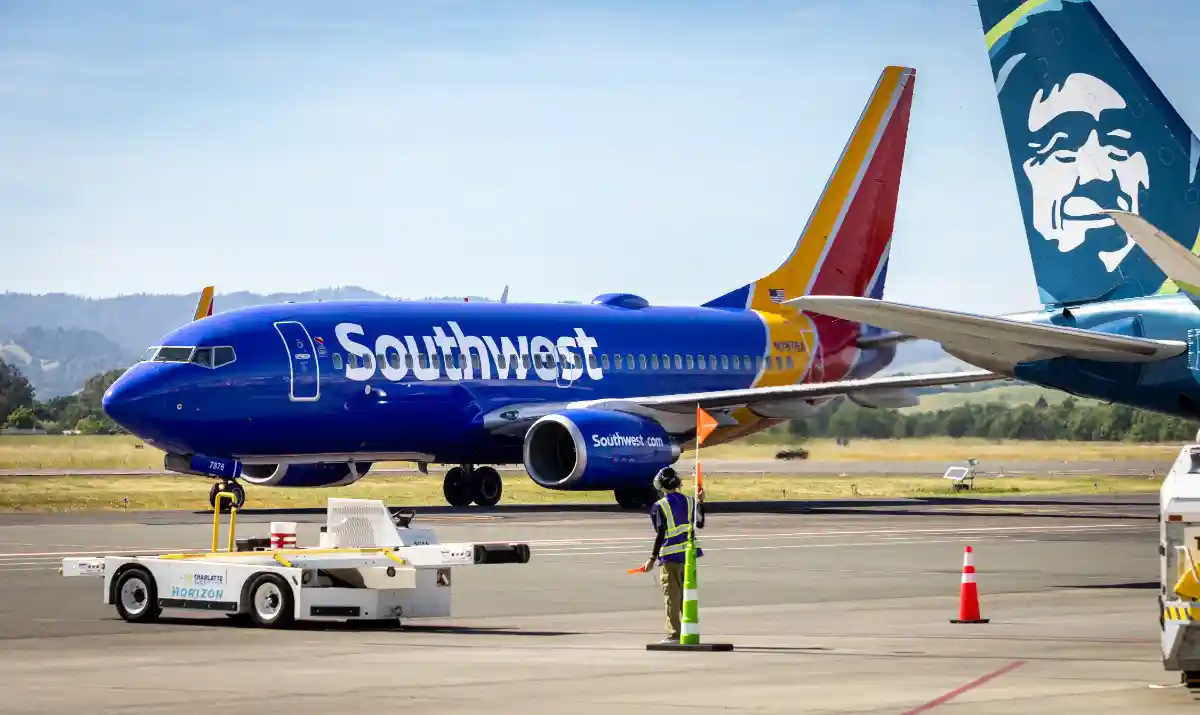
Among all five additions, Charles M. Schulz–Sonoma County Airport (STS) may prove to have the greatest regional impact. Located roughly 55 miles north of San Francisco, Santa Rosa has experienced an unprecedented increase in available airline capacity following Southwest’s arrival.
During the third quarter of 2026, STS is expected to offer approximately 406,000 round-trip seats, representing a remarkable 44% increase over the previous capacity record established in 2024. Southwest’s multiple daily Boeing 737 departures account for much of this growth, but the expansion extends beyond a single airline.
Alaska Airlines has simultaneously increased capacity by roughly 30%, adding new routes to Ontario and Palm Springs while expanding existing services to Burbank, Las Vegas, Portland, and San Diego. As both carriers now compete on several overlapping routes, travelers benefit from more scheduling choices and increased competition.
One particularly competitive market is Santa Rosa–Burbank, where available seats have climbed dramatically compared with previous years. The challenge now shifts from adding capacity to consistently filling those seats while maintaining profitable fares. Historical Department of Transportation data showed previous operators struggled with passenger loads despite facing far less competition, making the coming quarters an important test for both airlines.
Southwest Streamlines Its Network By Exiting Two Airports
Network expansion has been accompanied by selective retrenchment. Southwest has discontinued service to Chicago O’Hare International Airport (ORD) and Washington Dulles International Airport (IAD), with both airports seeing their final Southwest departures during June 2026.
Rather than maintaining operations across multiple airports in the same metropolitan areas, Southwest has chosen to concentrate resources at its stronger historical bases. In Chicago, the airline continues to focus on Chicago Midway International Airport, one of its largest and most established operations. Around Washington, Baltimore remains Southwest’s preferred airport, offering extensive connectivity and long-standing customer loyalty.
The decision closes relatively recent chapters in Southwest’s history. O’Hare joined the network in 2021, while Washington Dulles had been served continuously since 2006. Over two decades, Southwest transported approximately 10.3 million passengers through Dulles, achieving an average seat load factor of 78.1%, slightly below the carrier’s broader system average.
What The Expansion Reveals About Southwest’s Long-Term Strategy
Rather than pursuing rapid expansion for its own sake, Southwest’s latest network adjustments reveal a disciplined approach focused on high-value opportunities. The airline is extending service into strategically attractive leisure destinations, strengthening connectivity through major operating bases, and concentrating resources where its network delivers the greatest competitive advantage.
The additions of Anchorage, Knoxville, Santa Rosa, St. Thomas, and St. Maarten collectively broaden Southwest’s geographic reach while reinforcing its reputation for point-to-point convenience backed by extensive connecting opportunities. Although overall capacity growth remains modest, these carefully selected markets demonstrate that Southwest continues to evolve its network with precision, balancing expansion with operational efficiency as competition across North American aviation intensifies.