Breeze Airways continues to reshape its route map as the fast-growing US carrier removes 18 domestic routes while simultaneously preparing for a major expansion that includes dozens of new markets. The airline’s latest network adjustments highlight the balancing act faced by newer carriers seeking profitable opportunities in underserved cities across the United States.
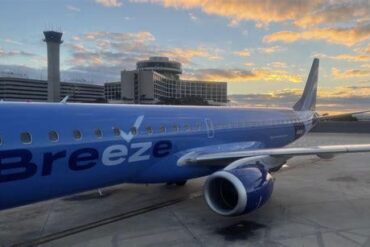
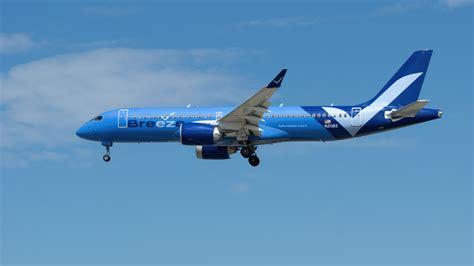
Since launching revenue operations in 2021, Breeze Airways has grown at an impressive pace. The airline has transported more than 16 million passengers and established a reputation for targeting routes that larger competitors often overlook. Its strategy centers on connecting smaller and medium-sized cities with limited nonstop service, using efficient Airbus A220-300 aircraft that allow profitable operations in thinner markets.
Although route cancellations often attract attention, the latest changes represent a relatively small portion of Breeze’s overall network. Data comparing schedules from January 2025 through May 2026 against the airline’s plans from June 2026 onward reveals that the eliminated routes accounted for less than 2% of the carrier’s total available capacity.
Breeze Airways Removes 18 Domestic Routes Across Its Network
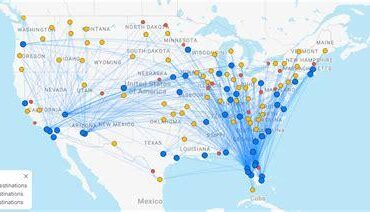
The route reductions affect 25 airports across the United States and span several regions, from the Northeast and Midwest to Florida and California. All of the affected services are domestic routes.
The airline discontinued routes gradually over a period extending from January 2025 through May 2026. Several Florida-focused routes were among the first to disappear, while other longer-distance services linking smaller cities to major destinations were later removed from the schedule.
The affected routes include:
- Orlando – Mobile International
- Fort Myers – Bangor
- Fort Myers – Stewart
- Westchester – Sarasota
- Orlando – Plattsburgh
- Stewart – Vero Beach
- Akron-Canton – Los Angeles
- Tampa – Orange County
- Huntsville – Los Angeles
- Norfolk – Syracuse
- Westchester – Greenville/Spartanburg
- Raleigh/Durham – Los Angeles
- Orange County – Montrose
- Orlando – Ogdensburg
- Hartford – Daytona Beach
- Orlando – Manchester
- Westchester – Daytona Beach
- Westchester – Jacksonville
Collectively, these routes represented approximately 248,000 round-trip seats during the period analyzed, making them a relatively small component of Breeze’s broader operation.
Why Breeze Airways Frequently Adjusts Its Route Network
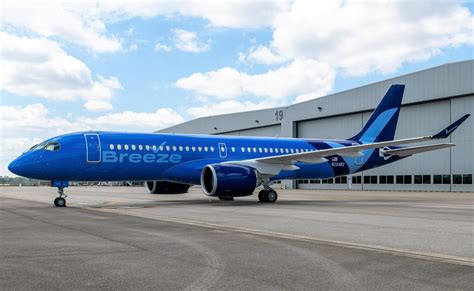
Unlike traditional legacy airlines that rely heavily on established hub-and-spoke systems, Breeze Airways operates with a more experimental business model. The airline actively searches for underserved city pairs where travelers currently face long connections or limited flight options.
This approach creates opportunities to establish unique nonstop services, but it also results in higher route turnover. Markets are continuously evaluated based on demand, operating costs, fare performance, and overall profitability. If a route fails to meet expectations, Breeze has demonstrated a willingness to redeploy aircraft to potentially stronger markets.
The carrier’s fleet composition plays a major role in this strategy. Approximately 88% of its fleet consists of the Airbus A220-300, a modern aircraft offering favorable economics for lower-capacity routes. With around 137 seats, the aircraft allows Breeze to test markets that would be difficult to sustain using larger narrowbody jets.
As a result, route experimentation has become a defining characteristic of the airline’s growth model.
Akron-Canton To Los Angeles Becomes A Notable Casualty
Among the discontinued routes, Akron-Canton Airport’s service to Los Angeles International Airport stands out as one of the most significant.
The route operated between May 2024 and August 2025 and represented a milestone for Akron-Canton. At 1,801 nautical miles each way, it became the longest scheduled passenger route ever offered from the Ohio airport. The service connected northeastern Ohio directly with one of the nation’s largest aviation gateways for the first time.
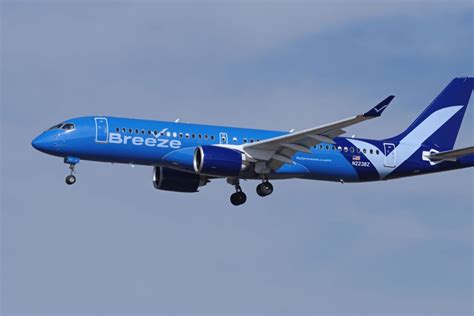
Despite the historic nature of the route, operational data suggests it struggled to achieve the performance necessary for long-term sustainability. During its existence, only 75 round-trip flights were operated, offering approximately 20,550 seats.
Department of Transportation data indicates that 14,270 passengers traveled on the route, producing a load factor of 69.4%. While not exceptionally weak by industry standards, it lagged behind Breeze’s overall network performance during the same period.
Fare performance also appears to have been a challenge. The average one-way fare, excluding taxes and ancillary fees, reached approximately $103. Although that figure exceeded average fares on many Breeze routes from Akron-Canton, the significantly longer distance increased operating costs substantially.
Long-haul routes require more fuel, crew resources, and aircraft utilization time. Even when passenger numbers appear respectable, profitability can become difficult if revenue fails to keep pace with those additional costs.
Florida Airports Feature Prominently In The Changes
Florida remains one of Breeze Airways’ most important regions, making it unsurprising that several discontinued routes involve airports within the state.
Orlando, in particular, experienced multiple route removals, including services to Mobile International, Plattsburgh, Ogdensburg, and Manchester. Other Florida airports affected include Fort Myers, Daytona Beach, Sarasota, Tampa, Jacksonville, and Vero Beach.
These changes do not necessarily signal reduced commitment to Florida. Instead, they reflect the airline’s ongoing efforts to optimize its network and shift capacity toward markets showing stronger demand potential.
Florida continues to generate substantial leisure travel traffic, making it a core component of Breeze’s long-term growth strategy.
Breeze Is Adding Far More Routes Than It Is Eliminating
The broader picture behind the route cuts is one of continued expansion rather than contraction.
Analysis of the airline’s future schedules indicates that Breeze plans to launch 34 new routes from June 2026 onward. That figure is nearly double the number of routes being removed.
Twenty-nine of the new services will be domestic, while five represent international expansion opportunities. Tampa will serve as the launching point for all five international routes, strengthening the city’s role within Breeze’s network.
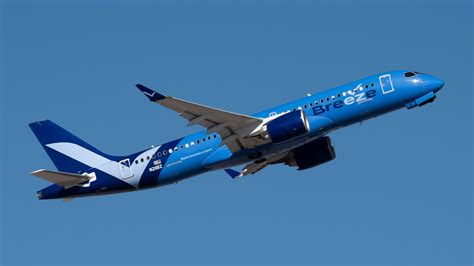
Upcoming international destinations include Nassau, Punta Cana, San José in Costa Rica, Cancun, and Montego Bay. Several of these markets will face little or no direct competition, aligning perfectly with Breeze’s strategy of targeting underserved routes.
The airline is also introducing service to St. Thomas in the US Virgin Islands, further broadening its leisure-focused network.
Network Evolution Remains Central To Breeze’s Growth
The elimination of 18 routes illustrates the realities of operating an airline built around discovering untapped travel demand. Not every experiment succeeds, particularly when connecting smaller cities with long-distance destinations. However, Breeze Airways appears comfortable making rapid adjustments when market conditions require change.
More importantly, the route cuts are being accompanied by an even larger wave of additions. The carrier continues to expand aggressively, leveraging its Airbus A220 fleet to enter new markets that many competitors ignore.
For travelers, the latest network update demonstrates that Breeze remains committed to growth, even as it fine-tunes its route portfolio. The airline’s willingness to discontinue underperforming services while launching new opportunities may ultimately prove essential to sustaining its rapid rise within the highly competitive US aviation industry.