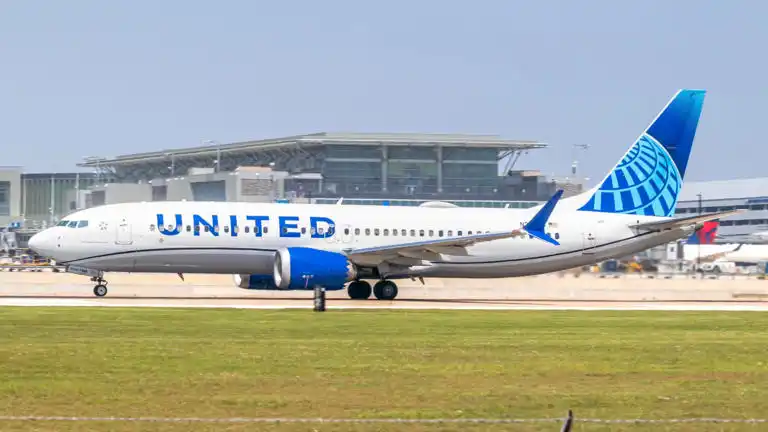
United Airlines is sharpening its regional network strategy for 2026 with the addition of five Midwestern cities that deepen its presence in the heartland while intensifying competition at Chicago O’Hare. The carrier’s regional arm will launch service to Bloomington, Champaign, Kalamazoo, La Crosse, and Lansing, pushing United’s global destination count to 391 airports worldwide, the highest among major airlines. This move underscores United’s philosophy that network density, not just long-haul glamour, defines competitive dominance.
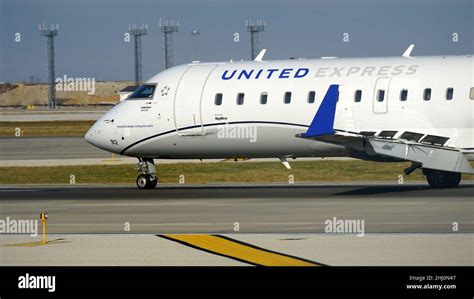
The new routes are scheduled to open for booking on January 29, with flights beginning in April and May. Each city will see up to four daily round-trip frequencies, operated by United Express partners using a mix of CRJ200, CRJ550, and Embraer E175 aircraft. These jets are designed for short-haul efficiency, business traveler flexibility, and hub connectivity.
At first glance, these additions might look like nostalgia-driven network restoration. In reality, they represent a calculated chess move in the escalating hub battle at O’Hare.
Chicago O’Hare’s Role as United’s Regional Engine
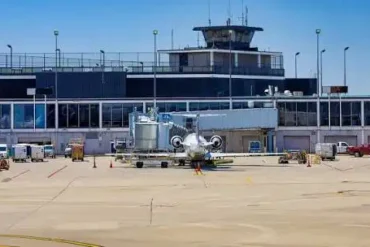
O’Hare remains United’s busiest hub in early 2026, fueled by high-frequency regional flights that feed long-haul services. The five new destinations sit within a compact geographic radius of Chicago, forming a tight regional mesh that enhances connectivity for both local travelers and international passengers transferring through the hub.
United previously served four of the five cities, but service has been intermittent over the past two decades due to shifting economics and regional demand. Bloomington last appeared on United’s route map in 2008, Champaign in 2018, Kalamazoo as recently as 2022, and Lansing in 2022 as well. La Crosse, notably, marks a rare entirely new market for United in modern times, with no scheduled service since the 1990s.
The Five New Midwest Cities and Why They Matter
These routes are less about raw passenger volume and more about strategic presence. Each city sits within a university, manufacturing, or government corridor that generates steady business and institutional travel demand.
- Bloomington, Illinois
- Champaign, Illinois
- Kalamazoo, Michigan
- La Crosse, Wisconsin
- Lansing, Michigan
United’s decision to schedule four daily frequencies per city is not about demand saturation. It is about schedule utility. Frequent departures allow same-day business trips, synchronized international connections, and corporate travel contracts—key levers in airline economics.
Head-to-Head With American Airlines at O’Hare
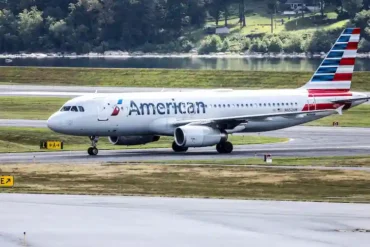
The competitive undertone is impossible to miss. American Airlines already serves all five cities from O’Hare through American Eagle, making this a direct turf war. In June 2026, American plans multiple daily flights on Embraer and CRJ aircraft, but United’s aggressive frequency match aims to neutralize American’s regional advantage.
O’Hare has become a microcosm of U.S. airline rivalry. United is not just adding routes; it is defending hub dominance through density warfare. The logic is brutally simple: more flights mean more loyalty program capture, more corporate contracts, and more feeder traffic for lucrative long-haul routes.
La Crosse: The Most Curious Addition
La Crosse stands out as both the smallest and most intriguing market. The Wisconsin city recorded only 106 daily passengers each way across all domestic routes in the year ending October 2025. The O’Hare market accounted for just 5.4 PDEW, a microscopic figure in airline planning terms.
Yet United plans four daily flights, on top of American’s three. This is not a demand-driven launch. It is a strategic signal that United intends to plant its flag even in marginal markets to prevent competitors from owning the local loyalty ecosystem.
La Crosse also marks United’s expansion to eight Wisconsin airports, a state-level record for the airline. This illustrates a broader thesis: granular regional coverage creates network stickiness that competitors struggle to unwind.
Fleet Strategy: Right-Sized Aircraft for High-Frequency Service
The aircraft mix reflects United’s evolving regional fleet philosophy. The CRJ200 offers ultra-low operating costs for thin routes, while the CRJ550 and E175 provide premium cabin features for business travelers. These aircraft are optimized for short-haul markets where frequency matters more than seat count.
Capacity purchase agreements with regional partners allow United to scale routes quickly without burdening its mainline fleet. This modular approach is why United can experiment aggressively with secondary cities while maintaining profitability discipline.
Why These Routes Exist Despite Thin Demand
Airlines rarely add routes solely because demand exists. More often, they add routes because strategic value exists. These cities feed Chicago, and Chicago feeds the world. Each regional passenger potentially connects to a transatlantic or transpacific flight, generating revenue far beyond the regional leg.
Moreover, corporate contracts often hinge on network completeness. If a company’s headquarters sits in Champaign or Lansing, United needs a nonstop link to secure corporate share. Even marginal passenger numbers can justify a route when corporate yield is high.
What Travelers Should Expect in 2026
For passengers, the benefits are immediate: more flight options, tighter schedules, and competitive fares. Regional travelers will gain improved access to United’s global network, while frequent flyers will enjoy increased loyalty program integration.
However, the sustainability of four daily flights in ultra-thin markets remains uncertain. History suggests frequency wars often lead to capacity reductions once competitive pressure stabilizes. In the short term, travelers enjoy a golden age of choice; in the long term, the market decides.
United’s Network Expansion Trajectory
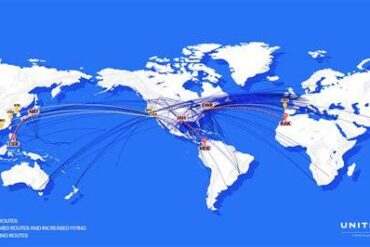
United’s rapid march toward 400 global destinations is not symbolic. It is a deliberate strategy to become the most interconnected airline ecosystem on the planet. Regional routes are the connective tissue that makes ultra-long-haul flights viable and profitable.
These five additions may seem small on a world map, but in airline strategy, small dots create giant networks. The Midwest expansion reinforces United’s commitment to hub-centric growth, competitive intensity, and granular market coverage.
In 2026, the battle for U.S. regional skies will not be fought with widebody jets or splashy long-haul launches. It will be fought with 76-seat aircraft, four daily frequencies, and relentless network density—precisely where United is now making its boldest moves.