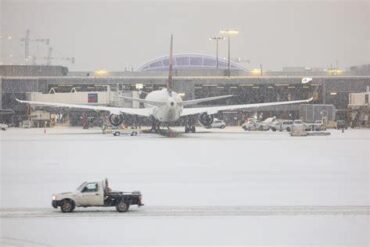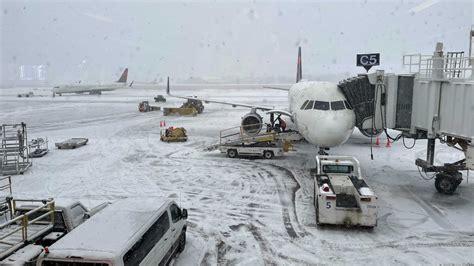
Delta Air Lines has begun preemptively canceling hundreds of flights across the American Midwest as meteorologists warn of a powerful winter storm expected to deliver heavy snowfall, strong winds, and widespread travel disruptions. The Atlanta-based carrier moved early to scale back operations, aiming to protect passengers, crews, and aircraft while minimizing the cascading operational failures that often occur when severe weather strikes major airline hubs.
Airlines rarely cancel large numbers of flights in advance unless forecasts show high confidence in severe conditions. In this case, weather models project snowfall totals approaching 18 inches in parts of Minnesota and Wisconsin, accompanied by gusting winds capable of creating whiteout conditions. These factors can drastically reduce runway visibility, complicate aircraft de-icing procedures, and slow ground operations to a crawl.
Delta’s largest operational challenge centers on Minneapolis–Saint Paul International Airport (MSP), one of the airline’s most important Midwestern hubs. The airport functions as a crucial connector between regional destinations and the broader Delta network. When operations there falter, delays and cancellations ripple outward through dozens of connecting routes.
Delta Scales Back Midwest Operations Ahead of Severe Weather
Flight tracking data shows Delta canceling a significant number of departures throughout the storm period. On Saturday alone, the airline scrapped more than 80 scheduled departures, and the number climbed sharply as the storm approached its peak. By Sunday, over 220 Delta flights were canceled, reflecting the growing severity of the weather forecast.
The disruption is particularly concentrated at MSP. Roughly 200 departing flights from Minneapolis–Saint Paul were canceled on Sunday, alongside a similar number of inbound arrivals. When arrivals disappear, aircraft and crews cannot reach their next assignments, amplifying the network disruption.
Delta’s regional partners are also affected. SkyWest Airlines, which operates many Delta Connection routes using regional jets, canceled more than 120 additional flights tied to the Midwest system. These smaller aircraft frequently serve communities that rely heavily on connecting flights through hubs like MSP.
Delta released a statement explaining the decision:
“Due to significant forecasted snow and winds in the Midwest, Delta has implemented cancellations for airports in the Midwest, including Delta’s Minneapolis-St. Paul hub, for Saturday through Sunday.”
Preemptive cancellations, while frustrating for travelers, often reduce the chaos that occurs when flights are delayed repeatedly before ultimately being canceled.
Minneapolis–Saint Paul Becomes the Epicenter of the Disruption
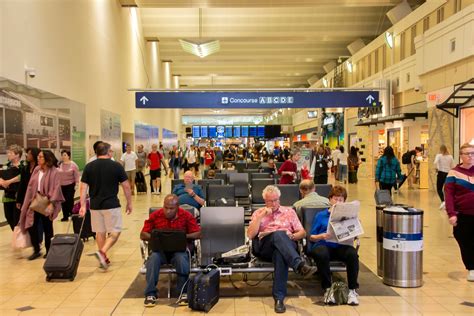
Minneapolis–Saint Paul International Airport has emerged as the storm’s operational ground zero. As forecasts worsened, crowds began forming in terminals while travelers sought updates, rebooking options, or standby seats on remaining flights.
Reports from local media described long queues and packed gate areas as early as Friday evening. More than 120 flights were delayed at MSP before the bulk of cancellations took effect. When delays stack up in freezing temperatures, aircraft must undergo repeated de-icing cycles, which slows departure rates even further.
Airlines and airports deploy extensive winter procedures—snow removal fleets, heated hangars, and chemical de-icing trucks—but the laws of physics remain stubborn. Heavy snow accumulation combined with strong crosswinds can temporarily reduce runway capacity or halt operations entirely.
That operational reality explains why airlines sometimes prefer to cancel flights early rather than strand aircraft and passengers overnight in unsafe conditions.
More Than Two Dozen Airports Across Seven States Impacted
Although MSP accounts for the majority of cancellations, the disruption stretches across a wide swath of the Midwest. Delta has identified 26 affected airports across seven states, many of them smaller regional destinations that rely on frequent feeder flights into major hubs.
Among the airports experiencing cancellations are:
- Minneapolis–Saint Paul (MSP)
- Milwaukee (MKE)
- Des Moines (DSM)
- Omaha (OMA)
- Green Bay (GRB)
- Duluth (DLH)
- Cedar Rapids (CID)
- Traverse City (TVC)
- Sioux Falls (FSD)
Several Michigan airports—including Alpena, Pellston, and Sault Ste. Marie—also appear on the list. Wisconsin and Minnesota host the largest clusters of impacted locations.
For smaller airports, even a handful of cancellations can severely disrupt travel. Many communities rely on just a few daily flights linking them to the national network.

Passenger Waivers and Flexible Rebooking Options
To soften the disruption, Delta issued a travel waiver covering flights scheduled between March 14 and March 15. The policy allows passengers to change their travel plans without incurring the typical airline change fee.
Under the waiver:
- Travelers may rebook flights for travel up to one year from the original ticket date.
- Fare differences are waived if passengers select new flights departing on or before March 22 in the same cabin class.
- Customers who choose not to travel can cancel their ticket and apply the value toward a future trip.
Airlines increasingly rely on these waivers during major weather events. By encouraging travelers to voluntarily shift their plans, carriers reduce airport congestion and protect limited operational capacity.
A Winter Season Already Marked by Major Storm Disruptions
The current Midwest storm is part of a broader pattern of severe winter weather affecting aviation during the 2025–2026 IATA winter season. Only weeks earlier, Winter Storm Hernando struck the U.S. East Coast with exceptional intensity, burying some regions under more than 30 inches of snow.
That storm triggered over 10,000 flight cancellations across four days, demonstrating how vulnerable the air transport system remains to extreme weather. Despite technological advances in forecasting, de-icing, and runway maintenance, aviation still operates within the unforgiving constraints of meteorology.
As the latest storm pushes across the Midwest, the forecast suggests improving conditions once the system moves eastward. Even so, the aftereffects—aircraft repositioning, crew scheduling resets, and passenger rebookings—are likely to produce lingering delays into the following week, a reminder that in aviation networks, one powerful storm can ripple across the continent.