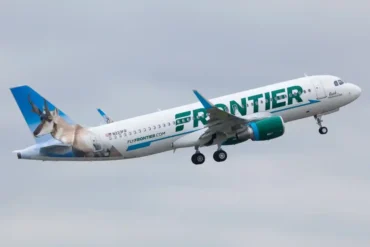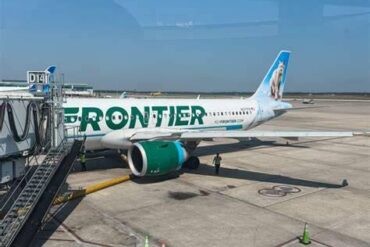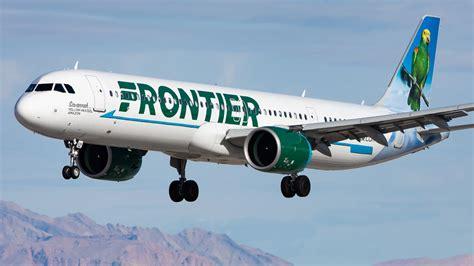
Frontier Airlines, known for its ultra-low-cost model and distinctive animal-themed aircraft, has rapidly extended its reach beyond domestic U.S. markets, focusing its international expansion on short- to mid-haul leisure destinations. In 2025, its 20 busiest international routes paint a compelling portrait of a carrier capitalizing on price-sensitive travelers, expanding from Midwestern hubs, and connecting a growing network across Mexico, the Caribbean, and Central America.
San Juan Emerges as a Caribbean Powerhouse
San Juan (SJU) has become a centerpiece in Frontier’s international strategy, not just as a departure point for flights to the U.S. mainland, but as a cross-Caribbean connector. The two busiest international routes in Frontier’s system in 2025 are both anchored at San Juan:
- Punta Cana (PUJ) – San Juan (SJU) tops the chart with 82 flights per month and 17,844 seats, an enormous volume for a relatively short hop. The route caters largely to VFR (visiting friends and relatives) traffic and leisure travelers, with demand driven by Puerto Rico’s proximity to the Dominican Republic.
- Close behind, Santo Domingo (SDQ) – San Juan (SJU) operates 79 monthly flights and 16,422 seats, showing strong inter-island travel trends.
These routes offer high frequency but shorter ASMs, reinforcing that volume and frequency, not distance, are currently fueling much of Frontier’s international strategy from San Juan.
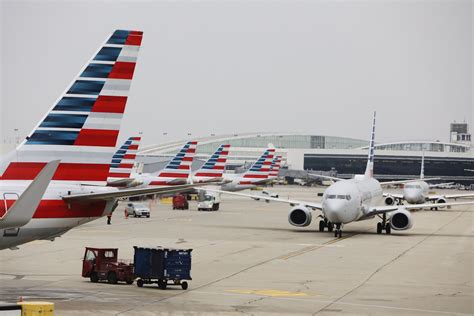
Chicago O’Hare: A Major International Springboard
Chicago O’Hare (ORD) plays a commanding role in Frontier’s global footprint, functioning as a key launchpad for high-capacity leisure flights to sun-and-sand destinations. Two standout routes showcase its international importance:
- ORD–Punta Cana, with 62 flights per month and 14,880 seats, generates an astonishing 29.4 million ASMs, making it Frontier’s highest ASM-producing route. The high yield and capacity suggest strong profitability, particularly for vacation-focused traffic.
- ORD–Cancun matches it in frequency, with 62 monthly flights, delivering over 13,000 seats and more than 19 million ASMs, proving that Cancun continues to be the darling of low-cost U.S. carriers.
ORD’s ability to connect the Midwest to beach destinations not only maximizes the reach of Frontier’s Airbus A320 fleet but also shows the airline’s strategic use of secondary cities like St. Louis and Cleveland to further capitalize on leisure travel trends.
Cancun: The International Anchor in the Network
Cancun (CUN) is unrivaled in Frontier’s international network. Of the top 20 busiest international routes, eight originate or terminate in Cancun, making it the most frequently served international destination. Cancun’s enduring appeal to budget-conscious Americans has helped the following routes gain prominence:
- Cancun–Philadelphia stands as the most capacious, with 14,476 seats per month on 62 flights, producing over 21 million ASMs.
- Routes like Cancun–Denver, Cancun–St. Louis, and Cancun–Dallas/Fort Worth each boast over 11,000 monthly seats and robust frequencies, cementing Cancun as the nucleus of Frontier’s international ambitions.
From families seeking budget beach vacations to millennials hunting for tropical escapes, Cancun embodies what Frontier does best: deliver value-packed, nonstop service to high-demand destinations.
Atlanta Asserts Caribbean Competitiveness
Though Atlanta (ATL) is a fortress hub for Delta Air Lines, Frontier has carved a growing niche in Caribbean travel from this massive southeastern gateway. Three critical routes shape this strategy:
- ATL–Montego Bay (MBJ) operates 58 flights monthly, offering over 11,200 seats, signaling a healthy appetite for Jamaican vacations.
- ATL–Punta Cana, with 44 flights, serves over 8,000 seats, translating into 11.7 million ASMs.
- ATL–Cancun delivers 8,604 seats across 42 monthly flights, competing head-on with legacy carriers.
The ability to maintain these routes out of Delta’s backyard reflects Frontier’s confidence in leisure elasticity and price-sensitive travelers in one of America’s busiest airport markets.
Florida’s Lower but Strategic Involvement
Surprisingly, despite its proximity to Latin America and the Caribbean, Florida doesn’t dominate the list, but Miami (MIA) still features prominently. Frontier’s Miami–Punta Cana and Cancun–Miami routes each log 28 flights per month, signaling measured involvement in a competitive Floridian airspace:
- These flights serve a massive Latino diaspora, especially Dominican and Cuban communities with connections across the Caribbean.
- Miami remains an expensive and congested airport for low-cost carriers, but Frontier’s willingness to compete here shows its intent to be more than a niche player.
Meanwhile, secondary Florida cities like Orlando or Fort Lauderdale remain absent from the top 20, indicating that Frontier sees Miami as its most viable Floridian international base for now.
The Rust Belt’s Vacation Pipeline
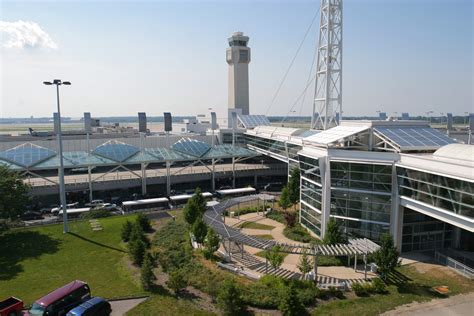
A notable and perhaps underappreciated element of Frontier’s international strategy is its focus on connecting industrial Midwestern cities—particularly Cleveland and St. Louis—with international beach destinations. These routes underscore a growing travel trend:
- Cancun–Cleveland: 44 flights, 10,120 seats
- Punta Cana–St. Louis: 36 flights, 8,640 seats
- Cleveland–Punta Cana: 26 flights, 6,240 seats
These corridors serve Americans from traditionally cold-weather cities, often underserved by legacy carriers for direct international service. Frontier fills the gap with affordable, direct flights to tropical getaways, transforming demand from latent to realized.
Smaller but Significant Routes Round Out the List
Not all of Frontier’s top 20 routes are high-frequency, high-capacity behemoths. Some offer moderate but strategic connections that support broader network goals:
- San Juan–Santiago (STI): Just 24 monthly flights and 4,464 seats, yet still one of the busiest due to steady demand between Puerto Rico and the Dominican Republic.
- Cancun–Miami: Only 28 flights and just over 5,200 seats, showing Frontier’s commitment to maintaining a presence in key competitive corridors.
- Cancun–Cincinnati (CVG): Though only 18 flights and 3,612 seats, this route taps into a region historically underserved by international leisure flights.
These “long tail” routes show Frontier’s flexibility and its ability to profitably serve thinner markets without compromising its low-cost structure.
Strategic Implications and Fleet Utilization
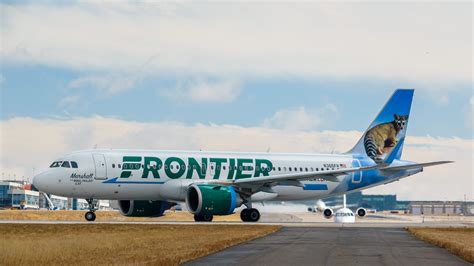
Frontier’s top 20 busiest international routes also reveal deep insights into how the carrier deploys its Airbus A320 family aircraft to balance frequency, capacity, and range. The Airbus A320neo, with its improved fuel efficiency and range, enables longer-haul operations like Chicago–Punta Cana and Philadelphia–Cancun, without requiring widebody investments.
With a focus on direct, nonstop leisure travel, Frontier ensures high aircraft utilization, low turnaround times, and fleet standardization, which all contribute to its competitive cost-per-available-seat-mile (CASM).
The Road Ahead for Frontier’s International Growth
Though not a legacy carrier or global alliance member, Frontier’s international reach is steadily growing, rooted in volume, value, and vibrant destinations. Its Caribbean and Mexican portfolio now accounts for a substantial portion of its network, and continued demand for affordable leisure travel suggests future expansion could target:
- Central American destinations like Costa Rica or Panama
- Northern South America, including Colombia or Ecuador
- Greater penetration into secondary U.S. cities with untapped demand
As the airline secures more international slots and potentially longer-range single-aisle aircraft, Frontier could evolve from a domestic ULCC into a true pan-Americas leisure carrier.
Final Thoughts
The 2025 list of Frontier Airlines’ top 20 busiest international routes underscores a deliberate and targeted strategy: connecting affordable American cities to sunny, budget-friendly destinations abroad. Whether from San Juan to Santo Domingo, Chicago to Cancun, or Cleveland to Punta Cana, Frontier is using frequency, fleet efficiency, and low prices to dominate underserved routes and reshape leisure international air travel.
If 2025 is any indication, Frontier’s global ambitions are only just taking off.