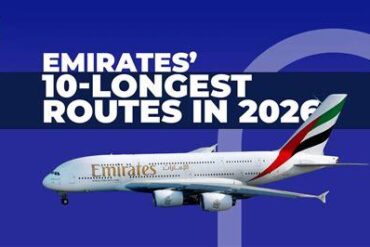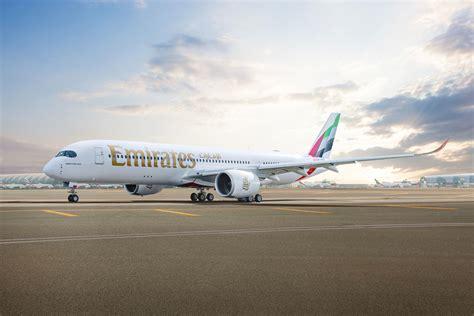
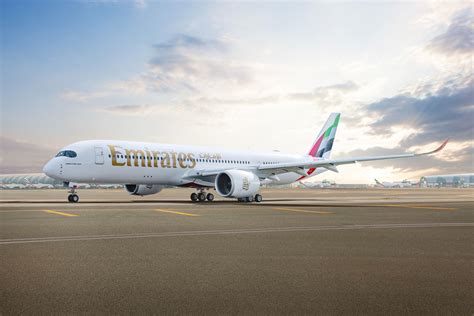
The arrival of the Emirates Airbus A350-900 marks one of the most strategically important fleet evolutions in the airline’s modern history. For decades, Emirates built its long-haul dominance around the double-decker Airbus A380 and the workhorse Boeing 777. Now, the A350 enters the stage not as a replacement, but as a precision instrument—designed to unlock range, efficiency, and network flexibility across ultra-competitive intercontinental corridors. In 2026, that strategy becomes tangible through ten standout nonstop routes, several stretching close to 14 hours in scheduled block time.
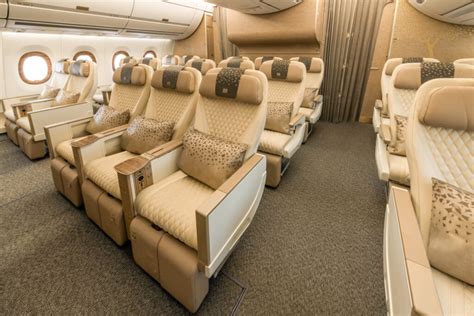
Fleet data confirms Emirates now operates 16 A350-900 aircraft, with 57 more on order. The average age sits at just under one year, effectively making this one of the youngest widebody sub-fleets in global aviation. Cabin configurations include 32 Business Class seats and either 21 or 28 Premium Economy seats—alongside up to 259 Economy seats—embedding a refined four-class experience into routes that demand both endurance and premium demand.
Nearly 14 Hours: Dubai to Montréal Sets the Benchmark
The longest Emirates A350 route currently links Dubai International Airport (DXB) with Montréal–Trudeau International Airport (YUL). The westbound journey peaks at 13 hours and 50 minutes, making it the carrier’s most time-intensive A350 deployment. Eastbound, favorable winds reduce the flight to approximately 12 hours and 20 minutes.
Montréal represents more than just a long flight—it symbolizes North America’s enduring strategic importance to Emirates. The A350 replaced the Boeing 777 on this daily service, signaling confidence in the aircraft’s economics on high-demand transatlantic and transcontinental routes. Canada remains a two-gateway market for Emirates, with Toronto continuing to receive flagship A380 service, reinforcing differentiated aircraft deployment across distinct demand profiles.
The near-14-hour block time showcases what the A350 was built for: sustained, fuel-efficient long-haul performance without sacrificing passenger comfort. Composite construction, advanced aerodynamics, and next-generation Rolls-Royce Trent XWB engines collectively enable range capability that rivals larger aircraft with lower operating costs.
Adelaide Joins the 13-Hour Club
The only other A350 route exceeding 13 hours connects Dubai with Adelaide Airport (ADL) in South Australia. Westbound block time reaches 13 hours and 10 minutes, while eastbound service averages around 12 hours and 20 minutes.
This pairing underscores Emirates’ deep commitment to secondary long-haul markets. Adelaide does not command the scale of Sydney or Melbourne, yet the deployment of a modern widebody like the A350 signals confidence in sustained premium and connecting traffic flows between Australia and Europe, the Middle East, and Africa.
Australia has historically been a cornerstone of Emirates’ global network. The A350 now adds surgical precision to that presence—right-sized capacity paired with long-range efficiency.
Asia-Pacific: The Core Growth Engine
Five of Emirates’ ten longest A350 routes serve the Asia-Pacific region, a clear indicator of geographic prioritization. Beyond Adelaide, Taipei and Hangzhou emerge as significant long-haul sectors.
Flights from Taipei Taoyuan International Airport (TPE) to Dubai reach up to nine hours and 55 minutes. Meanwhile, services from Hangzhou Xiaoshan International Airport (HGH) approach nine hours and 50 minutes. These durations may fall short of Montréal’s marathon, yet they represent economically powerful mid-to-long-haul corridors connecting major Asian commercial centers to Emirates’ global hub.
The Asia-Pacific strategy blends frequency with network connectivity. Dubai’s geographic position allows Emirates to channel traffic from these cities onward to Europe, Africa, and the Americas with minimal backtracking. The A350’s operating economics make such hub-and-spoke optimization increasingly efficient.
Vietnam also enters the top ten list. Flights from Tan Son Nhat International Airport (SGN) in Ho Chi Minh City record maximum durations of seven hours and 30 minutes. While shorter than the transpacific-style routes, these services represent vital connectors in Southeast Asia’s booming travel economy.
Africa and Europe: Strategic Depth Over Distance
Outside North America and Asia-Pacific, Emirates’ fifth-longest A350 route heads south to Cape Town International Airport (CPT). The outbound flight from Dubai peaks at nine hours and 40 minutes, making it Africa’s longest A350 deployment within the Emirates system.
Cape Town blends tourism and business traffic, demanding balanced cabin configurations. The A350’s Premium Economy cabin plays a particularly strategic role here, targeting affluent leisure travelers seeking elevated comfort without Business Class pricing.
Europe contributes four destinations to the top ten list. The longest among them connects Dubai to Edinburgh Airport (EDI) at eight hours and 15 minutes. The Scottish capital benefits from strong inbound tourism and energy-sector links.
Close behind are flights to London Gatwick Airport (LGW) at seven hours and 45 minutes, Oslo Airport (OSL) at seven hours and 35 minutes, and Helsinki Airport (HEL) at seven hours and 25 minutes.
These European routes illustrate a deliberate recalibration. Rather than deploying high-capacity A380 aircraft to every major city, Emirates uses the A350 to maintain frequency while aligning seat supply with demand variability. The result is improved load factor stability and stronger route profitability.
The Cabin Experience on Ultra-Long Sectors
On flights stretching toward 14 hours, cabin architecture becomes decisive. The Emirates A350 introduces a quieter cabin environment, larger windows, improved humidity levels, and enhanced air pressure control compared to older-generation widebodies. Over extended durations, such environmental factors materially reduce passenger fatigue.
Premium Economy arrives as standard on these aircraft, reflecting Emirates’ evolving product philosophy. Previously absent from the airline’s lineup, the cabin now bridges the pricing gap between Economy and Business Class, capturing demand from travelers seeking comfort without corporate budgets.
Business Class, configured in a modern 1-2-1 layout, ensures direct aisle access for all passengers—essential on overnight sectors exceeding ten hours. The aircraft’s fuel efficiency also translates into operational resilience, particularly on ultra-long routes susceptible to wind variability and payload constraints.
Strategic Implications of the A350 Expansion
The deployment pattern of Emirates’ ten longest A350 flights reveals a broader thesis. The aircraft is not a symbolic addition—it is a network enabler. Nearly 14-hour routes like Montréal demonstrate maximum range capability. Thirteen-hour services to Adelaide highlight secondary-market viability. Nine-to-ten-hour sectors across Asia showcase hub optimization.
Unlike the A380, which thrives on density between megahubs, the A350 thrives on versatility. It opens thinner long-haul markets while sustaining premium demand corridors. Its arrival does not signal the retirement of the A380; rather, it complements the fleet architecture through flexibility.
With 57 additional A350s on order, Emirates positions itself to deepen this transformation. Expect further expansion into long-haul markets where right-sized widebodies outperform sheer scale.
A New Long-Haul Chapter from Dubai
Emirates’ ten longest Airbus A350 flights represent more than endurance milestones. They signal a recalibrated long-haul strategy rooted in efficiency, passenger comfort, and geographic balance. From nearly 14-hour journeys to Canada to precision deployments across Asia and Europe, the A350 reshapes how Emirates connects Dubai to the world.
As additional aircraft join the fleet, the list of ultra-long A350 routes will likely evolve. What remains constant is the airline’s commitment to pairing modern aircraft technology with strategic route planning—ensuring Dubai remains one of the world’s most powerful global aviation hubs well into the next decade.