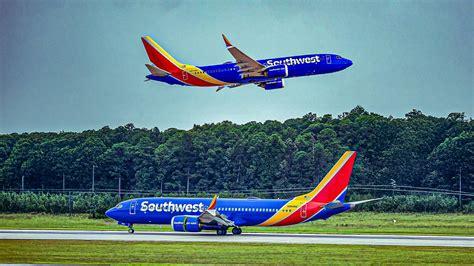
Southwest Airlines built its reputation on short-haul, high-frequency flights linking cities across the United States. For decades, the airline’s simple strategy revolved around rapid aircraft turnarounds, point-to-point routes, and an all-Boeing 737 fleet designed to maximize efficiency on domestic travel. Yet as the carrier has evolved, so too has the range of journeys it operates. In 2026, some Southwest flights now approach seven hours nonstop, a striking contrast to the quick hops that once defined the brand.
Operating more than 4,000 daily flights on average during the second quarter of 2026, Southwest remains one of the largest airlines in North America. Its fleet of Boeing 737-700s, 737-800s, and 737 MAX 8 aircraft allows it to serve routes of varying lengths while maintaining operational simplicity. The airline’s growing network has quietly introduced some remarkably long domestic and transoceanic services, connecting mainland hubs with Hawaii and spanning the breadth of the continental United States.
While the airline still operates multi-stop itineraries that can stretch across several cities, examining pure nonstop routes reveals the true extent of Southwest’s longest journeys. Measured using maximum block time—covering taxiing, airborne time, and schedule padding for delays—these flights show just how far the airline’s single-aisle aircraft now travel in one continuous stretch.
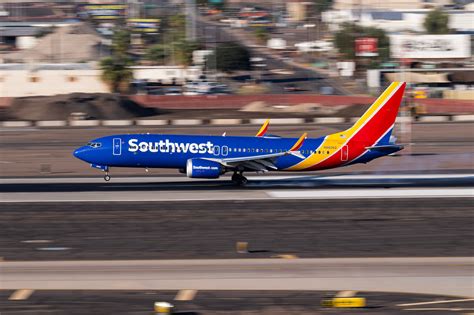
Phoenix to Honolulu: Southwest’s Longest Scheduled Flight
The title of Southwest Airlines’ longest scheduled flight belongs to the Phoenix Sky Harbor to Honolulu route. With a maximum block time of 6 hours and 55 minutes, the flight represents the carrier’s most time-intensive operation currently scheduled in Q2 2026.
This journey links Arizona’s desert hub to Hawaii’s largest city, a distance that pushes the capabilities of the Boeing 737 MAX 8 while remaining comfortably within its operational range. Southwest operates the route daily using the MAX 8, a variant chosen for its improved fuel efficiency and longer reach compared with earlier 737 models.
For travelers departing Phoenix, the flight provides a rare opportunity: a direct connection from the American Southwest to the central Pacific without transferring through California. This convenience has helped Southwest compete with larger carriers that historically dominated Hawaii routes.
Las Vegas and Phoenix: Key Gateways to Hawaii
Hawaii routes dominate Southwest’s longest-flight rankings, reflecting both geography and growing passenger demand. The airline has strategically used Las Vegas and Phoenix as mainland gateways to the islands, allowing connections from dozens of U.S. cities.
Among the longest services:
- Phoenix – Kahului: up to 6 hours 40 minutes
- Las Vegas – Honolulu: about 6 hours 40 minutes with multiple daily departures
- Las Vegas – Lihue: roughly 6 hours 40 minutes
- Las Vegas – Kona: around 6 hours 20 minutes
- San Diego – Honolulu: approximately 6 hours 20 minutes
Each route typically operates with the Boeing 737 MAX 8, the backbone of Southwest’s Hawaii expansion. The aircraft’s extended range and modern cabin have made it practical for a low-cost airline to operate flights once considered better suited to wide-body jets.
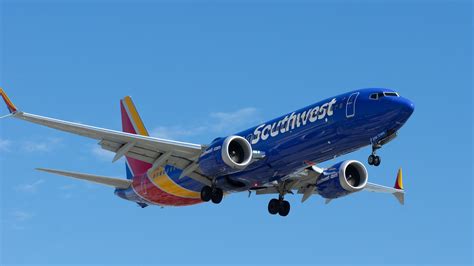
These transpacific flights highlight how Southwest has gradually expanded beyond its traditional domestic network. For many passengers, the airline’s well-known perks—such as two free checked bags and open seating—remain appealing even on flights lasting more than six hours.
Orlando to Sacramento: The Longest Route in the Continental U.S.
While Hawaii routes dominate the upper end of the list, one flight stands out for spanning the American mainland. The Orlando to Sacramento nonstop service carries the distinction of Southwest’s longest route within the lower 48 states, with a maximum block time of about 6 hours and 20 minutes.
The journey covers 2,092 nautical miles (3,874 kilometers) between Florida’s tourism capital and California’s inland government hub. Interestingly, this connection did not exist as a nonstop route prior to Southwest’s introduction of it in 2018. The service paused during the pandemic but returned in late 2024 and has continued to operate since then.
Passenger demand on this route has proven strong. Data from the U.S. Department of Transportation shows roughly 182,000 round-trip travelers moved between Orlando and Sacramento over a twelve-month period between late 2024 and 2025. Because Southwest is the only airline offering a nonstop option, it captured more than half of the market.
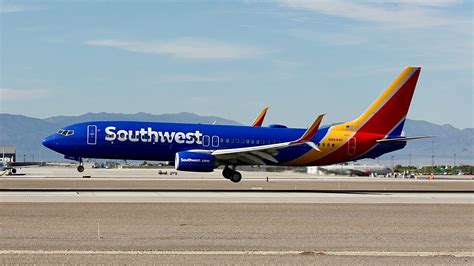
Load factors on the route have also been impressive. Southwest filled over 91% of available seats, demonstrating that long domestic flights can succeed even within a low-cost carrier’s network. Interestingly, a significant number of passengers still chose connecting itineraries through cities like Dallas, Denver, Las Vegas, Houston Hobby, and Nashville, showing how the airline’s network flexibility continues to shape travel patterns.
Boston to San Diego: A New Coast-to-Coast Link
Another notable addition to Southwest’s longest flights arrives in mid-2026. Beginning June 4, the airline will launch a daily nonstop service between Boston and San Diego, with a scheduled block time of about 6 hours and 10 minutes.
This route represents an expansion into a city pair the airline had not previously served nonstop. By connecting two major coastal markets, Southwest taps into demand from both leisure travelers and business passengers seeking alternatives to traditional legacy carriers.
The route also highlights how the 737 MAX 8 enables efficient long-distance flights across the United States. With improved fuel burn and aerodynamic refinements, the aircraft allows Southwest to push the limits of its single-aisle fleet while maintaining competitive operating costs.
Seasonal and Limited Long-Distance Flights
Beyond regularly scheduled services, Southwest occasionally introduces limited or seasonal long routes. One example is the Los Angeles to Lihue flight, which appears only on select weekends during parts of the year.
Although it operates just a handful of times during the Q2 schedule period, the route still ranks among the airline’s longest with a block time of approximately 6 hours and 15 minutes. These niche operations often coincide with peak leisure travel periods when demand for Hawaii vacations surges.
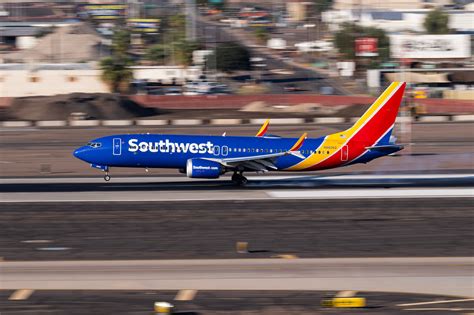
Such routes demonstrate Southwest’s ability to adjust capacity and experiment with new markets without committing to year-round service.
A New Era of Long-Haul Narrowbody Flying
Southwest Airlines’ longest flights reveal a subtle but significant transformation in the carrier’s network strategy. The airline that once focused almost entirely on short domestic hops now regularly operates six-to-seven-hour journeys across oceans and continents.
This shift reflects broader changes in aviation. Advances in narrowbody aircraft technology—particularly the Boeing 737 MAX—have enabled airlines to connect distant markets efficiently without deploying larger wide-body jets. For Southwest, the approach preserves the simplicity of its all-737 fleet while unlocking new destinations.
With further route experimentation and continued fleet modernization, the airline’s longest flights may soon stretch even farther. What once seemed unusual for Southwest—a nearly seven-hour journey over open ocean—has quickly become a defining feature of its modern network.