
North America remains the world’s most complex laboratory for regional air travel, where dense networks, competitive hub economics, and evolving aircraft performance collide. In 2026, regional jets are no longer confined to short hops and quick turns. A growing set of scheduled services now approaches — and in one case exceeds — five hours of block time, pushing small jets to the edge of their operational envelope while reshaping traveler expectations.
What makes this shift notable is not novelty for novelty’s sake. It reflects a deeper realignment of airline strategy. Improved fuel efficiency, longer certified ranges, and refined scheduling models have allowed carriers to deploy aircraft like the Embraer E-190, E-175, ERJ-145, and Bombardier CRJ-700/900 on sectors once reserved for mainline narrowbodies. These routes exist because demand is real, yields are defensible, and hub-to-secondary connectivity still matters.
Cirium schedule data for the first half of 2026 (H1 2026) reveals ten regional jet routes to or from the United States with the longest maximum block times currently in operation. Airbus A220 services are excluded, as the aircraft is not classified as a regional jet. What emerges is a fascinating portrait of endurance flying in small cabins — part efficiency experiment, part network necessity.
Regional Jets Are Flying Farther Than Ever
The idea of a five-hour regional jet flight would have sounded absurd twenty years ago. Early-generation RJs were optimized for short runways and sub-90-minute sectors. Today’s aircraft tell a different story. Modern variants offer ranges exceeding 2,000 nautical miles, with the Embraer E195-E2 pushing close to 3,000 nautical miles under optimal conditions. While the E195-E2 itself does not appear on this list, its technological lineage explains how long-sector regional flying became viable.
Block time matters more than pure distance. It captures taxi congestion, routing inefficiencies, prevailing winds, and airport constraints. A 1,600-mile flight can easily outlast a longer one if terminal airspace or seasonal weather adds minutes on both ends. That nuance defines the ranking of the longest regional jet routes in 2026.
The Longest Regional Jet Flight in the United States
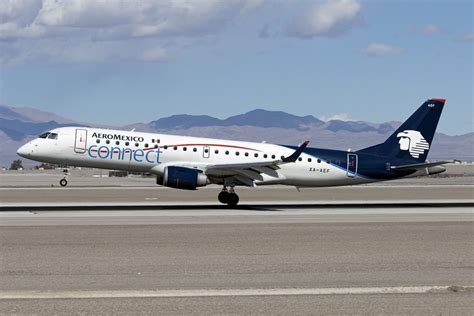
The single longest scheduled regional jet flight in H1 2026 belongs to Aeromexico, operating between Detroit Metropolitan Airport and Querétaro. Covering roughly 1,790 miles, the route carries a maximum block time of 5 hours and 37 minutes, flown by an Embraer E-190. This service stands as a milestone for regional aviation, blending cross-border business demand with aircraft utilization efficiency.
Querétaro’s growing manufacturing base, particularly in aerospace and automotive sectors, underpins the route’s sustainability. Detroit’s role as a legacy industrial hub completes the logic. This is not leisure experimentation; it is network pragmatism executed with a regional jet.
Aeromexico’s Quiet Dominance on Ultra-Long Regional Routes
Aeromexico appears repeatedly among the longest U.S. regional jet flights in 2026, underscoring how effectively the airline leverages its E-190 fleet. Beyond Detroit–Querétaro, the carrier operates Raleigh/Durham to Mexico City, scheduled up to 4 hours and 49 minutes, and Detroit to Monterrey, reaching approximately 4 hours and 40 minutes in block time.
These routes serve strategic secondary U.S. markets with strong corporate and diaspora demand. By using regional jets rather than upgauging to mainline aircraft, Aeromexico preserves frequency while maintaining cost discipline. For passengers, the experience feels closer to a mainline flight than traditional RJ service, especially on newer cabin configurations.
Caribbean Endurance: Anguilla’s Long Reach into the U.S.
Three of the ten longest regional jet flights are operated by AnguillAir, a young subsidiary of BermudAir, connecting the British Overseas Territory of Anguilla with Boston, Baltimore, and Newark. Each route pushes past four hours of block time, with the Boston–Anguilla service stretching to around 4 hours and 40 minutes.

What makes these routes compelling is not just distance but intent. AnguillAir launched in 2025 as BermudAir’s first expansion beyond Bermuda, operating twice-weekly services with Embraer E-190s. The goal is targeted connectivity rather than volume. These flights open Anguilla to nonstop access from major U.S. population centers, a rare achievement for a small Caribbean destination without widebody infrastructure.
The strategy has paid off in visibility and demand. Anguilla now connects to 11 destinations across the U.S. and Caribbean, reshaping its tourism funnel while proving that regional jets can anchor long-haul leisure routes when demand is concentrated and seasonal peaks are well understood.
U.S. Domestic Routes That Test Regional Jet Limits
Not all endurance flights cross borders or oceans. Several long regional jet routes operate entirely within the United States, quietly stretching aircraft utilization norms. St. Louis to Los Angeles, flown by American Eagle using the Embraer E-175, reaches a maximum block time of 4 hours and 26 minutes, while Newark to Houston Intercontinental, operated by United Express with an ERJ-145, pushes to 4 hours and 30 minutes.
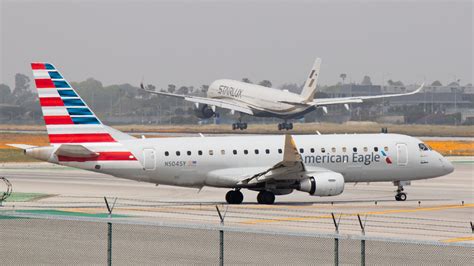
These flights exist because hub economics demand them. Slot constraints, frequency requirements, and regional pilot scope clauses all influence aircraft choice. While passengers may prefer a mainline jet, the economics often favor a well-timed regional operation, especially during off-peak windows.
Mountain Weather and Block Time Inflation
One of the most operationally challenging routes on the list is Charlotte to Aspen, flown by American Eagle using the Bombardier CRJ-700. With a maximum block time of 4 hours and 22 minutes, this flight demonstrates how terrain and weather can inflate schedules beyond what distance alone would suggest.
Aspen’s high-altitude airport environment imposes payload restrictions and procedural complexity. When paired with East Coast congestion, block times stretch. Yet demand remains strong, particularly during ski season, making the route economically defensible despite its operational friction.
Why These Flights Matter in 2026
Regional air travel in the United States continues its steady recovery. Airlines have scheduled over 2.7 million regional flights in 2026, offering approximately 187.5 million seats, a year-on-year increase exceeding 5%. Compared with 2020, regional flight volumes are nearly 40% higher, driven largely by American Airlines, Delta Air Lines, and United Airlines expanding their regional networks.
Long-sector regional jet flights are not anomalies; they are signals. They indicate confidence in aircraft performance, network planning sophistication, and sustained demand in thin but valuable markets. As fuel efficiency improves and scheduling analytics sharpen, the upper limit of what qualifies as a “regional” flight will continue to blur.
In 2026, five hours in a regional jet is no longer unthinkable. It is scheduled, sold, and — increasingly — successful.