Air travel is entering a new era where distance is no longer the ultimate barrier. In 2026, Air France is pushing deeper into the ultra-long-haul market with routes that rival the world’s most demanding commercial operations. While Gulf carriers and Asia-Pacific airlines often dominate headlines surrounding marathon flights, Air France has quietly assembled one of Europe’s most impressive long-distance networks from its hub at Paris Charles de Gaulle Airport.
The airline now operates a complex portfolio of intercontinental services connecting Europe with South America, East Asia, Southeast Asia, and the South Pacific. Some of these flights exceed 14 hours nonstop, while others approach an astonishing 22-hour block time when intermediate stops and operational requirements are included. The result is a network built not only around tourism and business demand, but also around geopolitical realities, aircraft efficiency, and strategic market positioning.
For 2026, Air France plans roughly 79 long-haul departures per day from France, reinforcing its status as one of Europe’s dominant intercontinental airlines. Yet despite this enormous footprint, many travelers remain unaware of how extensive — and physically demanding — some of these routes have become.
The carrier’s ultra-long-haul strategy also reflects the changing shape of global aviation. Russian airspace closures, instability in parts of the Middle East, rising fuel optimization demands, and evolving passenger expectations have fundamentally altered route planning. Flight durations that once seemed excessive are becoming routine across the industry.
Air France’s 22-Hour Tahiti Service Is Europe’s Most Extraordinary Flight
At the top of Air France’s ultra-long-haul portfolio sits its remarkable service from Paris CDG to Papeete via Los Angeles. The route reaches a maximum block time of 22 hours and 20 minutes, making it one of the most time-intensive commercial airline services anywhere in the world.
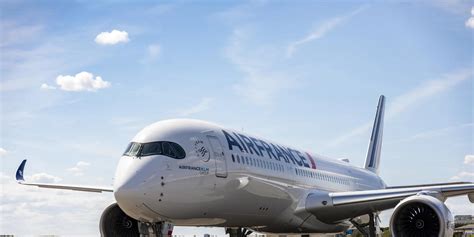
The flight is operated exclusively by the Airbus A350-900, one of the airline’s most efficient long-range aircraft. Configured with 292 seats, the aircraft allows Air France to maintain profitability on an operation that combines enormous stage lengths with premium-heavy demand. The route varies between five weekly frequencies and daily service depending on seasonality.
What makes the flight especially fascinating is its legal and operational structure. Although it includes a stop in Los Angeles, the service remains technically domestic because Tahiti is part of French Polynesia, an overseas collectivity of France. Despite spanning 8,486 nautical miles, the route is still considered an internal French connection.
Air France also enjoys fifth freedom rights between Los Angeles and Tahiti, allowing the airline to sell tickets solely on the US–French Polynesia segment. This creates additional revenue opportunities while helping maximize aircraft utilization on one of the world’s most challenging scheduled passenger operations.
The Tahiti route highlights how geography still shapes aviation economics. Unlike nonstop ultra-long-haul flights operated by carriers such as Qantas or Singapore Airlines, Air France’s service balances passenger demand with operational practicality through a strategically placed stopover.
Manila Flights Return As Airspace Restrictions Reshape Asian Operations
Air France’s second-longest operation in 2026 connects Paris with Manila. The return leg to France now reaches block times of up to 15 hours and 10 minutes, largely due to geopolitical complications affecting traditional flight corridors.
The airline resumed Manila flights in late 2024 after a 20-year absence, signaling renewed confidence in Southeast Asian demand. However, regional instability and the avoidance of Russian and Iranian airspace have dramatically altered routing efficiency. Aircraft now follow longer paths across Central Asia and alternative southern corridors, adding significant flight time.
These flights operate three times weekly using the Airbus A350-900. Air France and KLM remain the only European Union airlines operating scheduled passenger service to the Philippines, giving the Franco-Dutch airline group a unique strategic position in the market.
The Manila operation demonstrates how modern airline route planning has become deeply interconnected with global politics. Airlines are no longer simply competing on onboard service or fleet quality; they are adapting continuously to evolving international tensions and restricted airspace zones.
Japan And China Routes Dominate Air France’s Longest Nonstop Services
Several East Asian destinations dominate Air France’s ultra-long-haul rankings in 2026. Services to Japan and China have become substantially longer due to rerouted flight paths and persistent airspace limitations.
Flights from Kansai International Airport back to Paris now reach nearly 15 hours. Operated by the Boeing 787-9, the route gives Air France a strong presence in western Japan, where European competition remains relatively limited.
Meanwhile, Tokyo Haneda services continue to form one of the airline’s most important Asian business corridors. Depending on seasonal scheduling, Air France operates between 10 and 18 weekly flights on the route using both the Airbus A350-900 and Boeing 777-300ER. Return journeys to Paris can approach 14 hours and 50 minutes.
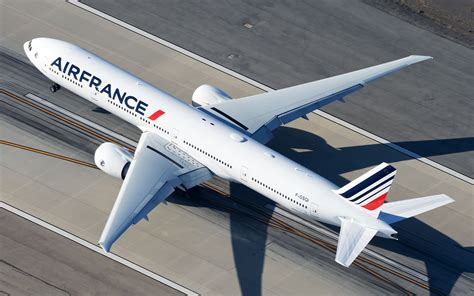
China remains equally significant within the carrier’s network strategy. Flights from Shanghai Pudong International Airport back to Paris now extend to approximately 14 hours and 45 minutes. These services rely primarily on Boeing 777-300ER aircraft, though the airline occasionally deploys the Boeing 777-200ER and Airbus A350-900.
The increased durations reveal how dramatically Eurasian airspace closures have impacted European carriers. Routes that previously crossed Russia directly must now navigate alternative corridors, increasing operational costs, crew complexity, and fuel burn.
South America Emerges As A Critical Growth Region
Beyond Asia, South America has become one of Air France’s most strategically important long-haul markets. The airline’s service to Santiago now reaches up to 14 hours and 30 minutes, placing it among the carrier’s longest flights worldwide.
Air France has quietly established itself as the leading airline connecting Northern Europe with Chile’s capital. Most flights are operated by the Airbus A350-900, although Boeing 777-200ER aircraft occasionally appear depending on seasonal demand and fleet allocation.
The airline’s Buenos Aires route also remains one of its flagship South American operations. Flights to Buenos Aires can reach nearly 14 hours and are operated using a mix of Airbus A350-900s and Boeing 787-9s.
These routes reflect the growing importance of South America within European aviation strategy. Demand comes from a combination of tourism, business traffic, cargo operations, and strong cultural links between France and Latin America.
Seoul, Singapore, And Hong Kong Complete The Ultra-Long Network
Air France’s remaining ultra-long-haul leaders include major Asian hubs that continue to anchor the airline’s global strategy. Flights from Incheon International Airport to Paris can exceed 14 hours and 20 minutes. The route operates daily and heavily supports SkyTeam alliance connectivity through partner Korean Air.
Singapore services, meanwhile, continue operating between 10 and 11 weekly frequencies using Boeing 777-300ER and Boeing 787-9 aircraft. Flights from Singapore back to Paris now approach 14 hours and 15 minutes.
Hong Kong also remains a cornerstone of Air France’s Asian network. Daily Airbus A350-900 operations between Hong Kong and Paris reach roughly 14 hours and five minutes under current scheduling assumptions.
Collectively, these routes showcase how Air France has transformed into one of Europe’s most ambitious ultra-long-haul operators. The airline is no longer simply connecting Paris to the world; it is managing an increasingly complex global network shaped by politics, geography, fleet modernization, and evolving passenger demand.
As airlines continue pushing the limits of aircraft endurance and operational efficiency, Air France’s 2026 network demonstrates that the future of long-haul aviation will not necessarily be defined solely by speed. Instead, it will be shaped by resilience, flexibility, and the ability to sustain profitable operations across some of the planet’s longest and most strategically critical air corridors.