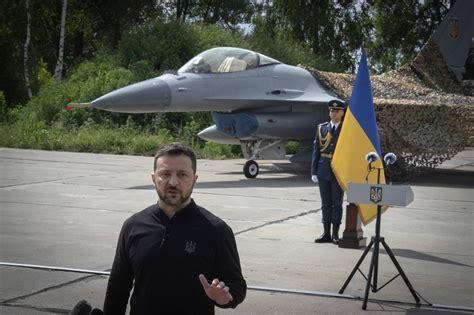
In a striking development within the evolving framework of international military aid, Norway is set to supply Ukraine with 14 F-16 fighter jets, doubling the number initially confirmed by Norwegian authorities. This revelation, unearthed through the country’s annual report on the import and export of conventional arms and highlighted by the defense-focused publication Militarnyi, significantly amplifies Oslo’s tangible support for Kyiv as Russia’s invasion enters its third year.
The disclosure not only sheds light on the expanding scale of Norway’s contributions but also raises critical questions about transparency in arms transfers and the strategic calculus behind quiet escalations in military aid. The new figure surpasses the previously declared six combat-ready F-16s, announced publicly in 2024 by Norwegian Prime Minister Jonas Gahr Støre.
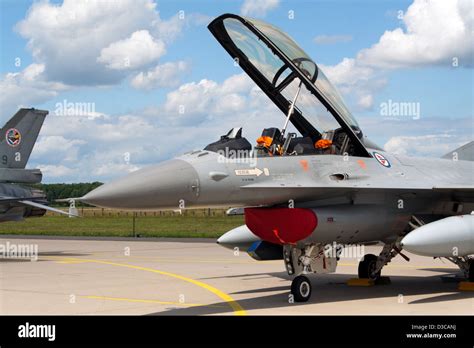
Norway Quietly Expands Its Commitment to Ukraine
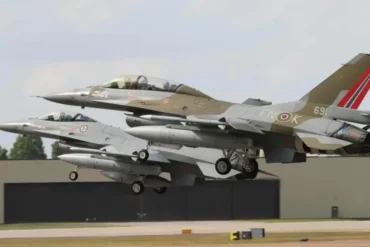
According to the arms export report, Norway plans to send a total of 14 F-16 aircraft to Ukraine, far exceeding public expectations. This substantial increment appears to include aircraft beyond the initially promised batch, possibly indicating a tiered support structure involving not just active fighters, but training and support units as well.
While the exact delivery schedule remains under wraps, Norwegian Defence Minister Ture Sandvik confirmed in May 2025 that all promised aircraft—regardless of the initial tally—would arrive in Ukraine by the end of the calendar year. The minister also acknowledged that a portion of these jets has already been delivered, although details regarding the specific models and their deployment locations were omitted.
This quiet escalation aligns with NATO’s broader strategy of gradually enhancing Ukraine’s air capabilities while managing escalation risks with Russia. Norway’s decision to effectively double its jet supply underscores a notable shift in policy, moving from symbolic gestures to more concrete and potentially game-changing contributions.
The F-16: A Critical Asset for Ukraine’s Air Force
The American-made F-16 Fighting Falcon is widely regarded as one of the most versatile multirole fighter jets ever built. Designed for air superiority and precision ground strikes, its introduction into Ukraine’s arsenal is expected to be transformative.
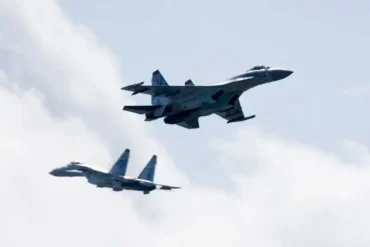
For Ukraine, long reliant on aging Soviet-era aircraft such as the MiG-29 and Su-27, the acquisition of modern Western jets represents a generational leap. F-16s bring with them advanced radar systems, beyond-visual-range missiles, and networked battlefield awareness—components vital for establishing air denial zones and supporting ground operations in contested areas like the Donbas and southern frontlines.
The 14 jets from Norway, especially if some have been refurbished to combat-ready status, could play a pivotal role in reshaping the aerial dynamics of the war.
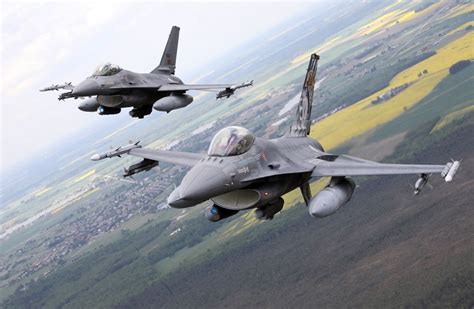
Unclear Status of Additional Aircraft
Despite the dramatic increase in numbers, the condition of the additional eight jets remains uncertain. The official report refrains from clarifying whether these aircraft are operational or if they will serve auxiliary functions. Analysts suggest three possible scenarios:
- Some of the eight additional F-16s could be airframes not fit for flight, potentially used for spare parts, ground crew training, or static display decoys.
- Norway may have restored or repaired several decommissioned units to make them airworthy again, effectively augmenting Ukraine’s operational capacity.
- Alternatively, the aircraft might be intended to accelerate pilot transition programs, acting as essential training platforms.
This ambiguity reflects a common practice among donor nations—deliberately maintaining opaqueness in defense contributions to ensure strategic unpredictability and avoid diplomatic friction.
From Decommission to Deployment: Norway’s Fighter Jet Inventory
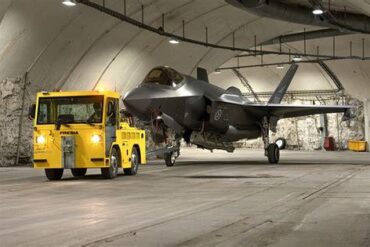
Norway retired its fleet of F-16s in 2021, replacing them with the more advanced F-35 Lightning II. The F-16s, however, remained in storage or underwent selective refurbishment. Originally designed in the late 1970s, these aircraft have undergone decades of incremental upgrades, enabling them to meet current combat standards under specific operational envelopes.
Reports from 2021 noted that Norway possessed over 50 F-16s at the time of decommissioning, many of which were stored in usable condition. Some of these aircraft were sold to private firms or foreign governments. The remainder now serves as a crucial reserve pool, from which the 14 units for Ukraine have likely been selected.
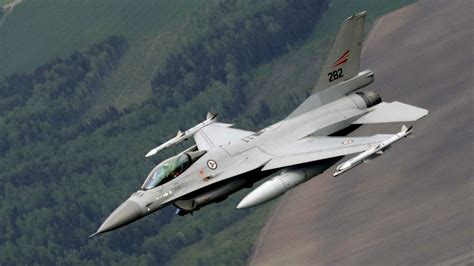
Strategic Implications for NATO and Europe
The expanded aircraft transfer carries significant implications beyond the battlefield. Strategically, it signals deepening Western alignment and willingness to escalate support despite mounting risks. Norway, while not a military heavyweight, wields substantial influence in Arctic security and serves as a key NATO gateway to the northern flank.
The decision to expand aircraft donations also mirrors a growing trend among European nations: shifting from token support to meaningful deliveries of advanced systems. The Netherlands and Denmark, for example, have also committed to transferring F-16s to Ukraine, with extensive pilot training operations already underway.
This cumulative buildup of air power is widely seen as a precursor to Ukraine’s long-term air force modernization, making it less dependent on legacy Soviet platforms and more interoperable with NATO structures. Importantly, these contributions reflect a new level of unity and urgency among allies, driven by a shared assessment that Ukraine’s survival requires not just defense, but proactive strengthening.
Additional Aid: Armoured and Engineering Vehicles
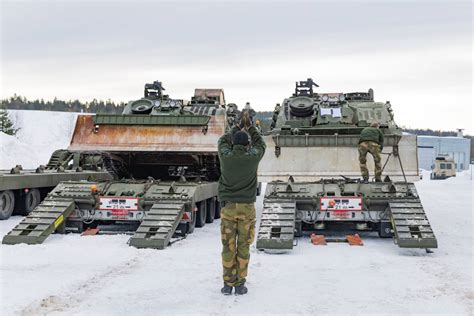
The arms export report further reveals Norway’s shipment of 20 German-made Dingo 2 armored vehicles and two NM189 engineering vehicles. The latter are based on the Leopard 1 tank chassis and are specialized for field repair, engineering mobility, and battlefield clearance.
These platforms play a less publicized but equally critical role in sustaining Ukraine’s front-line capabilities. Dingos, known for their mine resistance and modular adaptability, have been widely used in NATO missions in Afghanistan and Mali. Their transfer provides Ukraine’s infantry with protected mobility—especially useful in mine-laden or artillery-exposed zones.
The NM189s, meanwhile, enhance Ukraine’s logistical and engineering backbone. By facilitating rapid repair of damaged equipment and clearing debris or mines, these vehicles support Ukraine’s capacity to hold and stabilize liberated territory.
A Calculated Message to Moscow
Norway’s decision to effectively double its jet transfer to Ukraine, while keeping it quiet until formal reporting required disclosure, appears to be a calculated strategic act. On one hand, it avoids early public confrontation with Russia, minimizing the diplomatic fallout while preparing Ukraine for sustained operations. On the other, it signals unwavering commitment to Ukraine’s long-term resilience.
The delayed transparency also aligns with NATO’s overall deterrence model: provide enough capability to shape battlefield outcomes without triggering overt escalations. By bolstering Ukraine’s air fleet incrementally but consistently, Norway and its allies are laying the groundwork for a durable Ukrainian defense posture.
Conclusion: Transparency, Timing, and Tactical Value
The revelation that Norway is providing 14 F-16 jets—twice the number publicly declared—reshapes the conversation around European support for Ukraine. It highlights the importance of transparency in democratic accountability, while also illustrating how strategic ambiguity can serve operational goals.
Ukraine now stands to gain not only in numerical strength but in tactical versatility. As F-16s begin to enter service, backed by logistics, training, and spare parts, their impact will resonate across battlefronts—from the skies over Kherson to the defensive lines in Luhansk.
By the end of 2025, with multiple Western partners delivering both aircraft and infrastructure, Ukraine’s air force will look markedly different. Norway’s 14 fighters, though modest in global terms, may prove to be a pivotal force multiplier in the long war ahead.