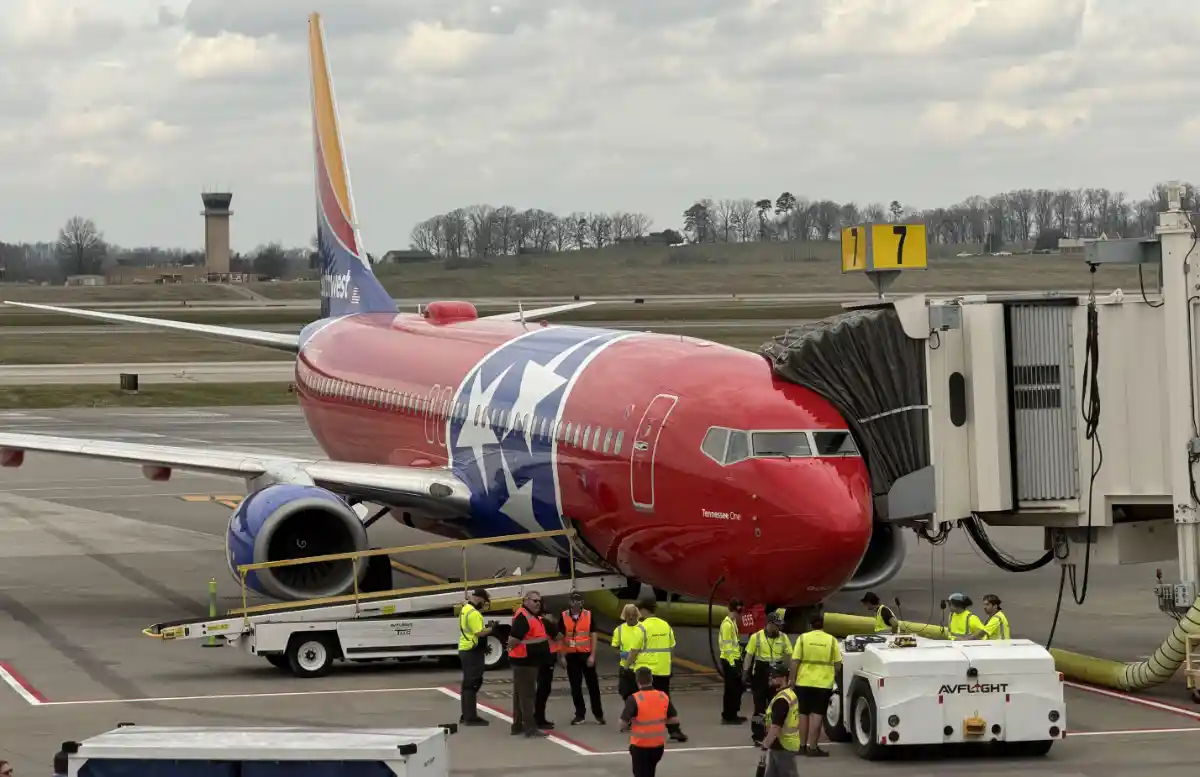
Southwest Airlines has officially launched its first-ever flights to Knoxville, Tennessee, marking a significant expansion for the world’s largest low-cost carrier by fleet size. Beginning March 5, the Dallas-based airline introduced multiple daily connections from Knoxville McGhee Tyson Airport (TYS) to key domestic destinations, bringing fresh competition and the promise of lower fares to travelers across eastern Tennessee. The move represents a strategic push into a growing regional market that has long sought greater access to affordable air travel.
For Southwest, Knoxville becomes its third destination in Tennessee, joining the airline’s established operations in Nashville International Airport (BNA) and Memphis International Airport (MEM). The launch also marks a milestone for McGhee Tyson Airport, which has spent years attracting additional carriers to increase connectivity and strengthen the region’s aviation network.
Initially, Southwest has begun operations with five daily round-trip flights, linking Knoxville with several major U.S. cities. These routes create new opportunities for both leisure and business travelers while improving regional access to some of the country’s busiest airline hubs.
Knoxville Joins Southwest’s Expanding Network
The airline’s debut schedule focuses on strong domestic demand corridors, offering year-round flights to several well-traveled destinations. These include Baltimore/Washington International Thurgood Marshall Airport (BWI), Dallas Love Field (DAL), Nashville International Airport, and Orlando International Airport (MCO).
Each of these connections plays a strategic role in Southwest’s broader route network. Dallas Love Field serves as one of the carrier’s most important operational hubs, while Baltimore provides access to the Mid-Atlantic region and the U.S. capital area. Orlando remains one of the nation’s most popular leisure destinations, drawing travelers year-round with its theme parks and entertainment districts.
Southwest’s entry into Knoxville immediately strengthens the airport’s airline mix. Before this launch, TYS was served by several carriers including Allegiant Air, American Airlines, Avelo Airlines, Delta Air Lines, Frontier Airlines, and United Airlines. However, Southwest’s arrival introduces a new level of competition in the low-fare segment while also expanding passenger options.
A Powerful Low-Cost Carrier Arrives
Southwest Airlines operates more than 800 Boeing 737 aircraft, making it the largest low-cost carrier in the world by fleet size. The airline has built its reputation on a simplified operating model that prioritizes point-to-point routes, high aircraft utilization, and competitive fares.
Despite some recent operational changes—such as adjustments to its long-standing free checked baggage policy and modifications to open seating procedures—Southwest remains one of the most recognizable brands in the U.S. aviation industry. Its arrival in Knoxville signals that the airline sees strong long-term demand in the region.
Travelers departing Knoxville can now reach several major destinations through direct flights. The airline currently operates:
- Two daily flights to Nashville
- One daily flight to Baltimore
- One daily flight to Dallas Love Field
- One daily flight to Orlando
These routes alone are expected to generate hundreds of annual flights, placing Southwest among the top five carriers at McGhee Tyson Airport by total operations in 2026.
Competitive Dynamics on Key Routes
Southwest’s new flights introduce interesting competitive dynamics within the Knoxville market. Some routes will see direct airline competition, while others give Southwest an immediate advantage with no nonstop rivals.
For example, the Knoxville–Baltimore route currently faces no direct competition, giving Southwest exclusive nonstop access between eastern Tennessee and the Baltimore–Washington region. This is likely to attract both leisure travelers and government-related business passengers.
Meanwhile, the airline’s service to Dallas Love Field stands apart from existing flights to Dallas/Fort Worth International Airport, which are operated by American Airlines through its regional affiliate, American Eagle. Although both routes connect Knoxville to the Dallas area, the airports serve different travel markets and airline networks.
The Knoxville–Nashville connection is another standout route. Southwest holds a monopoly on this short regional flight, making it the only carrier offering nonstop service between the two Tennessee cities.
Orlando, however, presents a more competitive environment. Allegiant Air already operates flights to Orlando International Airport and Orlando Sanford, creating a potential fare battle in one of the most popular leisure markets for travelers from Tennessee.
Seasonal Routes Expand the Network in 2026
While the initial launch focuses on year-round service, Southwest plans to expand its Knoxville operations with several seasonal routes later in 2026. These additional flights are designed to capture peak travel demand during popular vacation periods.
The airline’s upcoming seasonal destinations include:
- Denver International Airport (DEN) beginning April 9 with daily service
- Tampa International Airport (TPA) starting June 6 with weekly flights
- Austin-Bergstrom International Airport (AUS) launching October 3 with weekly flights
Denver is expected to be the most competitive of the seasonal additions. The route already features service from Allegiant Air and Frontier Airlines, while United Airlines offers seasonal operations using both mainline and regional aircraft.
Austin may also spark competition since Allegiant already operates flights between the Texas capital and Knoxville. Tampa, however, currently has no direct airline rival, giving Southwest an opportunity to establish a strong foothold in the Florida travel market.

Economic Impact for Knoxville and Eastern Tennessee
Southwest’s arrival is widely viewed as a major victory for McGhee Tyson Airport and the broader region. Airport officials have spent years working to attract additional low-cost carriers in order to increase competition and reduce ticket prices for local travelers.
Industry analysts often observe that when Southwest enters a new market, average fares tend to decline, a phenomenon sometimes referred to as the “Southwest Effect.” Increased seat capacity and competition typically encourage other airlines to adjust pricing strategies, ultimately benefiting passengers.
State leaders have also welcomed the development. Tennessee Governor Bill Lee previously praised the airline’s expansion into Knoxville, emphasizing the broader economic benefits that stronger air connectivity can bring to the state.
Improved air service supports tourism, encourages corporate investment, and strengthens regional mobility. For eastern Tennessee—home to attractions such as Great Smoky Mountains National Park—better flight options could significantly boost visitor numbers in the years ahead.
With new routes launching and additional seasonal services on the horizon, Southwest Airlines’ Knoxville debut represents more than just a route expansion. It signals a transformational moment for the region’s air travel landscape, delivering wider connectivity, increased competition, and new travel possibilities for millions of passengers.