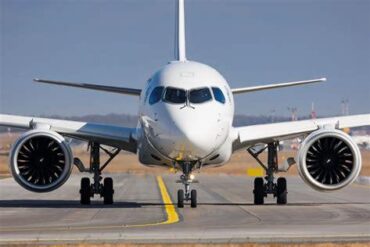
The Airbus A220 is the rare commercial airliner that was conceived, funded, engineered, and flown before its eventual owner had any operational say in its design. It began life in Montreal as the Bombardier CSeries, the boldest gamble any regional jet manufacturer had ever attempted: a clean-sheet, 100-to-150-seat narrowbody intended to crack the global commercial duopoly that Airbus and Boeing had held for decades. Bombardier had built nothing larger than a regional jet before this project, yet it poured billions into lithium-aluminum alloys, carbon-fiber composite wings, and an entirely new Pratt & Whitney engine architecture, all in pursuit of a market niche the giants had long ignored. The engineering was a triumph. The business was a near-death experience. Development delays, cost overruns, and the crushing weight of certification and production ramp-up costs pushed Bombardier to the brink of insolvency, and in 2018 the company surrendered a 50.01% controlling stake in the program to Airbus for a symbolic one dollar. Bombardier’s remaining 25% followed in 2020, leaving Airbus with 75% and the government of Quebec with 25%. What survives today is a spectacular contradiction: a machine that failed its creator but succeeded spectacularly as an airliner. As of September, the A220 had accumulated 1,107 orders and 550 deliveries, a fleet of 25 operators flying more than 1,900 routes, and reported operational reliability approaching 99%, figures that belong to a mature workhorse rather than a risky new entrant.
How the A220 Became a Core Pillar of Short-to-Medium-Haul Networks
Airbus delivered its 500th A220 in late March, and the milestone capped six years in which airlines worldwide have woven the small narrowbody into the structural fabric of their networks rather than treating it as an experiment for thin, marginal routes. Delta Air Lines demonstrates what committed scale looks like: Cesium schedule data shows the carrier scheduled 97,438 A220 flights for 2026, an average of 267 departures every single day. No airline stakes that volume of traffic on an aircraft it regards with doubt. JetBlue, Air France, and airBaltic have built substantial A220 orders into their fleet plans, while smaller operators such as Breeze Airways have used the jet to open markets their larger competitors cannot economically touch. In May, AirAsia signed the largest single firm order in the program’s history for 150 A220-300s, all to be assembled at the Mirabel plant north of Montreal, the same factory Bombardier vacated during its retreat from commercial aviation. The A220 has, in effect, become the aircraft that lets carriers right-size capacity instead of guessing, and that single capability has turned it into a competitive necessity rather than an indulgence.
Building a Jet for an Airframe Class That Sat Empty
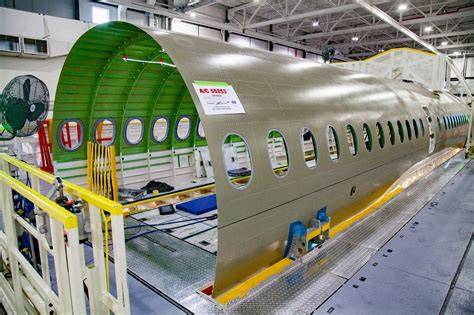
The transformation of the Bombardier CSeries into the Airbus A220 ranks among the strangest ownership stories in modern aviation, because the airplane itself barely changed. Airbus made virtually no modifications to the clean-sheet design after assuming control; the aerodynamics, the weight-saving alloys, the composite wings, the Pratt & Whitney Geared Turbofan integration, and the flight deck were all locked in during Bombardier’s tenure. The aircraft was already certified and carrying paying passengers before program ownership changed hands. Airbus markets the A220 as the only airliner purpose-built for the small end of the single-aisle market, and that claim is literal rather than rhetorical: where competitors shrank existing designs, Bombardier started with a blank sheet aimed squarely at a gap the duopoly had left unserved. The irony is that Bombardier achieved total engineering success and total industrial failure in the same program. Airbus contributed what the Canadian manufacturer could not: order-book credibility, supply chain leverage that drove down production costs, and the global service network that airlines demand before committing to a new type. To circumvent punishing American tariffs that threatened the program’s commercial viability, Airbus even opened a second assembly line in Mobile, Alabama, a maneuver only an industrial heavyweight could execute at that scale.
The Winning Combination of Low Operating Costs and Cabin Comfort
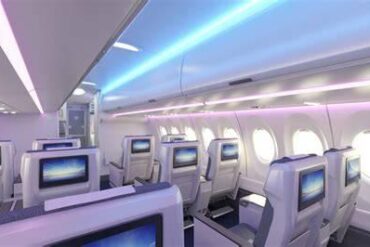
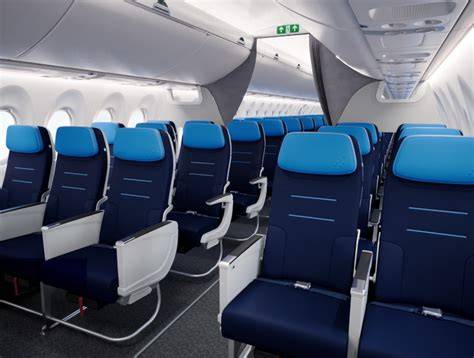
The commercial case becomes convincing the moment operating economics meet passenger experience. Airbus claims the A220 burns roughly 25% less fuel per seat than the previous generation of small single-aisle jets, with a corresponding reduction in emissions, and says the type offers up to 20 more seats than some competitors at up to 14% lower operating cost per seat. Inside the cabin, the A220 delivers a genuine mainline experience rather than a dressed-up regional product. Business class seats four across at 21 inches in width, economy seats exceed 18 inches, and the middle seat in each five-abreast row stretches to 19 inches, a small mercy that frequent travelers notice immediately. The windows measure 11 by 16 inches, the ceiling sits four inches higher than on competing jets, and extra-large overhead bins add 20% more volume, eliminating the gate-check scramble that plagues older narrowbodies. A two-by-three configuration gives every economy passenger either an aisle or a window at worst, and the wide cabin allows airlines to install comfortable seat pitches without surrendering profitable row counts.
JetBlue Extends the A220’s Range Across the Continent
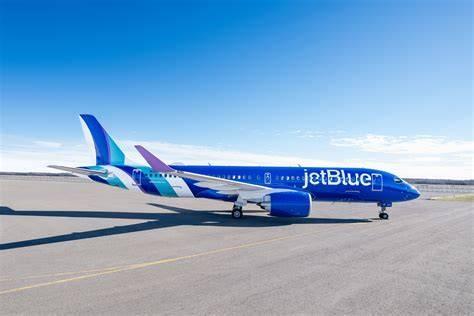
The A220 has proven especially well suited to retiring the venerable Embraer E190, a regional type that dominated US domestic flying for years but whose thirsty engines and demanding maintenance schedule steadily eroded airline margins. JetBlue was the E190’s launch customer and has now received more than 50 A220s, roughly half its total order, modernizing the smaller end of its fleet in a single decisive move. The upgrade is simultaneously an upgauge and an upgrade: more seats, more legroom, superior fuel efficiency, and crucially greater range. JetBlue deliberately operates a specialized 140-seat configuration on its A220-300s, holding passenger count below the aircraft’s maximum exit limit to preserve transcontinental performance. That engineering discipline unlocks routes the E190 could never fly, including New York JFK to secondary western fields such as Reno-Tahoe and Hollywood Burbank, and Boston Logan to Sacramento and Portland, Oregon. The A220 gives JetBlue the freedom to test long, thin markets without risking a widebody’s trip cost, and that willingness to experiment is precisely what the small narrowbody makes affordable.
Delta Maximizes Network Flexibility With Airbus’ Littlest Jet
Delta has pushed the A220 further than any other operator, deploying it as the backbone of Midwestern and West Coast inter-hub connections and as a bridge between large airports and regional fields. Salt Lake City International Airport has become the largest A220 hub on earth, a deliberate outcome of Delta redesigning its regional operation around the type. The high-frequency shuttle between Salt Lake City and John Wayne Airport in Orange County illustrates the aircraft’s particular genius. John Wayne is notorious for strict noise curfews, a short runway, and steep departure profiles, an environment where the A220’s refined aerodynamics and Geared Turbofan engines allow Delta to lift heavy passenger loads at maximum takeoff power without breaching local noise limits. The same aircraft also spares Delta the financial punishment of flying a partially empty Boeing 737 or Airbus A320 on routes like Salt Lake City to Minneapolis-Saint Paul when demand softens, letting the carrier substitute capacity without rewriting its schedule or canceling service.
The Small Narrowbody Advantage That No Rival Can Match
Every airliner carries a trip cost floor that cannot be lowered by simply boarding fewer passengers. Mainline narrowbodies fly with heavier baseline weights, incur higher landing fees, and burn substantial fuel in larger engines just to reach cruise, which is why a half-empty A320 or 737 bleeds cash on a soft route. The A220 pushes that break-even floor lower than any variant of either rival family, allowing a carrier to fly modest loads profitably where a larger jet would hemorrhage money. That arithmetic lets JetBlue chase risky transcontinental markets, lets Delta swap airframes as traffic fluctuates without disturbing its schedule, and lets smaller carriers enter markets using a low-cost platform with mainline appeal. No other aircraft today replicates that combination, which explains why 1,107 orders have accumulated for a jet born from a program that nearly destroyed its creator. The Bombardier name never adorned the A220’s fuselage, but the engineering that made Airbus’ smallest jet a disruptive, historic success in a notoriously impenetrable industry remains entirely its own.