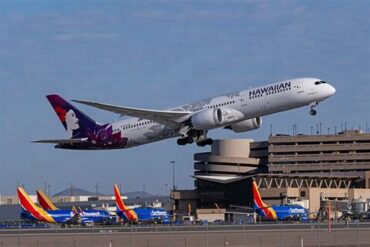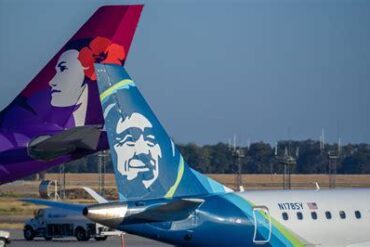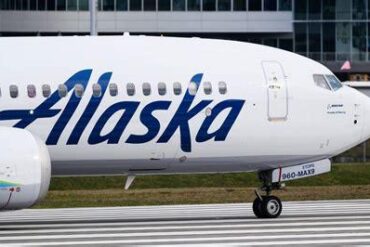
Alaska Airlines has stepped decisively into the global aviation arena, unveiling a strategic wave of long-haul international routes that mark a profound shift in the airline’s trajectory. With the acquisition of Hawaiian Airlines finalized in September 2024, the Alaska Air Group wasted no time in deploying its newly acquired widebody capabilities to transform Seattle-Tacoma International Airport (SEA) into a premier transoceanic gateway. The new services to Tokyo, Seoul, and Rome not only reflect growing international ambitions but also tap into long-standing market demand, reinforcing Alaska Airlines’ standing as the fourth-largest U.S. domestic carrier.
The ‘Alaska Accelerate’ Strategy: A Fast-Track to Global Reach
During the December 2024 Investor Day, CEO Ben Minicucci introduced the ‘Alaska Accelerate’ initiative, a comprehensive blueprint to globalize the carrier’s network. Describing the Hawaiian Airlines acquisition as a “strategic accelerant,” Minicucci noted that what would have taken a decade to accomplish organically was now achievable almost overnight. Central to this strategy is the expanded role of Seattle-Tacoma, where Alaska holds the highest market share and is scaling up to six daily widebody departures.
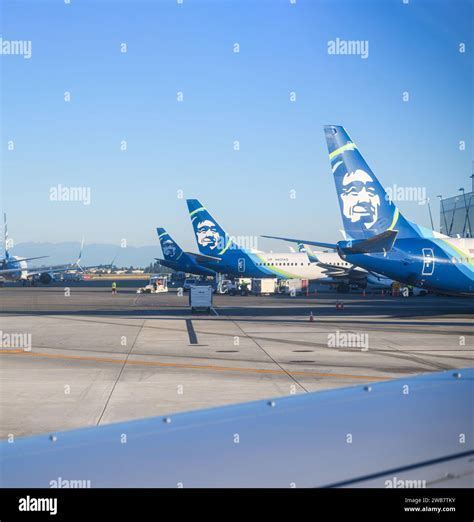
Andrew Harrison, Chief Commercial Officer, emphasized that the integration of Hawaiian Airlines not only added widebody aircraft to the fleet, such as the Airbus A330-300s and Boeing 787-9s, but also linked strategic hubs across the West Coast. These enhancements allow Alaska Airlines to drive stronger point-of-sale revenue, especially in the high-yield international segments.
Loyalty Leads the Way: Mileage Plan Drives International Demand
A key insight from internal research revealed that a large proportion of Alaska Airlines’ Mileage Plan elite members already fly internationally. With more than 50% of surveyed elites having flown abroad in the past year, the message was clear: customers craved international service directly from Alaska’s home base.
Brett Catlin, VP of Loyalty and Alliances, went further, revealing that the carrier could fill 14 Boeing 787s daily with demand from loyalty members alone. He stressed that these customers “want to go global, and they want to do it on Alaska.” With partner enthusiasm from oneworld alliance members like Japan Airlines and British Airways, the long-haul rollout aligns naturally with alliance dynamics.
Tokyo Takes Off: A Pacific Gateway Opens
On May 12, 2025, Alaska Airlines launched its inaugural flight from Seattle-Tacoma to Tokyo-Narita (NRT), operated by Hawaiian Airlines’ A330-300. This historic step inserted Alaska into a highly competitive corridor where ANA, Delta Air Lines, and oneworld partner Japan Airlines already operate from Tokyo’s twin hubs, Narita and Haneda.
Despite being a latecomer to this corridor, Alaska’s edge lies in leveraging Seattle as a consolidated U.S. departure point. By shifting Hawaiian Airlines’ Tokyo flights from Honolulu to Seattle, the group optimizes U.S.-Japan connectivity. Additionally, Japan-Hawaii traffic is consolidated at Tokyo-Haneda, freeing Narita to serve as a Seattle-focused international outlet.
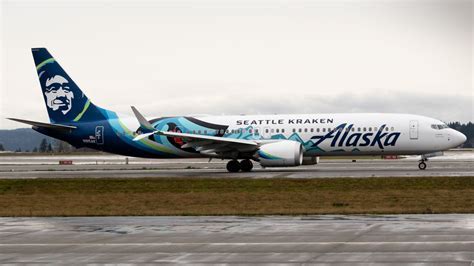
Delta’s recent aircraft upgrade from A330-900 to A350-900 on the Tokyo-Haneda route underscores the competition’s intensity, but also validates Alaska’s bet on robust transpacific demand.
Seoul Next: Competing in a Crowded Korean Market
Following the Tokyo announcement, Alaska Airlines confirmed it would begin five-times-weekly service to Seoul-Incheon (ICN) on September 12, 2025, using Hawaiian Airlines’ Boeing 787-9 aircraft. The carrier enters a route already served by Asiana Airlines, Korean Air, and Delta, all with entrenched positions and loyal clientele.
Yet Alaska’s strategy centers on precision. Flights will depart SEA at 14:50 local time and arrive in Seoul at 18:35 the next day. The aircraft choice offers a superior cabin experience, and the schedule optimizes both cargo connections and passenger transfers. Jason Berry, EVP of Cargo, noted that Tokyo and Seoul are Asia’s third and fourth-largest cargo export markets, allowing Alaska to inject new momentum into its international cargo growth, previously constrained by Hawaiian’s island-focused operations.
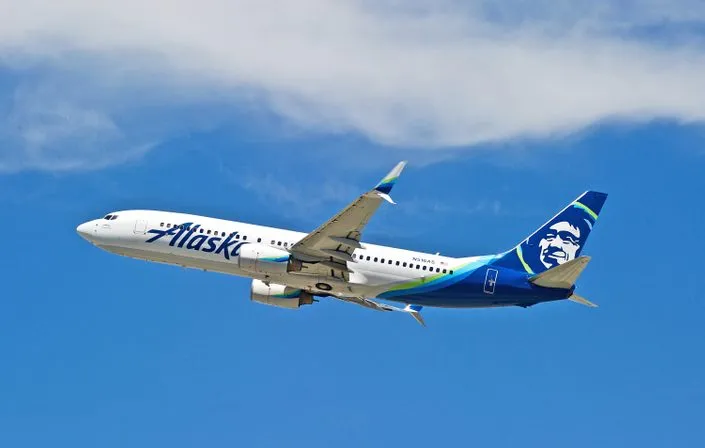
From August 2023 to July 2024, over 117,000 passengers flew between SEA and ICN, indicating a solid market foundation. The timing also takes advantage of Korean Air’s merger with Asiana, temporarily reducing real competition despite the presence of three operating certificates.
Rome Rising: Transatlantic Ambitions Solidify
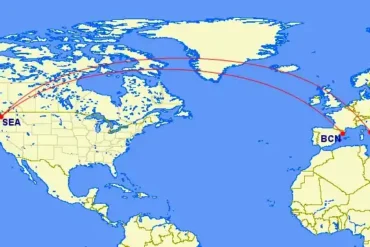
On June 3, 2025, Alaska Airlines announced its most ambitious route yet — Seattle to Rome Fiumicino (FCO) — marking its first transatlantic long-haul service. The flight is set to launch in May 2026, with four weekly departures aboard Hawaiian Airlines’ 787-9. Ticket sales will commence in fall 2025.
For Minicucci, this route holds personal significance, as the son of Italian immigrants. More importantly, it satisfies years of demand from Alaska’s customer base for direct service to Italy, which until now required multi-stop connections from Seattle.
According to OAG, over 47,000 travelers flew from Seattle to Rome on connecting itineraries in the preceding 12 months. With only two West Coast airports (LAX and SFO) offering nonstop Rome flights currently, Alaska Airlines carves a valuable niche. This new offering will compete with European and U.S. giants like Delta, American Airlines, ITA Airways, United, and Neos, all of whom operate to Rome-FCO from other U.S. cities.
A Vision Beyond 2026: More Destinations on the Horizon
While Tokyo, Seoul, and Rome are the first, they are far from the last. The ‘Alaska Accelerate’ roadmap outlines a goal of 12 international long-haul destinations from Seattle-Tacoma by 2030. According to Harrison, SEA is the sixth-largest U.S. market for Asia and Oceania and the tenth-largest for Europe, bolstered by travelers from neighboring states like Alaska, Idaho, Oregon, and Montana.
“Seattle is closer to 90% of the world’s population compared to LAX or SFO,” Harrison stated. This geographical advantage positions the airport as a superior launching pad for East Asia and Europe, both in terms of flight efficiency and carbon footprint.
Notably absent from current plans is Delhi, despite having 129,000 annual one-way passengers connecting from Seattle. The challenge lies in the ongoing closure of Russian airspace, which forced United Airlines to cancel its SFO–Delhi route. Air India, the sole operator from the West Coast to Delhi now, benefits from India’s ability to overfly Russian territory.
The Strategic Role of Hawaiian Airlines’ Fleet
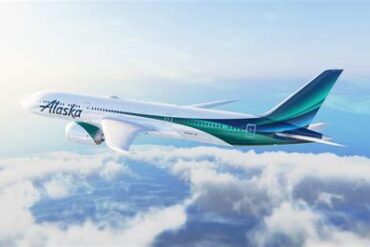
The transformation wouldn’t be possible without the aircraft. Hawaiian Airlines brought with it an impressive widebody fleet, including the Airbus A330-300 and Boeing 787-9, both ideal for long-haul service. Alaska’s existing single-aisle fleet was ill-suited to intercontinental operations, making the merger pivotal for network expansion.
The aircraft, along with international flying rights and operational certifications, were the missing links. Their integration has not only allowed new destinations to materialize but also reinforced Alaska Airlines’ position as a more balanced full-service global airline.
Final Approach: The Rise of a Global Alaska Airlines
Alaska Airlines’ international expansion marks a turning point, not just in its corporate evolution but in the broader dynamics of U.S. air travel. By leveraging strategic assets from Hawaiian Airlines, tapping into strong brand loyalty, and making data-driven decisions, Alaska is writing a new chapter — one where Seattle becomes a genuine global hub, and the airline competes not just with domestic rivals, but with the world.
With the Rome route slated for 2026 and nine more destinations planned by 2030, Alaska Airlines has sent a clear message: it is no longer just a regional or domestic player. It is an emerging global contender with the fleet, ambition, and geography to connect the Pacific Northwest to the world.