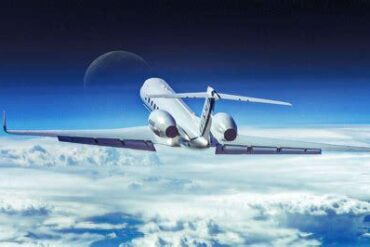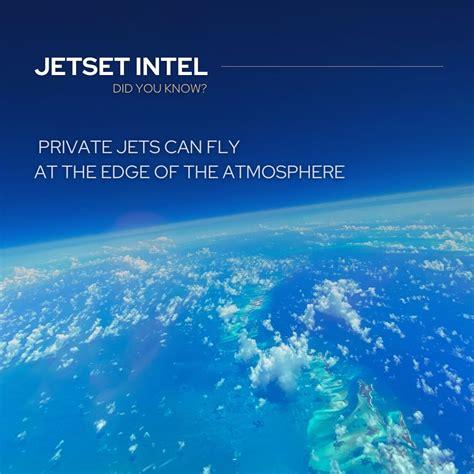
Private jets routinely cruise at altitudes that most commercial airliners rarely reach. While an airline such as Boeing’s 737 MAX or Airbus’ A320 family commonly operates between 30,000 and 41,000 feet, many modern business jets spend substantial portions of their flights between 41,000 and 45,000 feet. Some of the most capable aircraft can climb dramatically higher. The Gulfstream G700 and Gulfstream G650, for example, have published maximum operating altitudes around 51,000 feet, putting them thousands of feet above the normal cruising levels of most passenger aircraft.
That difference is not simply a consequence of private aviation being associated with luxury. It is fundamentally an engineering and operational advantage. A private jet carries far fewer passengers, less baggage and, in many cases, considerably less total weight than a commercial airliner. Its engines, wings, pressurization system and overall structure can therefore be optimized around a different mission: flying a relatively small number of people quickly and efficiently over long distances.
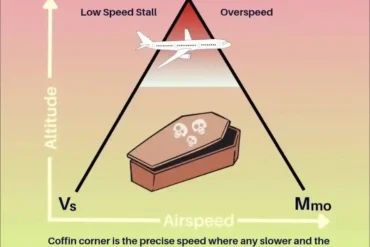
At higher altitude, the atmosphere changes significantly. Air becomes thinner, aerodynamic drag decreases, weather systems are often left below the aircraft, and the amount of traffic sharing the same airspace can fall sharply. Yet climbing higher is not automatically better. Thin air also reduces engine thrust and makes it harder for a wing to generate lift. Every aircraft therefore has a carefully defined performance envelope in which altitude, weight, speed, thrust and aerodynamic efficiency must remain balanced.
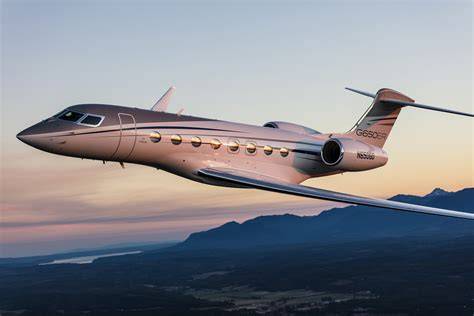
For private jets, that balance is especially favorable because the aircraft are relatively light and are designed around high-altitude cruise from the beginning. The result is an unusual combination of speed, range, efficiency and operational flexibility that helps explain why business jets can comfortably operate where a heavily loaded airliner may struggle to climb.
1. Private Jets Are Light Enough To Reach Higher Altitudes
The most fundamental reason private jets fly higher than commercial planes is weight. At altitude, an aircraft needs enough lift to support its weight while its engines must produce enough thrust to overcome aerodynamic drag and maintain the required airspeed. As the aircraft climbs, the surrounding air becomes progressively less dense, changing the performance of both the wings and engines.
A commercial airliner can weigh hundreds of thousands of pounds when it leaves the airport. It may be carrying hundreds of passengers, their baggage, a substantial quantity of cargo and enough fuel for a long international flight. A private jet, by contrast, may carry fewer than 20 passengers and relatively little baggage. Even when the two aircraft are flying comparable distances, their takeoff weights can be dramatically different.
Consider the Boeing 737 MAX 8, which has a maximum takeoff weight of approximately 182,000 pounds. Its published service ceiling is around 41,000 feet. The much larger Airbus A350-900 has a maximum takeoff weight of roughly 617,300 pounds and a published ceiling of approximately 43,100 feet. These aircraft have enormous engines and sophisticated wings, but their operating weights make very high cruise altitudes more difficult to achieve, particularly during the earlier stages of a flight when fuel loads are high.
A Gulfstream G650, meanwhile, has a maximum takeoff weight of about 99,600 pounds. It uses two Rolls-Royce BR725 engines, each producing approximately 16,900 pounds of thrust. With a comparatively small passenger load, the aircraft can climb toward its 51,000-foot maximum operating altitude under suitable conditions.
The important point is that this is not simply a contest between a private jet and an empty airliner. Commercial aircraft are deliberately built to carry large payloads. Their business model depends on moving hundreds of people and substantial cargo economically. A business jet sacrifices payload capacity for flexibility and performance, and that trade-off makes high-altitude flight far more practical.
As fuel burns during a flight, commercial aircraft become lighter and can often climb to higher cruise levels. This is why an airliner might initially cruise at one altitude and later request a climb after consuming fuel. Private jets benefit from the same principle, but their lower starting weight gives them a much larger performance margin.
2. Private Jets Operate Above Much of the Crowded Airline Traffic
High altitude also provides an important air traffic advantage. Most commercial airline flights spend their cruise portion in the broad band between approximately FL300 and FL410, although exact altitudes vary according to aircraft weight, route, direction, weather and air traffic control requirements.
That portion of the sky can become exceptionally busy. Major corridors around cities such as New York, Washington and Boston contain large numbers of airline flights moving along overlapping routes. Aircraft may be separated by only 1,000 feet vertically while maintaining carefully controlled horizontal spacing. Air traffic controllers must continuously balance departures, arrivals, overflights, holding patterns, weather deviations and aircraft traveling in different directions.
Above FL410, the picture changes. Fewer commercial airliners are capable of sustained operations at those levels under normal payload conditions, so the airspace can be considerably less congested. Business jets, military aircraft and specialized aircraft make up a larger proportion of the traffic.
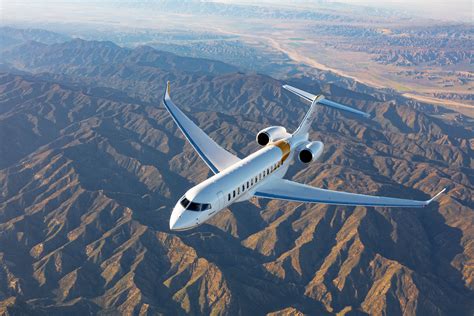
For a private jet operator, that can translate into greater routing flexibility. A Gulfstream, Bombardier Global or similar aircraft flying at FL450 may have access to a less crowded portion of the airspace than a commercial aircraft operating at FL350. The aircraft is still subject to air traffic control and cannot simply fly wherever the crew wants, but fewer conflicts can make efficient routing easier.
The advantage becomes especially interesting on long domestic flights. Suppose two aircraft are traveling across the United States along roughly the same geographic corridor. The commercial aircraft may have to follow a heavily used route structure and accommodate traffic-control requirements, while the private jet at a higher altitude may receive a more direct clearance.
Even a relatively small reduction in route length can matter. On a flight of approximately 2,100 nautical miles, saving 50 to 100 nautical miles can remove a meaningful amount of flight time and fuel consumption. Depending on winds and aircraft speed, that difference can amount to roughly 10 to 20 minutes.
For private aviation, where travelers often pay a premium specifically to save time, this operational flexibility has considerable value.
3. Thinner Air Can Reduce Drag and Improve Cruise Efficiency
At first glance, flying higher might seem inefficient because jet engines receive less dense air. However, high-altitude cruise works because reduced atmospheric density also produces less aerodynamic drag.
At approximately FL450, air density is only around 16% of its value at sea level. It is also roughly half the density found around FL350. The thinner atmosphere means that an aircraft encounters less resistance from the surrounding air, allowing it to maintain high true airspeeds with reduced parasitic drag.
That does not mean higher is always more fuel-efficient. Aerodynamics involves competing effects. As altitude increases, the wings have less dense air available to generate lift. The aircraft may need to fly at a higher angle of attack, which can increase induced drag. Engine performance also changes as atmospheric pressure and temperature fall.
The ideal cruise altitude is therefore a moving target. It depends on aircraft weight, speed, temperature, winds and engine performance. A heavy airliner often achieves its best balance somewhere around FL340 to FL390, while a lighter long-range business jet may find its optimum considerably higher.
This is one reason modern private jets are engineered around high-altitude cruise rather than merely being capable of reaching it. Their wings, engines and aerodynamic surfaces are optimized to extract useful efficiency from the thin atmosphere.
A Gulfstream G650, for example, can cruise at very high altitude while maintaining speeds approaching the upper end of the business-jet spectrum. The Bombardier Global 7500 is similarly designed for sustained high-altitude operation. At those levels, the aircraft can exploit lower drag while using powerful engines specifically designed to maintain performance in thin air.
Fuel savings accumulate over time. A large-cabin business jet can consume hundreds of gallons of fuel per hour, so even a modest improvement in fuel burn per nautical mile becomes meaningful across thousands of flight hours. For operators, high-altitude efficiency is therefore not merely a technical curiosity. It directly affects operating economics.
4. Most Weather and Convective Activity Remains Below Them
One of the most noticeable benefits of high-altitude private aviation is the ability to fly above much of the weather.
Most significant atmospheric weather occurs in the troposphere, the lowest major layer of Earth’s atmosphere. Thunderstorms, icing, heavy precipitation, frontal systems and much of the turbulence encountered by aircraft occur within or near this layer. The tropopause, which marks the transition into the stratosphere, varies substantially with latitude and season but commonly sits around 36,000 feet at mid-latitudes.
Commercial aircraft frequently cruise near this boundary. An airliner at FL350 or FL370 may be high above ordinary clouds while still encountering powerful weather systems. A major thunderstorm can have tops reaching 40,000 feet or higher, forcing an aircraft to make a significant lateral deviation.
A private jet at FL450 or FL470 has a better chance of remaining above those cloud tops. That does not mean the aircraft is immune to storms. Exceptional thunderstorms can reach extraordinary altitudes, and pilots must always treat convective weather as a serious operational hazard. Nevertheless, a higher cruising altitude can reduce the number of weather systems that directly interfere with the planned route.
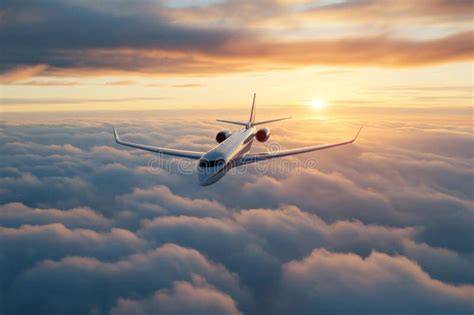
The same principle applies to some forms of turbulence. The jet stream often occupies altitudes around FL300 to FL400, with wind speeds that can reach 100 to 200 knots in strong areas. Clear-air turbulence can occur outside the visible boundaries of the jet stream, so climbing above this region does not guarantee a smooth flight. However, a business jet operating at FL450 may be able to avoid some of the turbulence associated with lower atmospheric layers.
For passengers, the effect can be significant. A high-altitude business jet may spend more of its journey in relatively stable air, reducing the frequency of some turbulence encounters and minimizing weather-related deviations. Pilots still monitor forecasts, radar information and reports from other aircraft, but greater altitude gives them another useful option when managing the route.
This is especially valuable for private aviation because passengers often choose business jets specifically to reduce travel time. Avoiding a lengthy detour around a storm can preserve one of the principal advantages of flying privately.
5. Private Jets Are Specifically Engineered for High-Altitude Flight
The final reason is perhaps the most important: private jets are designed to fly high.
Manufacturers do not simply take a conventional aircraft and instruct pilots to climb thousands of feet higher. High-altitude operation requires carefully integrated changes to the engines, wings, fuselage, pressurization system and flight-control architecture.
Cabin pressurization provides a clear example. At FL510, the outside atmosphere is extremely thin, so the aircraft must maintain a substantial pressure difference between the cabin and the surrounding air. Modern business jets can provide surprisingly low cabin altitudes even while flying above 50,000 feet.
The Gulfstream G700, for example, is designed to maintain a cabin altitude of approximately 4,850 feet at FL510 under specified conditions. This is possible because its pressurization system and fuselage are engineered for the demands of high-altitude operation.
A smaller business-jet fuselage can also provide structural advantages. Pressurization loads depend partly on the size and shape of the pressure vessel. A narrow business-jet cabin does not experience exactly the same structural demands as a much larger commercial widebody fuselage when exposed to high differential pressures.
The wings are equally important. Modern long-range business jets use highly swept, carefully optimized wing designs intended to produce low drag at high subsonic speeds and high altitudes. The Bombardier Global 7500, for instance, was developed with high-altitude cruise as a core requirement rather than an afterthought.
The engines are matched to that mission as well. Turbofans such as the Rolls-Royce Pearl family and General Electric Passport family are engineered to deliver the necessary performance across the demanding operating environment of large-cabin business jets. Their performance characteristics complement aircraft designed to spend long periods above FL400.
Commercial aircraft could theoretically be redesigned for significantly higher cruise altitudes. But doing so would involve structural, aerodynamic and engine changes that might add weight and cost without producing enough economic benefit. An airline aircraft has to justify its design by carrying hundreds of passengers and cargo efficiently. A private jet has a completely different economic equation.
That is why the altitude gap exists. It is not because commercial aircraft are incapable of flying high in an absolute sense. It is because their entire design is optimized around a different balance of payload, range, cost, reliability and air traffic requirements.
Why Flying Higher Matters to Private Jet Passengers
The ability to cruise above 40,000 feet combines several advantages that reinforce one another. A lighter aircraft can climb higher. Higher altitude reduces aerodynamic drag. Thinner air can improve cruise efficiency when the aircraft is operating within its optimum envelope. Less congested airspace can create opportunities for more direct routing, while the ability to remain above much of the weather can reduce deviations.
None of these advantages is guaranteed on every flight. Wind direction can make a lower altitude more efficient. Air traffic control can require a particular altitude. Severe weather can extend far above normal cruise levels, and aircraft performance changes continuously as fuel is burned.
Even so, the overall design philosophy is unmistakable. Private jets trade passenger and cargo capacity for performance, and high-altitude capability is one of the clearest results of that trade.
A commercial airliner may carry hundreds of people at 35,000 feet because that is an exceptionally effective way to move large numbers of passengers over long distances. A Gulfstream or Bombardier business jet may carry a small group of travelers at 45,000 or 51,000 feet because its entire design is built around a different objective.
That difference explains why the view from a private jet can literally be above the normal airline traffic. At those altitudes, the aircraft is operating in an environment where the air is thinner, the sky is often clearer, traffic is lighter and the surrounding atmosphere is more stable.
Ultimately, private jets fly higher than most commercial planes because they are lighter, less constrained by payload, optimized for thin-air cruise, engineered specifically for high-altitude performance and able to take advantage of less congested airspace. The altitude itself is only the visible part of the equation. Beneath it lies an intricate combination of aerodynamics, propulsion, structural engineering and aviation economics that makes sustained flight above 40,000 feet practical.