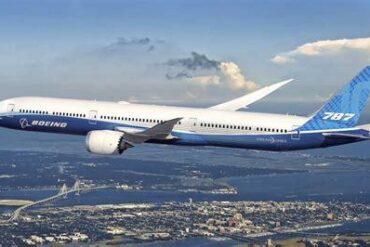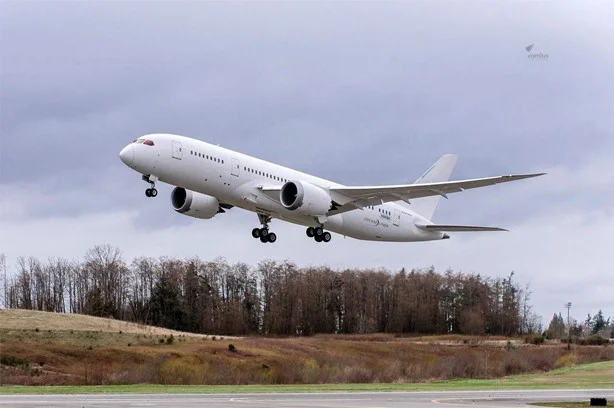
The idea of dismantling a modern widebody aircraft typically conjures images of aging jets that have endured decades of service, their airframes fatigued and their systems outdated. Yet the case of Boeing 787-8 Dreamliner N947BA overturns that expectation entirely. This aircraft, with barely 13 flying hours to its name, has been reduced to a source of spare parts—an outcome that feels counterintuitive until the underlying economics and history are fully understood.
What makes this story so compelling is not just the rarity of such an event, but the convergence of manufacturing challenges, abandoned business ambitions, and a global supply chain strained to its limits. The dismantling of N947BA is not an anomaly driven by failure—it is a calculated decision shaped by market demand.
A Dreamliner That Never Found Its Purpose
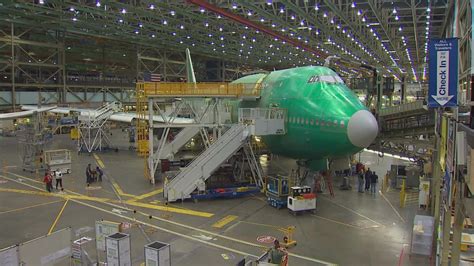
The journey of N947BA began with promise. As the 17th Boeing 787 ever built, it emerged from the Everett production line during the early days of the Dreamliner program. These early aircraft, often referred to as part of the “terrible teens,” carried the burden of being pioneers—jets built before the program had fully matured.
From the outset, this aircraft struggled to find a permanent home. Initially intended for Royal Air Maroc, the jet was ultimately rejected due to assembly defects and performance limitations, including excess structural weight. These early production shortcomings would become a defining factor in its fate.
Instead of entering commercial service, the aircraft was redirected into a far more ambitious vision. In 2017, it was acquired by Crystal Cruises, which planned to transform it into a luxury flying experience featuring just 60 first-class seats and ultra-long-haul itineraries spanning the globe.
The concept was bold—almost cinematic—but it never materialized. The collapse of the luxury aviation venture, compounded by the financial pressures of the pandemic, led to the aircraft being sold off at a fraction of its potential value. What followed was years of storage, with the Dreamliner sitting idle in the desert, waiting for a second chance that never came.
The “Terrible Teens” Problem: Early-Build Compromises
To understand why such a young aircraft became expendable, it is essential to examine the technical realities of early 787 production. The “terrible teens” label was not coined lightly. These aircraft required extensive post-production modifications, particularly around the wing-to-fuselage join, where structural weaknesses demanded reinforcement.
These fixes came at a cost. Additional materials increased the aircraft’s weight, reducing its maximum takeoff weight by as much as 12 tonnes. For airlines, this translated into reduced range, lower payload capacity, and diminished economic efficiency—three critical factors in long-haul operations.
Unlike later Dreamliners, which benefited from refined manufacturing processes and optimized designs, early units like N947BA became outliers in a fleet built for efficiency. Retrofitting them to modern standards proved costly and, in many cases, economically unjustifiable.
From Storage to Scrap: A Sudden Turn at Roswell
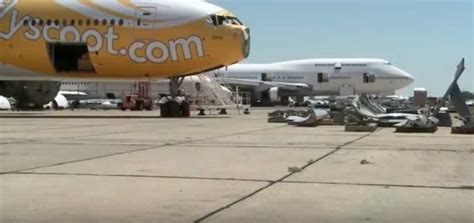
After spending nearly seven years in storage at Victorville, N947BA was eventually sold again and relocated to Roswell International Air Center in New Mexico. But this was not a return to service—it was the beginning of the end.
The aircraft had logged only a handful of ferry flights, making its transition to dismantling all the more striking. Yet for companies like C&L Aviation, the appeal was obvious: a virtually untouched Dreamliner offered a treasure trove of high-value components.
This marked a historic moment in aviation: the first GE-powered Boeing 787 to be dismantled in the United States, and arguably the first time a “new” Dreamliner had been parted out anywhere in the world.
Why a Boeing 787 Is Worth More in Pieces
At the heart of this story lies a simple but powerful principle: market demand can outweigh operational value. The global aviation industry is currently grappling with persistent supply chain disruptions, making it increasingly difficult to source critical aircraft components.
For operators maintaining aging Dreamliner fleets, spare parts are no longer just maintenance items—they are strategic assets. This has created a scenario where dismantling an aircraft like N947BA becomes not only viable, but highly profitable.
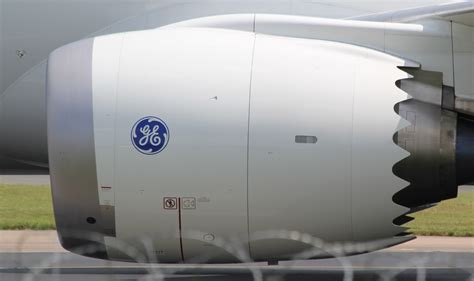
The numbers tell a compelling story. The aircraft’s two GEnx-1B engines alone are valued at approximately $20 million each at half-life condition. That means the engines, by themselves, are worth significantly more than what the entire aircraft sold for just a few years ago.
Beyond the engines, the aircraft contains a wide array of high-demand components:
- Landing gear systems valued between $4–6 million
- Avionics and line-replaceable units (LRUs) worth up to $4 million
- Auxiliary power units, nacelles, and thrust reversers contributing several million more
- Rotables, actuators, brakes, and cabin equipment adding incremental but meaningful value
Collectively, these components push the total estimated value of the aircraft’s parts to over $50 million. In contrast, selling the aircraft as a complete unit—given its limitations and unusual history—would likely yield far less.
The Supply Chain Squeeze Driving Aircraft Teardowns
The dismantling of N947BA is not an isolated event driven by its unique circumstances. It reflects a broader shift in the aviation ecosystem, where parts scarcity is reshaping asset values.
Airlines worldwide are facing delays in maintenance cycles due to limited availability of critical components. Manufacturers, still recovering from pandemic-era disruptions, are struggling to meet demand. In this environment, a low-cycle aircraft becomes something akin to a flying warehouse—or, in this case, a grounded one.
This dynamic explains why teardown specialists describe the process not as a loss, but as a redistribution of value. Each component extracted from N947BA will extend the operational life of other Dreamliners, effectively supporting the global fleet in a time of need.
Not an Isolated Case: A Growing Trend
While N947BA’s minimal flight hours make it particularly noteworthy, it is not alone in its fate. Earlier Dreamliner teardowns included Boeing test aircraft, which were never intended for commercial service. More recently, however, even airline-operated 787s have begun to be dismantled.
In 2023, two former Norwegian Air Shuttle 787-8s were broken up at Glasgow Prestwick Airport. Unlike N947BA, these aircraft had accumulated years of service and were approaching costly maintenance milestones, such as 12-year checks and landing gear overhauls.
Despite the different circumstances, the conclusion remains the same: when maintenance costs and market demand intersect, parting out an aircraft can deliver greater financial returns than keeping it intact.
The Hidden Value of Low-Cycle Aircraft
Ironically, what makes N947BA unusual—its extremely low flight time—is also what makes it so valuable as a donor aircraft. Components with minimal wear command premium prices, especially when they can be immediately deployed into active fleets.
This has sparked interest in other early-build Dreamliners that have spent years in storage. Aircraft like VP-CSC, another member of the “terrible teens,” are now being closely watched by industry insiders. With only a few flights recorded and long-term storage behind them, they represent untapped reservoirs of high-value parts.
A Market-Driven Reality for Modern Aviation
The dismantling of a nearly-new Boeing 787-8 Dreamliner may seem wasteful at first glance, but it is, in reality, a reflection of cold, rational market forces. The aircraft’s troubled origins, combined with an unexpected surge in parts demand, created a scenario where breaking it apart made more sense than putting it into service.
This case underscores a broader truth about modern aviation: an aircraft’s value is no longer defined solely by its ability to fly. In a constrained supply environment, its components may hold greater worth than the machine itself.
For N947BA, the story ends not with passengers boarding for distant destinations, but with its parts dispersed across the globe—keeping other Dreamliners in the air. It is an unconventional legacy, yet one that perfectly captures the evolving economics of aviation in the 21st century.