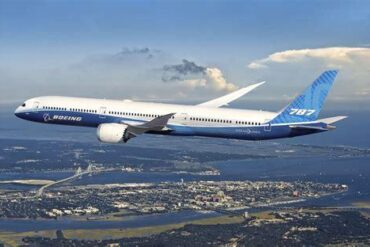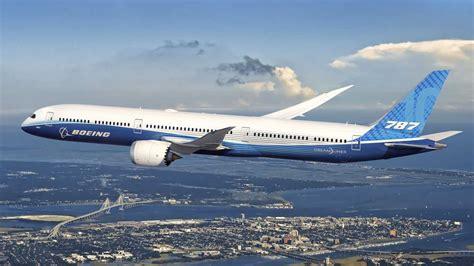
The Boeing 787 Dreamliner did not quietly enter service—it disrupted decades of entrenched aviation logic with a level of precision that forced airlines to rethink everything from route planning to pricing strategy. For years, long-haul air travel revolved around the hub-and-spoke model, concentrating passengers through mega-airports like London Heathrow, Los Angeles, and Dubai. The Dreamliner changed that paradigm by making long, thin routes not just viable, but profitable.
What makes the 787 indispensable is not merely its range, but its ability to match capacity with demand while maintaining exceptional fuel efficiency. Airlines no longer needed to gamble on filling 300+ seats to justify intercontinental service. Instead, they could deploy a right-sized aircraft capable of flying farther, burning less fuel, and opening routes once dismissed as economically irrational.
Across more than a decade of operations, several routes have stood out—not just as successful ventures, but as defining proof points that reshaped global aviation. These are not just flights; they are turning points where engineering met strategy, and the result was a quieter, more efficient revolution in the skies.
Tokyo to Frankfurt: The Route That Proved the Dreamliner’s Maturity
When All Nippon Airways (ANA) launched the Tokyo Haneda–Frankfurt route in January 2012, the aviation world watched closely. This was not a niche experiment or a secondary market—it was a high-stakes intercontinental corridor linking two major economic powerhouses.
The significance of this route lies in its role as the Dreamliner’s first true endurance test. Short-haul domestic flights had already demonstrated the aircraft’s efficiency, but a 12-hour mission across Eurasia required reliability, consistency, and performance under sustained operational pressure.
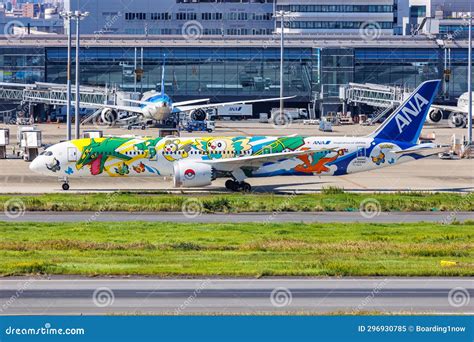
ANA’s gamble paid off almost immediately. The airline reported projected annual fuel savings of approximately $131 million, a staggering figure that underscored the 787’s economic advantage. By replacing older widebodies, ANA achieved a rare balance: maintaining premium service standards while dramatically lowering operating costs.
This route did more than validate a new aircraft—it established a template for long-haul deployment. Airlines around the world began to recognize that the Dreamliner could handle flagship routes traditionally reserved for larger jets, without sacrificing profitability. In many ways, Tokyo–Frankfurt marked the moment the 787 transitioned from an ambitious project to an essential asset.
Oslo to New York: When Low-Cost Long-Haul Became Real
In 2013, Norwegian Air Shuttle took a bold step that many industry veterans considered reckless: launching low-cost transatlantic flights using the Boeing 787. The Oslo–New York route became the centerpiece of this strategy, directly challenging legacy carriers that had long dominated the market.
The brilliance of this move lay in the Dreamliner’s low trip cost. Norwegian could offer dramatically reduced fares while still operating a widebody aircraft across the Atlantic. For passengers, it felt almost surreal—long-haul travel at prices previously associated with short-haul flights.
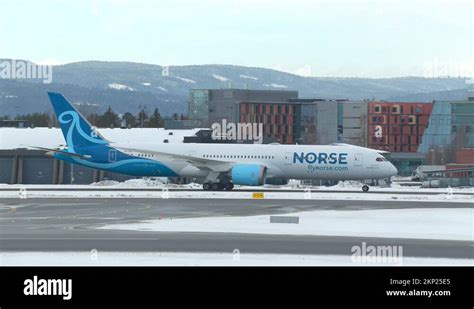
The ripple effects were immediate. Established airlines were forced to respond by introducing basic economy products, effectively reshaping pricing structures across the entire transatlantic market. While Norwegian itself faced financial turbulence in later years, the technical success of the route proved a crucial point: the 787 could support high-utilization, low-margin operations.
This route demonstrated that efficiency gains could be passed directly to consumers, democratizing long-haul travel. It also highlighted the aircraft’s flexibility—capable of thriving not only in premium-heavy configurations but also in cost-sensitive business models.
Even as the broader low-cost long-haul experiment faced challenges, the Dreamliner emerged unscathed, reinforcing its role as a multi-strategy platform adaptable to vastly different airline philosophies.
Tokyo to San Jose: The Perfect Example of Hub Bypass Strategy
The launch of Tokyo Narita–San Jose in 2013 represented one of the purest expressions of the Dreamliner’s potential. Once again led by ANA, this route connected Japan directly with Silicon Valley, bypassing the congestion of San Francisco International Airport.
Before this service, travelers heading to Silicon Valley endured additional connections, often losing hours navigating crowded hubs. The Dreamliner eliminated that inefficiency, offering a nonstop link tailored to high-value business travelers.
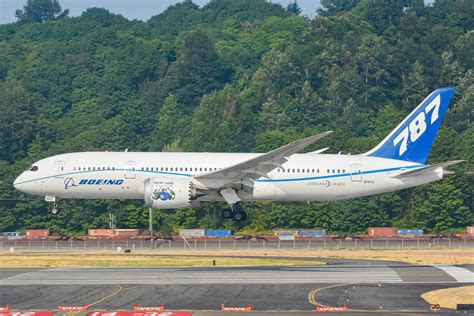
What made this route particularly fascinating was its intentional design. ANA configured the 787-8 with just 158 seats, including a disproportionately large business class cabin. This was not about volume—it was about yield optimization.
By targeting corporate travelers willing to pay for convenience, ANA transformed a secondary airport into an international gateway. The success of this route proved that demand does not always require massive passenger numbers—it requires the right passengers.
This shift empowered smaller airports worldwide. Suddenly, cities without the scale of major hubs could compete on a global stage, provided they had access to the right aircraft. The Dreamliner became the enabler of this transformation, turning overlooked markets into strategic opportunities.
Houston to Sydney: Ultra-Long-Haul Without Compromise
When United Airlines introduced the Houston–Sydney route in 2018, it pushed the boundaries of what twin-engine aircraft could achieve. Covering 7,469 nautical miles, this route would have once been considered the domain of four-engine giants like the Boeing 747.
The Dreamliner changed that equation entirely.
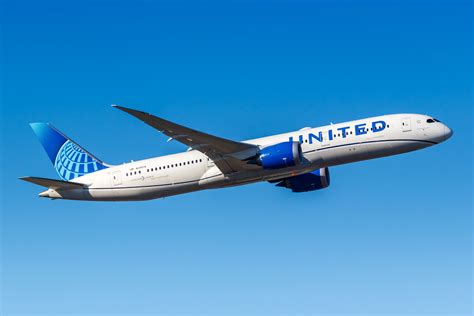
The key to this route’s success lies in operational efficiency under extreme conditions. Westbound flights often battle intense headwinds, stretching flight times beyond 17 hours. The 787-9’s lightweight composite structure and advanced aerodynamics allow it to carry sufficient fuel without sacrificing payload—a delicate balance that defines profitability on ultra-long-haul routes.
For United, the route achieved something even more strategic: it transformed Houston into a global gateway for Australia, bypassing traditional West Coast entry points. Travelers from across the southern United States and Latin America gained direct access to Sydney without the need for additional connections.
This route proved that range alone is not enough—what matters is the ability to sustain long missions efficiently, day after day. The Dreamliner delivered exactly that, making ultra-long-haul operations not just feasible, but dependable.
Melbourne to Dallas/Fort Worth: Redefining Transpacific Connectivity
In December 2022, Qantas introduced a route that quietly rewrote transpacific travel norms: Melbourne–Dallas/Fort Worth. Unlike traditional services that routed passengers through Los Angeles, this flight connected Australia directly to the central United States.
The implications were profound. For decades, West Coast hubs acted as mandatory gateways between the two continents. The Dreamliner eliminated that necessity, enabling airlines to bypass congestion and reduce total travel time.
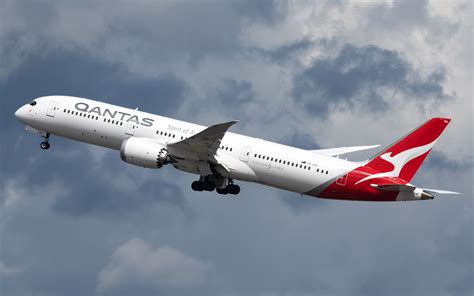
Spanning over 7,800 nautical miles, this route demonstrated the 787-9’s ability to operate at the edge of its range while maintaining commercial viability. It also showcased the aircraft’s adaptability to varying environmental conditions, from Australian summer heat to North American winter operations.
For passengers, the benefits were immediate: fewer connections, shorter journeys, and a smoother travel experience. For Qantas, it meant tapping into a massive hub at Dallas/Fort Worth without relying on intermediary stops.
This route reinforced a critical insight: the Dreamliner is not just about connecting major cities—it’s about connecting the right cities directly, even when geography once made that impractical.
Perth to London: The Route That Changed Everything
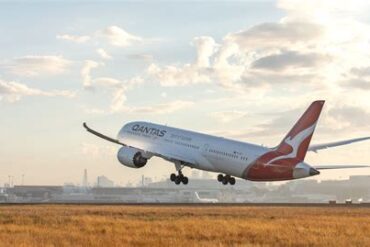
Few routes carry the symbolic and practical weight of Perth–London Heathrow. When Qantas launched this service, it was widely hailed as a historic breakthrough—the first nonstop passenger flight linking Australia and Europe.
At 7,828 nautical miles, this was not just another long route; it was a redefinition of global distance.
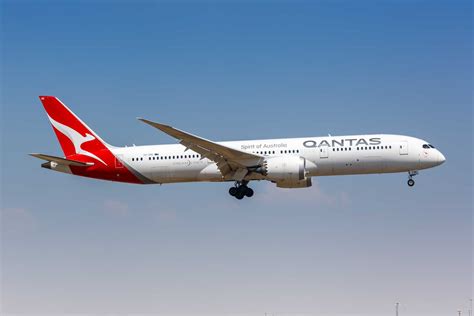
What makes this route extraordinary is not just its length, but its immediate success. Within a year, it achieved a 94% load factor, far exceeding industry norms. This level of demand proved that passengers were willing to endure a 17-hour flight in exchange for the simplicity of a nonstop journey.
The Dreamliner’s cabin design played a crucial role here. Improved humidity, lower cabin altitude, and larger windows contributed to a more tolerable ultra-long-haul experience. Qantas capitalized on these features, positioning the flight as not just efficient, but physiologically manageable.
This route effectively rewrote the “Kangaroo Route”, which once required multiple stopovers across Asia or the Middle East. What had historically taken days could now be completed in a single, continuous journey.
More importantly, it demonstrated that no city pair is inherently unreachable. With the right aircraft, even the most extreme distances become commercially viable realities.
Why These Routes Made the 787 Indispensable
Each of these routes represents a different dimension of the Dreamliner’s capabilities, but together they tell a unified story. The aircraft’s true power lies in its ability to align economics with opportunity.
- It enables airlines to bypass congested hubs and serve secondary cities directly
- It supports both premium-focused and low-cost business models
- It makes ultra-long-haul routes financially sustainable
- It reduces operational risk by matching capacity with demand
This is why the Boeing 787 is not just another aircraft—it is a strategic tool. Airlines use it to explore markets that were previously inaccessible, to refine their networks, and to compete in ways that were once impossible.
The industry did not simply adopt the Dreamliner; it adapted around it. Routes like Tokyo–Frankfurt and Perth–London are not isolated successes—they are evidence of a broader transformation.
And here’s the quietly fascinating part: many of today’s “normal” nonstop routes would have seemed wildly unrealistic just fifteen years ago. The 787 didn’t just make them possible—it made them routine.
That’s the difference between innovation and necessity.