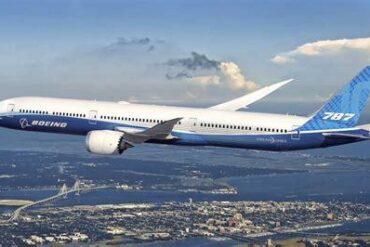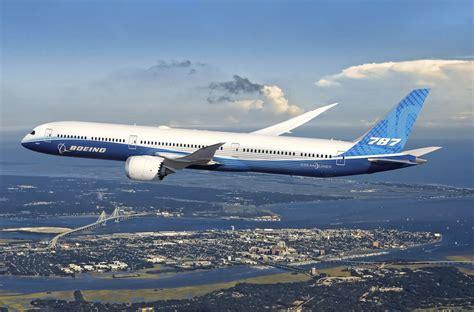
The arrival of the Boeing 787 Dreamliner in 2011 did more than introduce a new aircraft—it triggered a structural shift in how the aviation industry thinks about distance, demand, and passenger experience. Fifteen years later, the Dreamliner is no longer just a successful program; it is the blueprint for modern long-haul travel. What once seemed like an ambitious gamble has become the defining philosophy of global aviation.
For decades, long-haul travel followed a rigid formula. Airlines concentrated traffic through massive hub airports, relying on large aircraft to maximize efficiency. Travelers accepted long layovers as inevitable, often zigzagging across continents just to reach their final destination. The system worked—but it was far from optimal. The Dreamliner changed that equation permanently.
Instead of chasing size, Boeing pursued efficiency, flexibility, and passenger comfort. That decision not only reshaped airline economics but also redrew the global air route map, bringing distant cities closer together in ways that once seemed commercially impossible.
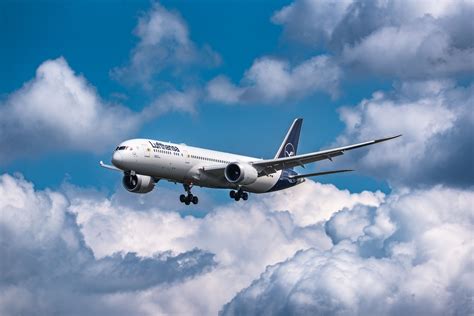
The End of Hub Dependency: A New Era of Direct Connectivity
Before the Dreamliner era, airlines faced a harsh economic reality: long-haul routes required high passenger volumes to remain profitable. Aircraft like the Boeing 747 and Airbus A340 offered the necessary range but demanded consistently full cabins. As a result, airlines funneled passengers through major hubs such as Heathrow Airport and Dubai International Airport, creating a system built on consolidation rather than convenience.
The Dreamliner dismantled that dependency. With its ability to carry between 240 and 330 passengers while maintaining intercontinental range, it unlocked a new category of routes—“long, thin” connections linking secondary cities directly. Suddenly, markets that lacked the density for a jumbo jet could sustain nonstop service.
The impact was immediate and profound. Airlines began launching routes that had long existed only in theoretical network plans. Flights such as Austin to London, San Jose to Tokyo, and Perth to Europe became viable. These weren’t just new routes; they represented a philosophical shift toward passenger-centric travel, where convenience began to outweigh sheer scale.
Over time, more than 370 new nonstop routes emerged thanks to the Dreamliner. The traditional hub-and-spoke model didn’t disappear—but it was no longer the only viable strategy.
Boeing’s Bold Bet Against the Superjumbo Vision
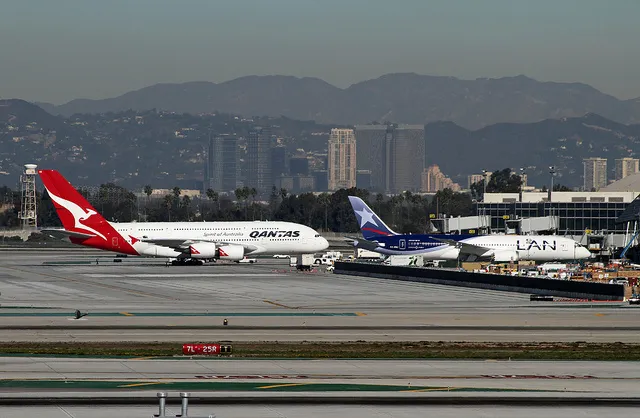
In the early 2000s, the aviation industry stood at a crossroads. Airbus placed its confidence in the Airbus A380, a double-deck giant designed to move massive numbers of passengers between global megahubs. Boeing, meanwhile, took a radically different path with the 787.
At the time, Airbus’s vision seemed dominant. The A380 captured public imagination, symbolizing luxury and scale. Many believed the future of aviation would revolve around fewer, larger flights connecting the world’s busiest airports.
But scale came with constraints. Filling more than 500 seats consistently proved challenging, particularly outside peak travel seasons. Airlines faced increasing financial pressure when demand fluctuated, and the operational complexity of such large aircraft limited flexibility.
The Dreamliner quietly exposed those weaknesses. By offering lower operating costs and greater route adaptability, it allowed airlines to increase frequency, diversify destinations, and reduce financial risk. Passengers, given the choice, overwhelmingly preferred nonstop flights over connections—even if it meant flying on a smaller aircraft.
The result was a decisive shift in industry strategy. Production of the A380 ended after just 251 units, while the 787 surged past 2,300 orders. Boeing’s bet on efficiency and flexibility didn’t just pay off—it redefined the competitive landscape.
Reengineering the Passenger Experience at 35,000 Feet
Long-haul travel has always been physically demanding. Traditional cabins, pressurized to the equivalent of 8,000 feet, exposed passengers to lower oxygen levels, dry air, and persistent fatigue. For decades, these discomforts were considered unavoidable.
The Dreamliner challenged that assumption.
Its composite fuselage allowed for a lower cabin altitude—around 6,000 feet—while maintaining higher humidity levels. The difference may appear subtle on paper, but in practice, it significantly reduces dehydration, headaches, and exhaustion on long flights. Passengers often arrive feeling noticeably more refreshed.
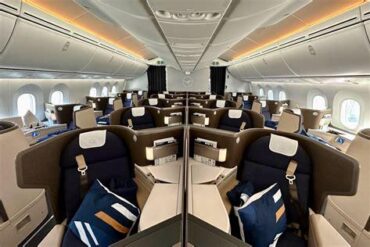
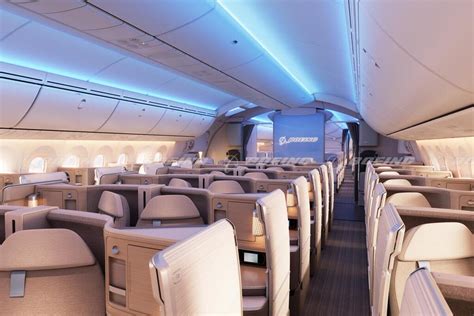
Beyond air quality, the aircraft introduced a suite of innovations that reshaped expectations. Larger windows—about 30% bigger than those on comparable aircraft—flood the cabin with natural light. Instead of mechanical shades, electronically dimmable windows allow passengers to control brightness without losing their view.
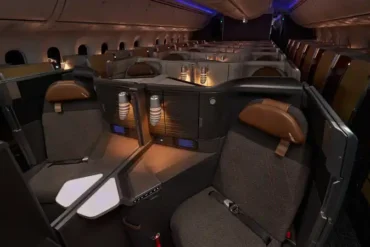
Advanced LED lighting systems simulate natural day-night cycles, helping regulate circadian rhythms during ultra-long-haul flights. Combined with quieter engines and improved cabin acoustics, the Dreamliner delivers an environment that feels less like endurance travel and more like a controlled, comfortable journey.
These features didn’t just enhance comfort—they raised the standard across the industry. Competing aircraft now incorporate similar technologies, proving how deeply the Dreamliner influenced cabin design philosophy.
Composite Construction: The Technology Behind the Revolution
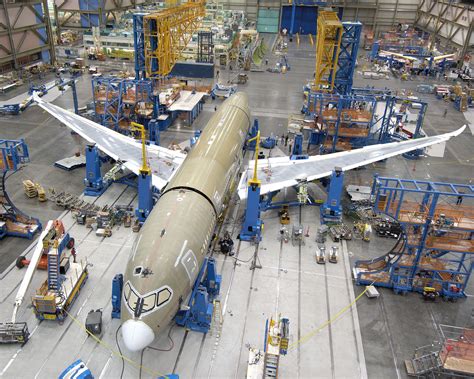
At the heart of the Dreamliner’s performance lies a radical departure from traditional aircraft construction. Earlier jets relied heavily on aluminum, a material that, while reliable, imposed limitations in weight, maintenance, and environmental control.
The 787 changed that by using approximately 50% carbon-fiber-reinforced composites by weight. This shift delivered multiple advantages simultaneously.
First, the lighter structure improved fuel efficiency dramatically. Airlines report fuel consumption reductions of roughly 20–25% compared to older aircraft like the Boeing 767. In an industry where fuel is one of the largest expenses, these savings translate into enormous financial benefits over time.
Second, composite materials resist corrosion and fatigue more effectively than metal, reducing maintenance requirements and extending service life. Boeing estimated maintenance costs could drop by up to 30%, a figure that significantly alters long-term operating economics.
Third, the aircraft’s “more-electric” architecture replaced many traditional pneumatic systems with electrical ones. This not only improved efficiency but also simplified system design and maintenance.
The Dreamliner’s engines—whether the General Electric GEnx or Rolls-Royce Trent 1000—further enhance performance, delivering quieter operation and lower emissions. Together, these technologies form a cohesive system that prioritizes efficiency without compromising capability.
Unlocking Ultra-Long-Haul Possibilities
Perhaps the most striking proof of the Dreamliner’s impact lies in the routes it made possible. Airlines no longer had to choose between range and profitability. The 787 offered both.
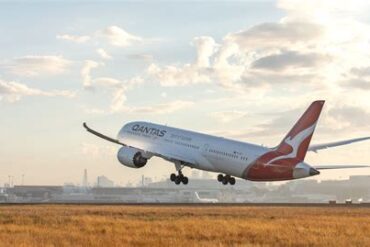
Carriers in geographically isolated regions benefited most dramatically. Qantas, for instance, leveraged the 787-9 to launch nonstop flights between Perth and London—one of the longest scheduled routes in the world. Covering over 9,000 miles, the journey exemplifies the aircraft’s ability to connect distant cities directly.
Today, the Dreamliner operates some of the longest flights on Earth, many exceeding 15 hours. Its range—up to 7,565 nautical miles depending on the variant—allows airlines to bypass traditional hubs entirely, creating a more efficient and passenger-friendly network.
This capability has reshaped airline strategy. Instead of concentrating traffic, carriers can now distribute it more evenly, reducing congestion at major airports while expanding global connectivity.
A Strategic Asset for Every Type of Airline
One of the Dreamliner’s greatest strengths is its versatility. Unlike previous widebodies that catered primarily to large legacy carriers, the 787 appeals to a wide spectrum of airlines.
Full-service global airlines use it to expand international networks with lower risk. Smaller national carriers deploy it to enter long-haul markets without investing in larger aircraft. Even low-cost airlines have experimented with long-distance routes, leveraging the Dreamliner’s efficiency to offer competitive pricing.
This adaptability has made the 787 a cornerstone of modern fleet planning. Airlines can tailor capacity to demand more precisely, avoiding the financial strain of operating oversized aircraft on marginal routes.
The result is a more dynamic, resilient aviation ecosystem—one where airlines can respond quickly to changing market conditions without sacrificing profitability.
The Numbers That Define a Game-Changer
The Dreamliner’s influence is not just theoretical—it is measurable at scale. Since its introduction, the program has accumulated over 2,300 orders and delivered more than 1,000 aircraft worldwide. Few widebody programs in history have achieved such sustained demand.
Its operational footprint is equally impressive. The global fleet serves over 2,000 unique city pairs, carrying millions of passengers every month. It consistently ranks among the best-selling long-haul aircraft, often outperforming competitors like the Airbus A330neo.
Beyond passenger transport, the 787 also offers substantial cargo capacity, allowing airlines to generate additional revenue streams. Its quieter engines reduce noise pollution around airports, while lower fuel consumption contributes to reduced carbon emissions.
These advantages collectively reinforce the aircraft’s value proposition: efficiency, flexibility, and sustainability in a single platform.
A Lasting Legacy in Modern Aviation
Fifteen years after its debut, the Boeing 787 Dreamliner stands as one of the most transformative aircraft ever built. It didn’t just improve long-haul travel—it redefined what was possible.
By prioritizing efficiency over size, comfort over compromise, and flexibility over rigidity, the Dreamliner reshaped airline strategies and passenger expectations alike. It enabled new routes, reduced travel times, and made long-haul journeys more accessible and enjoyable.
Its influence extends beyond its own success. Competing aircraft programs, including the Airbus A350, have adopted similar technologies and design philosophies, further cementing the Dreamliner’s role as an industry benchmark.
In an era where travelers increasingly value time, comfort, and convenience, the 787 remains not just relevant—but essential. It proved that the future of aviation isn’t about moving more people at once. It’s about connecting the world more intelligently.
And in doing so, it didn’t just change long-haul travel—it quietly revolutionized the way the world moves.