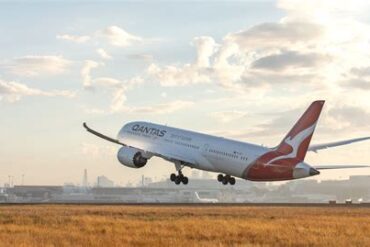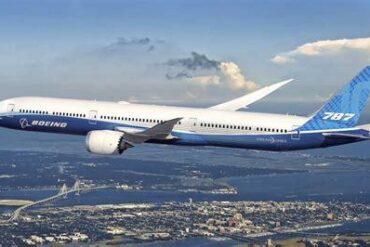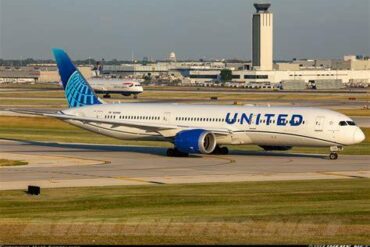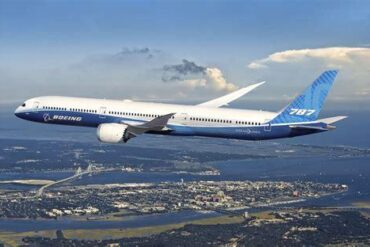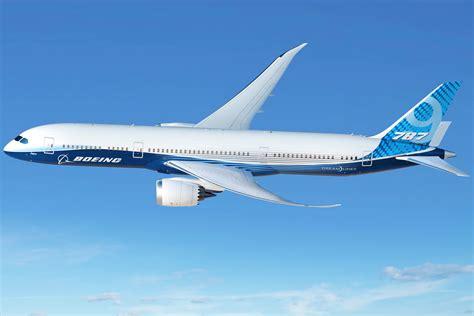
The Boeing 787 Dreamliner has rapidly positioned itself as a linchpin in the transformation of Middle Eastern aviation, redefining long-haul travel strategies with its state-of-the-art technology, fuel efficiency, and unrivaled passenger comfort. As global travel demand continues its post-pandemic resurgence, airlines in the Middle East are turning to the Dreamliner to anchor their fleet expansions and optimize long-haul route economics.
The Dreamliner’s Appeal: Efficiency Meets Versatility
The core of the Boeing 787’s appeal lies in its lightweight composite structure and next-generation engines, which drastically reduce fuel consumption—by up to 20% compared to previous generation widebodies. This enhanced efficiency is especially critical in the Middle Eastern climate, where high temperatures traditionally increase operating costs.
Moreover, the 787’s extended range capability allows airlines to deploy it on “long, thin routes”—long-haul sectors with lower demand that were previously uneconomical. Its size flexibility, with variants ranging from the 787-8 to the stretched 787-10, offers airlines tailored solutions to match specific route demands without overcommitting capacity.
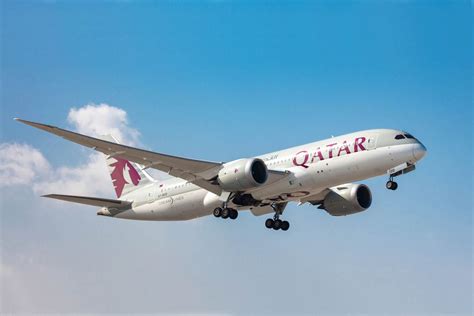
Qatar Airways: The Regional Powerhouse of the 787 Fleet
Qatar Airways, based at Doha Hamad International Airport (DOH), is the region’s largest Boeing 787 operator with 56 Dreamliners (32 787-8s and 24 787-9s). This number is set to grow significantly with 136 more on order, including the long-range 787-9 and high-capacity 787-10.
The airline uses the aircraft to seamlessly balance cost with performance on key routes across Europe, South Asia, and Southeast Asia. Notable high-frequency 787 routes include:
- Kathmandu (KTM) – 82 flights in November 2025 (787-8)
- Barcelona (BCN) – 75 flights (787-9)
- Manchester (MAN) – 73 flights (787-9)
These figures highlight the aircraft’s pivotal role in Qatar Airways’ medium- to long-haul operations, enabling consistent service to secondary markets with lower costs and optimized passenger loads.
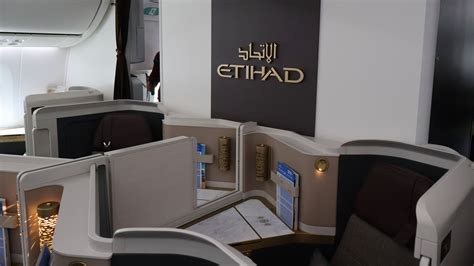
Etihad Airways: A Fleet Revamp Anchored in Dreamliners
Etihad Airways has also embraced the Boeing 787 as a backbone of its fleet renewal and network rebuilding strategy. With a fleet of 47 Dreamliners (37 787-9s and 10 787-10s), the Abu Dhabi-based carrier has recalibrated its long-haul focus with precision.
From Abu Dhabi International Airport (AUH), Etihad deploys the 787 across Europe, Asia, Australia, and North America. Top performing Dreamliner routes in November 2025 include:
- Phuket (HKT) – 63 flights (787-10)
- Milan (MXP) – 61 flights (787-9)
- Madrid (MAD) – 60 flights (787-9)
Etihad has also confirmed a comprehensive retrofit program beginning in 2026, investing 3 billion dirhams to upgrade its entire 787 and 777 fleets. This modernization effort will further elevate the passenger experience, reinforcing the airline’s premium brand identity.
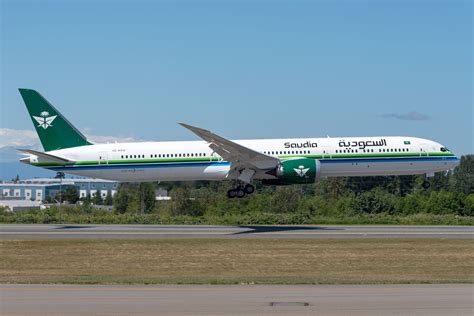
Saudia: Redefining Its Global Footprint With the Dreamliner
For Saudia, the national airline of Saudi Arabia, the Boeing 787 has become a strategic asset for global expansion and brand revitalization. The fleet includes 13 787-9s and 8 787-10s, with a significant order of 39 more Dreamliners on the horizon.
This acquisition spree supports Saudia’s ambitious growth plans, particularly for Europe, the U.S., and Africa, where demand is strong but variable. The 787’s flexible capacity and operational economics offer Saudia the agility to meet fluctuating market needs without compromising service quality.
Chief Commercial Officer Arved von zur Muehlen underscored this vision, noting that 2027 will mark a major delivery milestone, with expectations of one new 787 delivered per week.
A Passenger-Centric Aircraft for Long-Haul Comfort
The Dreamliner has reshaped the passenger experience with an interior environment optimized for comfort:
- Larger windows with electronic dimming
- Lower cabin altitude and higher humidity, reducing fatigue
- Quieter cabins thanks to advanced engine nacelle design
- Improved air filtration and pressure control systems
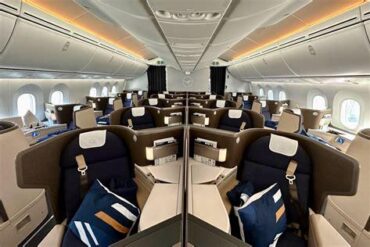
These innovations make the 787 a favorite among frequent flyers, especially on long-haul journeys connecting the Middle East with Europe, Asia, and Oceania.
Gulf Air, Oman Air & Royal Jordanian: Regional Ambitions Take Flight
Several mid-sized carriers in the Middle East are also leveraging the 787 to scale their global aspirations:
- Gulf Air operates 10 Boeing 787-9s, focusing on connectivity between Bahrain and hubs in Europe and Asia.
- Oman Air’s fleet of 8 787-9s supports its premium-driven service to Europe and the Indian Subcontinent.
- Royal Jordanian Airlines, with 7 787-8s, uses the Dreamliner for transatlantic and Asian routes from its Amman base.
These carriers underscore how the 787 democratizes long-haul connectivity beyond the Gulf’s largest players.
Riyadh Air & Emirates: Future Giants Eyeing the 787
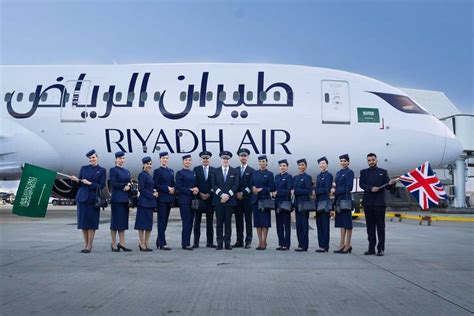
Riyadh Air, Saudi Arabia’s newly launched flag carrier, has signaled bold ambitions with an order of 39 Boeing 787-9s in addition to its lone active aircraft. With plans to operate over 100 routes by 2030, the Dreamliner will be central to Riyadh Air’s international expansion.
Meanwhile, Emirates, long known for its fleet of Airbus A380s and Boeing 777s, will soon integrate 35 Boeing 787s—20 787-8s and 15 787-10s—into its operations. This marks a significant shift in strategy as the airline seeks more agile aircraft for mid-capacity, long-range missions.
Technological Edge: What Makes the 787 Special?
Each Dreamliner variant brings a unique value proposition:
- 787-8: Ideal for long, low-demand routes with a range of 13,530 km (7,305 nm) and typical capacity of 242 passengers.
- 787-9: The most popular variant, offers increased range of 14,010 km (7,530 nm) and capacity for 296 passengers.
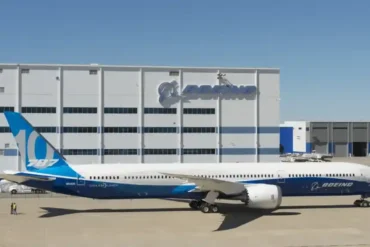
- 787-10: Optimized for high-density regional or transcontinental routes, carrying up to 336 passengers, though with slightly reduced range.
All variants share the same cockpit design, which simplifies pilot training and fleet flexibility, making the Dreamliner an operationally attractive option for airlines managing multiple variants.
Conclusion: The Dreamliner Era in Middle Eastern Aviation
The Boeing 787’s fusion of fuel efficiency, operational flexibility, and cabin innovation has made it the aircraft of choice for Middle Eastern carriers looking to compete in an increasingly complex and competitive global market. Whether it’s enabling frequency growth, launching new markets, or reducing environmental footprints, the Dreamliner is central to reshaping the future of aviation in the region.
With orders growing, new entrants emerging, and established players doubling down, the Boeing 787 is not merely a part of the Middle Eastern aviation narrative—it is shaping its very trajectory.