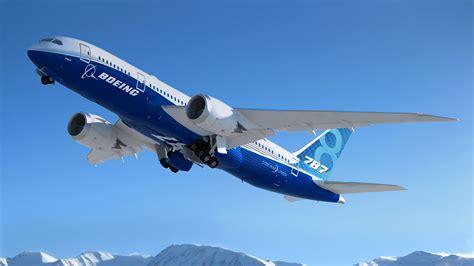
The story of the Boeing 787 Dreamliner is not simply about a new aircraft entering service; it is about a fundamental shift in how aviation defines progress. For decades, airlines equated advancement with size, power, and range achieved through brute force engineering. The Dreamliner quietly disrupted that philosophy, proving that efficiency—not excess—would define the future of long-haul flight.
At the center of this transformation lies a striking figure: the Boeing 787 consumes approximately 20% less fuel than the aircraft it replaces, such as the Boeing 767 and early-generation Boeing 777 models. This is not a marginal gain. In an industry where even a 1% improvement can reshape profitability, a double-digit reduction represents a structural breakthrough.
What makes this achievement even more compelling is how it was accomplished. The Dreamliner did not rely on a single revolutionary invention. Instead, it combined materials science, aerodynamics, propulsion innovation, and systems redesign into a cohesive philosophy. Each improvement compounds the next, creating an aircraft that operates with remarkable precision and restraint.
By the time the 787 entered service, airlines were already grappling with volatile fuel prices and increasing environmental scrutiny. The Dreamliner arrived as both a solution and a statement: fuel efficiency is no longer optional—it is the foundation of sustainable aviation economics.
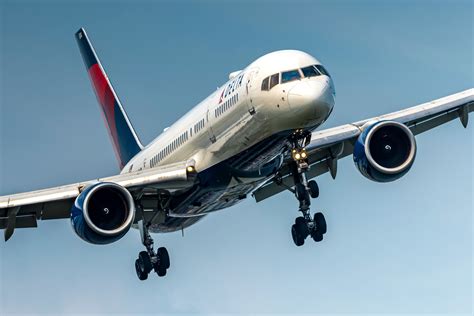
Carbon Fiber Revolution: The Weight Advantage That Changed Everything
The most profound contributor to the Dreamliner’s fuel savings begins with what you cannot easily see: its structure. Traditional airliners relied heavily on aluminum, a material that served aviation well for decades but imposed unavoidable weight penalties. Boeing made a bold decision to replace much of that metal with carbon fiber reinforced polymer composites, resulting in an airframe that is approximately 50% composite by weight.
This shift dramatically alters the aircraft’s relationship with gravity. A lighter aircraft requires less thrust to climb, less energy to maintain cruise altitude, and less braking force during landing. Every phase of flight becomes more efficient. In practical terms, this means less fuel burned per mile, per passenger, per journey.
The manufacturing approach itself also contributes to efficiency. Instead of assembling thousands of aluminum panels with tens of thousands of fasteners, Boeing constructed large composite fuselage sections as single-piece barrels. This eliminated 40,000 to 50,000 fasteners, reducing both weight and structural complexity. Fewer joints mean fewer stress points, which translates into improved durability and lower maintenance requirements.
Beyond structural efficiency, composites allow the aircraft to maintain higher cabin humidity and pressure levels, improving passenger comfort. Yet even here, the underlying benefit traces back to fuel efficiency: a stronger, lighter structure enables better performance without increasing energy demand.
This philosophy of weight reduction is not a single advantage—it is a cascading effect. Each pound saved reduces the workload on engines, wings, and landing gear, creating a self-reinforcing cycle of efficiency that defines the Dreamliner’s performance profile.
Next-Generation Engines: Extracting More From Every Drop of Fuel
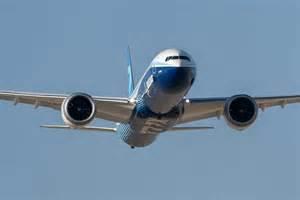
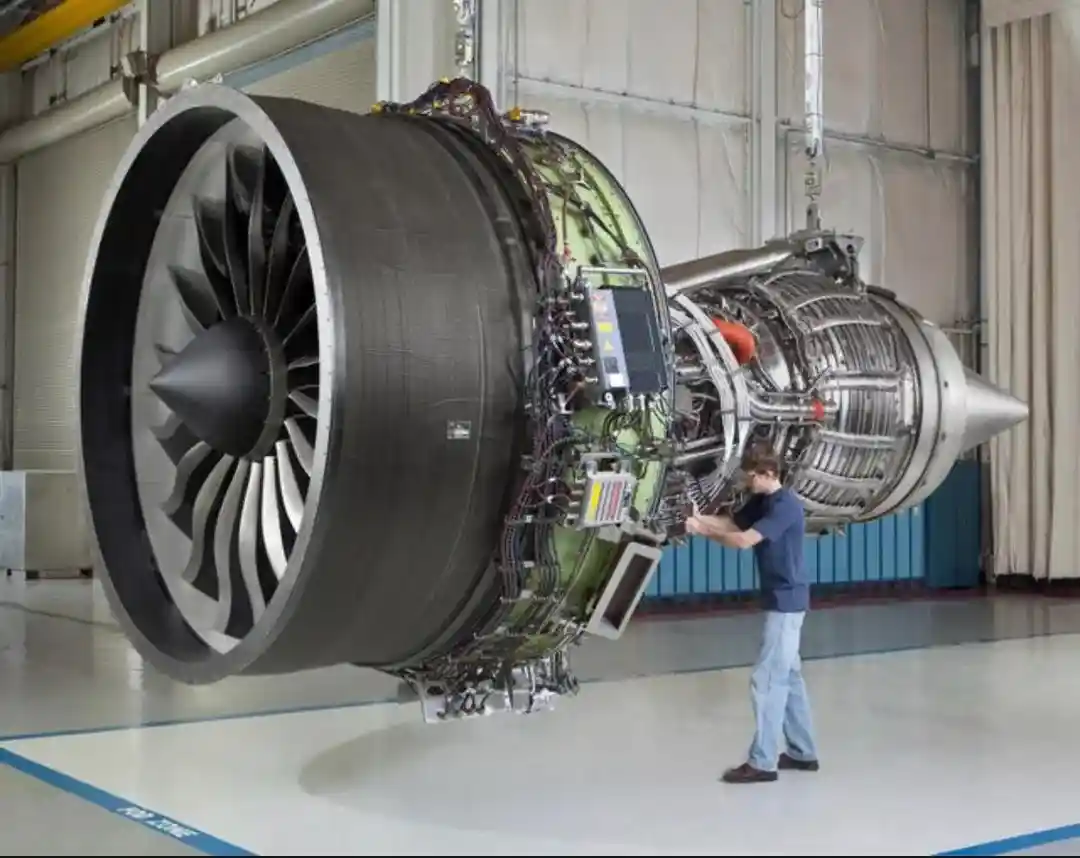
While weight reduction sets the stage, the engines deliver the performance. The Boeing 787 is powered by two of the most advanced turbofan engines ever built: the General Electric GEnx and the Rolls-Royce Trent 1000. These engines are not merely upgrades; they represent a generational leap in how jet propulsion extracts energy from fuel.
At the core of their efficiency is an exceptionally high bypass ratio, reaching approximately 9:1. This means that for every unit of air passing through the engine core, nine units bypass it, producing thrust more efficiently. Compared to older engines on aircraft like the Boeing 767, this design significantly reduces fuel consumption while also lowering noise output.
The engines are also designed to operate at higher temperatures and pressures, allowing them to extract more usable energy from the combustion process. Advanced materials and cooling techniques make this possible, ensuring durability even under extreme conditions.
A distinctive visual feature—the serrated edges on the engine nacelles, known as chevrons—plays a subtle but important role. These structures smooth the interaction between hot exhaust gases and cooler surrounding air, reducing turbulence, lowering noise, and improving aerodynamic efficiency.
The result is a propulsion system that contributes heavily to the Dreamliner’s 20–22% fuel efficiency improvement, depending on the variant. For airlines, this translates into millions of dollars saved annually per aircraft. For passengers, it often means more direct routes and fewer layovers.
No-Bleed Architecture: Rewriting Aircraft Energy Systems
One of the most overlooked yet impactful innovations on the Boeing 787 is its no-bleed system architecture. Traditional aircraft divert compressed air from the engines to power systems such as cabin pressurization, wing de-icing, and engine starting. This process, known as bleed air extraction, reduces engine efficiency because it siphons energy away from thrust production.
The Dreamliner eliminates this inefficiency entirely. Instead, it relies on a fully electric system powered by onboard generators. Cabin air is supplied by electric compressors, wing de-icing is handled by heating elements, and engine start-up is performed using electric motors.
This redesign offers multiple advantages. First, it allows the engines to operate at optimal efficiency because they are no longer burdened by secondary tasks. Second, it reduces the weight and complexity associated with traditional pneumatic systems. Third, it enables more precise control over energy distribution throughout the aircraft.
Although this innovation contributes roughly 3% of the total fuel savings, its importance goes beyond the numbers. It represents a philosophical shift toward energy optimization, where power is delivered exactly where and when it is needed, without unnecessary losses.
In aviation, incremental gains accumulate rapidly. That 3% improvement, when applied across thousands of flights over an aircraft’s lifetime, becomes a substantial economic and environmental benefit.
Aerodynamic Mastery: Wings That Work With the Air
If the engines provide power and the structure reduces weight, the wings determine how efficiently that power is used. The Boeing 787’s wings are a masterclass in aerodynamic design, combining high aspect ratio geometry with advanced materials to minimize drag and maximize lift.
The wings are longer and more slender than those of earlier aircraft, with an aspect ratio of approximately 11, compared to around 8 on the Boeing 767. This design reduces induced drag, which is the resistance created by lift. Lower drag means less thrust is required, and less thrust means less fuel burned.
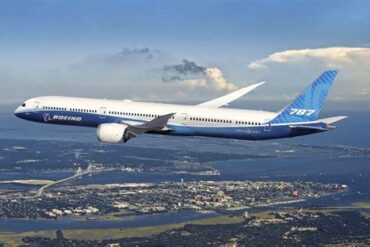
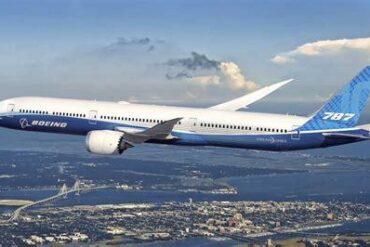
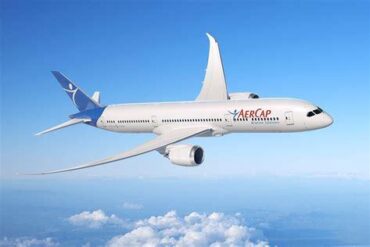
At the wingtips, Boeing opted for raked wingtips instead of traditional vertical winglets. These extended, swept-back tips reduce vortex formation, preserving the aircraft’s energy as it moves through the air. Studies suggest this design provides a drag reduction of up to 5.5%, further enhancing fuel efficiency.
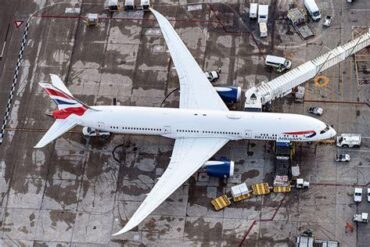
Perhaps the most visually striking feature is the wing’s flexibility. During flight, the wings can flex upward by as much as 25 feet, absorbing aerodynamic forces and maintaining optimal lift distribution. This flexibility is made possible by the strength of composite materials and allows the aircraft to adapt dynamically to changing conditions.
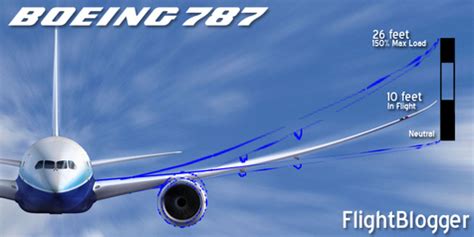
Rather than resisting the forces of nature, the Dreamliner’s wings cooperate with them, smoothing airflow and reducing wasted energy. It is a design that reflects a deeper understanding of aerodynamics, where efficiency emerges from harmony rather than force.
The Economics of Efficiency: Enabling New Routes and Opportunities
Fuel efficiency is not just an engineering achievement—it is a commercial enabler. The Boeing 787’s reduced fuel consumption allows airlines to operate routes that were previously considered economically unviable. This is where the concept of “long-thin routes” becomes transformative.
Traditionally, long-haul flights required large aircraft like the Boeing 747 or 777, which needed high passenger volumes to justify their operating costs. The Dreamliner changes that equation by allowing airlines to fly smaller aircraft over long distances profitably.
Routes such as Denver to Tokyo or secondary city pairs across continents become feasible because the aircraft can carry fewer passengers while maintaining strong margins. This flexibility reshapes global air travel, shifting away from congested hub-and-spoke systems toward more direct, point-to-point connections.
For passengers, this means fewer layovers and shorter travel times. For airlines, it means access to new markets and more efficient fleet utilization. For the industry as a whole, it represents a structural evolution driven by fuel efficiency as a strategic asset.
Environmental Impact: Lower Emissions Without Compromise
The Dreamliner’s fuel savings have a direct and measurable impact on the environment. Burning less fuel means emitting less carbon dioxide, and the 787 achieves a significant reduction in emissions per passenger compared to older aircraft.
Since its introduction, the global fleet of Boeing 787 aircraft has collectively prevented millions of tons of CO₂ emissions. This is not a marginal improvement—it is a meaningful step toward more sustainable aviation.
Noise pollution is also reduced. The Dreamliner produces a 60% smaller noise footprint than the Boeing 767, thanks to advanced engine design and aerodynamic refinements. This allows airports to operate more efficiently while minimizing the impact on surrounding communities.
These environmental benefits are not achieved through compromise. The aircraft maintains long range, high reliability, and strong passenger appeal while reducing its ecological footprint. It demonstrates that efficiency and performance can coexist, setting a precedent for future aircraft design.
A Blueprint for the Future of Aviation
The influence of the Boeing 787 extends far beyond its own performance metrics. It has become a template for modern aircraft design, influencing programs such as the Boeing 777X and even competing models like the Airbus A350.
The widespread adoption of composite materials, advanced engines, and electric systems can be traced back to the success of the Dreamliner. It proved that these technologies are not only viable but essential for the next generation of aviation.
Airlines have embraced the aircraft not just for its efficiency, but for its versatility. Whether operating ultra-long-haul routes or connecting secondary cities, the 787 adapts to a wide range of mission profiles with consistent efficiency.
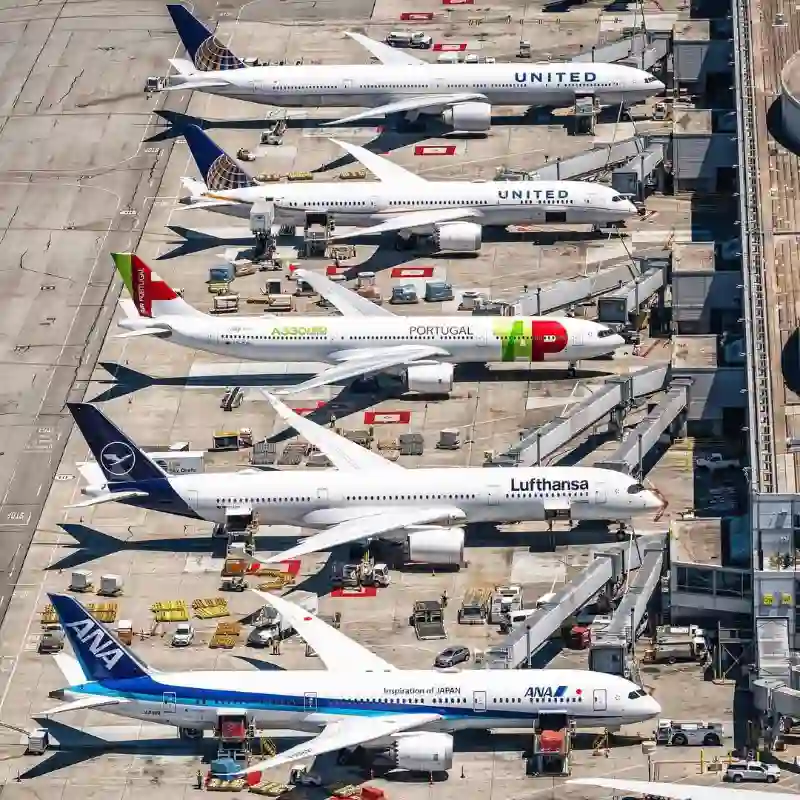
In many ways, the Dreamliner redefined what passengers expect as well. Improved cabin pressure, higher humidity, larger windows, and quieter interiors enhance the travel experience. Yet even these features are enabled by the same innovations that drive fuel savings, reinforcing the idea that better engineering benefits both airlines and travelers simultaneously.
Conclusion: The True Meaning of a 20% Fuel Saving
A 20% reduction in fuel consumption may sound like a simple statistic, but it represents a profound transformation in aviation philosophy. The Boeing 787 Dreamliner achieves this through a combination of lighter materials, smarter engines, optimized aerodynamics, and innovative systems design.
Each of these elements contributes incrementally, but together they create an aircraft that operates with remarkable efficiency. This is not about a single breakthrough—it is about the integration of many disciplines into a unified vision.
The Dreamliner’s legacy is not just measured in fuel saved, but in the opportunities it created. New routes, lower emissions, improved passenger experiences, and a blueprint for future aircraft all stem from its design.
In an industry defined by precision and constraint, the Boeing 787 stands as a reminder that true progress comes from refinement, not excess. It does not fight the limits of physics—it works within them, extracting maximum value from every drop of fuel and every mile of sky.