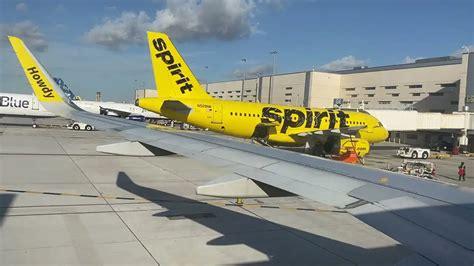
Airbus has spent more than five decades transforming commercial aviation, not through dramatic overnight revolutions but by introducing aircraft that gradually altered how airlines calculate profitability, expand networks, and manage fleets. While passengers often remember iconic airplanes because of their appearance or size, airline executives remember them for something entirely different: operating costs, fuel efficiency, crew requirements, maintenance expenses, and route flexibility.
The European manufacturer emerged from an ambitious multinational collaboration in 1970, bringing together aerospace expertise from several countries determined to challenge American dominance in commercial aviation. Rather than simply producing alternatives to existing aircraft, Airbus consistently looked for ways to make flying more economically sustainable for carriers while improving operational efficiency.
Many of its greatest achievements unfolded quietly. Some aircraft pioneered entirely new business models, while others expanded route possibilities or reduced costs enough to reshape airline strategies worldwide. Together, these six aircraft fundamentally changed the economics of air travel and continue to influence fleet planning across every continent.
After decades of innovation, their impact can be measured not merely by sales figures but by the billions of passengers transported under business models they helped create.
Airbus A300: The Twin-Engine Widebody That Changed Airline Cost Structures
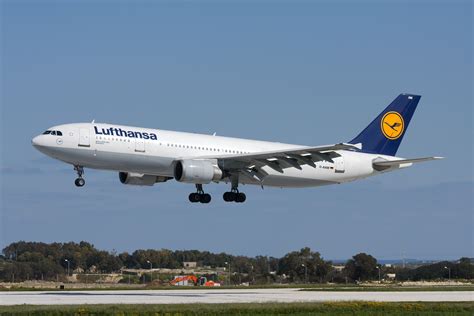
When the Airbus A300 entered commercial service in 1974, it represented far more than the launch of a new airplane. It demonstrated that a twin-engine widebody could operate efficiently enough to compete with larger aircraft carrying three or four engines.
Before its arrival, airlines largely depended on trijets and quadjets for medium- and long-haul operations. More engines meant higher maintenance costs, greater fuel consumption, and increased operational complexity. Improvements in turbofan reliability made Airbus confident that two engines could safely power a large passenger aircraft while significantly reducing expenses.
The gamble paid off.
The A300 became the world’s first successful twin-engine widebody, permanently shifting industry thinking toward lower operating costs without sacrificing capacity. Airlines suddenly had an aircraft capable of transporting hundreds of passengers while consuming less fuel and requiring fewer maintenance resources than previous competitors.
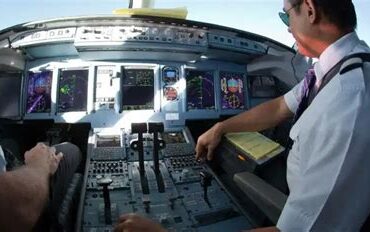
Equally significant was its cockpit innovation. The A300 introduced advanced digital flight management technologies and eventually evolved into one of the first widebody families with a two-pilot glass cockpit configuration, eliminating the need for a dedicated flight engineer. Reducing cockpit crew requirements generated substantial long-term savings across airline operations.
Beyond its own commercial success, the A300 established the engineering philosophy that would shape future Airbus widebodies and influence competitors worldwide.
Airbus A320: The Narrowbody That Became the Backbone of Modern Aviation
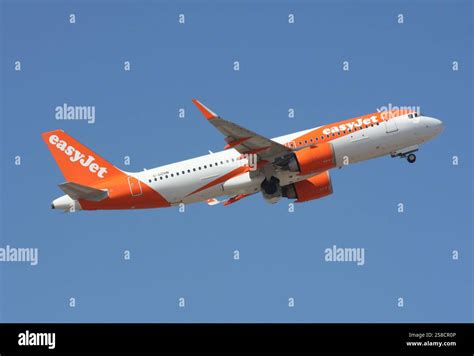
Few aircraft have influenced everyday air travel more profoundly than the Airbus A320.
Introduced in 1988, the A320 arrived roughly two decades after the Boeing 737 but benefited enormously from more modern engineering philosophies. Airbus designed a wider cabin that enhanced passenger comfort while incorporating taller landing gear capable of accommodating larger and more fuel-efficient engines in future generations.
Its most revolutionary feature was invisible to passengers.
The A320 became Airbus’ first fly-by-wire commercial airliner, replacing conventional mechanical flight controls with digital electronic systems. The technology simplified aircraft handling, improved reliability, and enabled sophisticated flight envelope protections that enhanced safety while reducing pilot workload.
For airlines, these innovations translated directly into financial benefits.
The aircraft offered exceptional dispatch reliability, reduced maintenance requirements, and operational commonality across an expanding family of variants. Pilots certified on one A320-family aircraft could transition efficiently to others, minimizing expensive retraining programs.
Low-cost carriers rapidly embraced the design because standardized fleets dramatically lowered operating expenses. Budget airlines that now dominate many regional markets owe much of their expansion to aircraft like the A320, whose economics supported high-frequency schedules and aggressive pricing strategies.
The family eventually grew into the A320neo generation, incorporating new engines that significantly improved fuel efficiency and reinforced Airbus’ dominance in the narrowbody sector. With thousands of outstanding orders and global departures occurring every few seconds, the A320 family has become one of aviation’s defining commercial successes.
Airbus A330: Making Medium-Density Long-Haul Routes Financially Viable
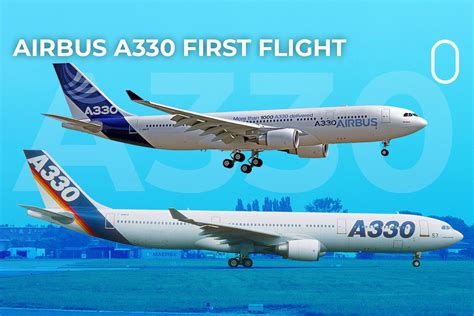
The Airbus A330 demonstrated that efficiency could reshape international networks without introducing radical technological breakthroughs.
Entering service in 1994, the twin-engine widebody occupied an ideal middle ground between smaller narrowbodies and enormous aircraft like the Boeing 747. Airlines discovered they could profitably serve destinations that previously lacked sufficient passenger demand to justify very large airplanes.
This flexibility fundamentally altered network planning.
Instead of funneling travelers through a handful of giant hubs using massive aircraft, carriers increasingly connected secondary cities with nonstop flights using aircraft sized appropriately for demand. Travelers benefited from shorter journeys while airlines enjoyed improved load factors and lower operating costs.
The A330 also reinforced industry confidence in twin-engine long-haul operations. Earlier concerns surrounding extended overwater flights gradually diminished as engine reliability improved and regulatory approvals expanded.
Airbus initially hedged its strategy by simultaneously developing the four-engine A340, anticipating that ETOPS restrictions might limit twin-engine expansion. History proved otherwise. Airlines overwhelmingly preferred the more economical A330, while the A340 eventually faded from production.
Continuous upgrades, including the A330neo, further improved fuel consumption and operational efficiency, allowing the aircraft family to remain competitive decades after its introduction.
Its enduring popularity reflects a simple economic truth: matching aircraft size closely to passenger demand often generates greater profitability than operating oversized airplanes.
Airbus A380: A Commercial Lesson in the Limits of Scale
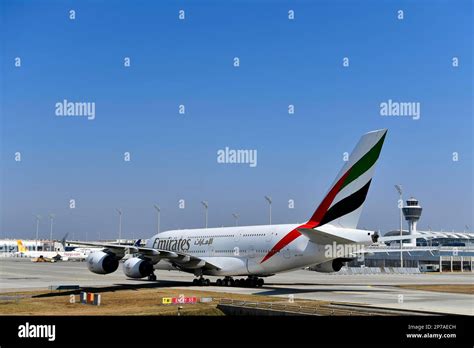
The Airbus A380 occupies a unique place in aviation history because its greatest contribution came through demonstrating what the future would not become.
When Airbus launched development, industry forecasts predicted growing congestion at major airports and increasing reliance on enormous hub-to-hub operations. The company envisioned a market requiring more than a thousand superjumbos capable of transporting hundreds of passengers between global megacities.
Technically, the aircraft delivered extraordinary achievements.
Its quiet cabin, spacious interior, advanced aerodynamics, and unprecedented passenger capacity established new standards for comfort. Travelers frequently praised the experience, especially aboard premium configurations featuring lounges and onboard amenities rarely seen elsewhere.
Commercial economics, however, evolved differently.
As fuel prices fluctuated and airlines prioritized flexibility, operators increasingly preferred smaller aircraft that could fly more frequently while maintaining high occupancy rates. Filling over 500 seats consistently proved difficult outside a limited number of routes.
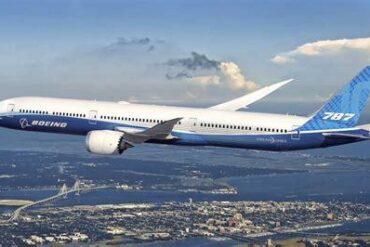
The emergence of highly efficient long-range twinjets accelerated this transition. Aircraft such as the Boeing 787 and Airbus A350 enabled airlines to bypass traditional hubs entirely, connecting cities directly while consuming substantially less fuel per trip.
Although Airbus ultimately sold only a fraction of its original expectations, the A380’s experience reshaped strategic thinking across the industry. Airlines learned that operational adaptability often outweighs maximum capacity, particularly when market demand fluctuates.
Ironically, one of aviation’s largest aircraft reinforced the economic case for smaller airplanes.
Airbus A321XLR: Unlocking Thin Long-Haul Markets
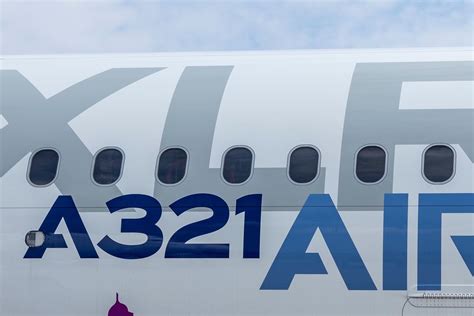
The Airbus A321XLR may eventually become one of the most economically influential aircraft ever produced because it targets routes previously considered commercially impractical.
For years, airlines faced a difficult choice. Smaller narrowbodies lacked sufficient range for many international markets, while larger widebodies introduced excessive operating costs for modest passenger demand.
The retirement of the Boeing 757 created a particularly noticeable gap.
Airbus addressed this opportunity by extending the capabilities of its successful A321 platform. The A321XLR offers an advertised range approaching 4,700 nautical miles, allowing airlines to operate numerous transatlantic and regional long-haul services using a single-aisle aircraft.
The implications are significant.
Cities that could never consistently fill a widebody now become viable nonstop destinations. Airlines can launch experimental international routes with lower financial risk, gradually building demand without committing to oversized aircraft.
Passengers benefit through expanded nonstop options that eliminate inconvenient transfers through major hubs.
Fleet planners appreciate another advantage as well. Because the A321XLR shares extensive commonality with existing A320-family aircraft, operators avoid many costs associated with introducing an entirely different aircraft type.
Rather than creating a completely new market, the A321XLR quietly unlocks latent opportunities hidden within thousands of underserved city pairs around the globe.
Its success demonstrates that route economics increasingly favor precision over sheer capacity.
Airbus A220: Redefining Economics Below the Traditional Narrowbody Segment
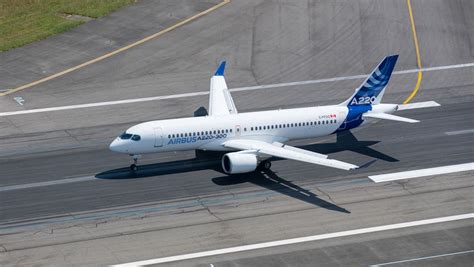
Unlike the other aircraft on this list, the Airbus A220 did not originate inside Airbus.
Originally developed by Canada’s Bombardier as the CSeries program, the aircraft entered service before Airbus acquired majority control and integrated it into its commercial portfolio. Despite its unusual history, the A220 has become one of the most strategically valuable additions to the Airbus lineup.
The aircraft occupies an important niche between regional jets and larger narrowbody airliners.
Designed with modern materials, advanced aerodynamics, and next-generation Pratt & Whitney geared turbofan engines, the A220 delivers dramatically improved fuel efficiency compared with many aircraft it replaces. Operating costs are substantially lower, allowing airlines to profitably serve routes that previously generated marginal returns.
Passengers notice another advantage immediately.
Its five-abreast seating configuration provides wider seats and aisles than many competing regional aircraft, while generous overhead bins enhance cabin comfort despite the airplane’s relatively compact dimensions.
From an airline perspective, the A220 expands scheduling flexibility by allowing right-sized capacity across evolving markets. Carriers no longer need to deploy larger aircraft simply because no efficient alternative exists.
Interestingly, Boeing currently lacks a direct competitor in this category, leaving Airbus primarily competing against Embraer’s E-Jet family.
As global travel patterns increasingly favor frequency and efficiency over maximum size, the A220 positions airlines to optimize capacity while maintaining profitability in markets where every seat counts.
Why These Six Airbus Aircraft Continue to Shape Airline Strategy
The commercial aviation industry rarely changes because of a single breakthrough. Instead, transformation usually occurs through a series of incremental innovations that collectively alter how airlines think about cost, efficiency, and network planning.
The Airbus A300 proved that twin-engine widebodies could replace more expensive alternatives. The A320 introduced digital technologies and operational efficiencies that became industry standards. The A330 expanded profitable long-haul opportunities for medium-density markets. The A380 illustrated the economic limitations of ultra-large aircraft despite remarkable engineering achievements. The A321XLR opened previously inaccessible routes with narrowbody economics, while the A220 optimized an underserved segment with exceptional efficiency.
Taken together, these aircraft reshaped airline business models in subtle but profound ways. They influenced fleet decisions, encouraged new route structures, reduced operating expenses, and enabled carriers to match capacity more precisely with passenger demand.
Their legacy extends far beyond production numbers or technological specifications. Each one contributed to a gradual evolution in commercial aviation where profitability increasingly depends not on flying the biggest airplane, but on flying the right airplane for the right market at the right cost.