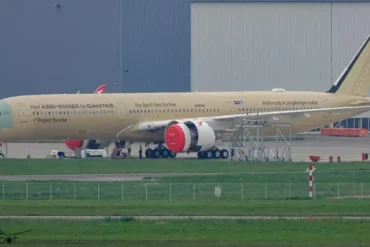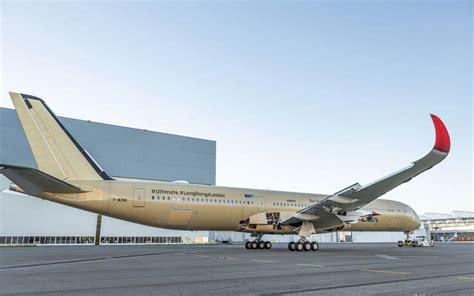
For decades, nonstop flights between Sydney and London existed in the same category as futuristic aviation concepts: technically imaginable, commercially questionable, and operationally punishing. Airlines could connect the two cities with one stop in Singapore, Dubai, or Doha, but removing the fuel stop entirely demanded something beyond the capabilities of conventional long-haul aircraft. The distance is simply brutal. Depending on routing and weather, Sydney to London pushes close to 10,600 nautical miles, forcing an aircraft to remain airborne for more than 20 hours while carrying hundreds of passengers, massive fuel reserves, crew rest facilities, catering supplies, and contingency margins.
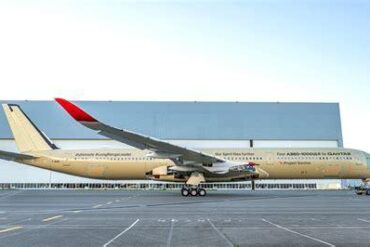
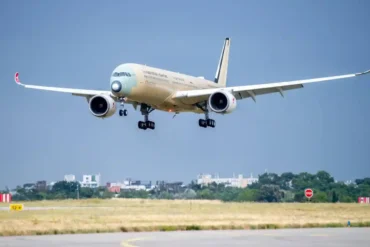
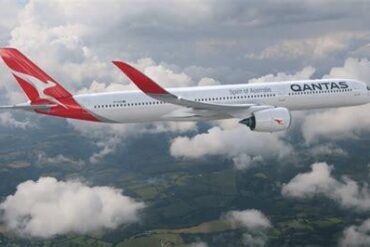
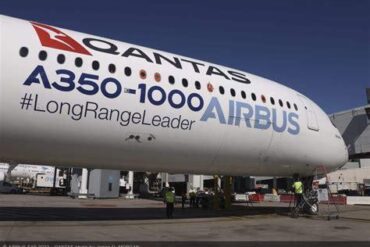
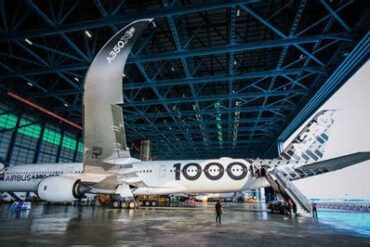
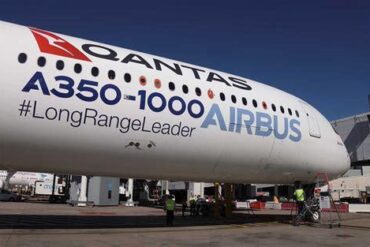
That challenge is precisely why Qantas’ Project Sunrise has become one of the most ambitious commercial aviation programs of the modern era. The airline is not merely launching another long-haul route. It is attempting to redefine what intercontinental travel looks like for the next generation. And after years of evaluating options, only one aircraft emerged as capable of doing the job: the specially modified Airbus A350-1000ULR.
The reason no other aircraft can realistically operate Sydney to London nonstop at commercial scale comes down to a delicate balance of engineering, fuel efficiency, structural strength, passenger economics, and operational flexibility. The Airbus A350-1000ULR sits in an extraordinarily narrow sweet spot where every variable aligns just enough to make the route viable.
The mission is not just about flying far. It is about flying far while remaining profitable, safe, comfortable, and operationally sustainable.
After all, a plane capable of technically reaching London means nothing if it arrives with no reserve fuel, cannot carry enough premium passengers, or suffers crippling payload restrictions every time headwinds strengthen over the Indian Ocean.
The Sydney To London Route Pushes Commercial Aviation To Its Absolute Limits
Most ultra-long-haul routes are already difficult. Sydney to London belongs in a completely different category.
A standard long-haul flight typically lasts between 10 and 14 hours. Even the world’s longest current services, including Singapore Airlines’ Singapore-Newark route, average around 18 to 19 hours. Project Sunrise extends beyond that threshold into territory where nearly every operational variable becomes exponentially more complicated.
Aircraft performance deteriorates as weight increases. More fuel allows greater range, but extra fuel itself adds weight, requiring even more fuel to transport it. Aviation engineers call this the “fuel to carry fuel” problem, and it becomes viciously inefficient on extremely long sectors.
That is why many existing widebody aircraft fail before they even begin.
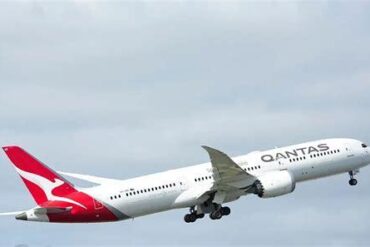
The Boeing 777-300ER, despite its legendary long-haul reputation, burns too much fuel for a mission of this magnitude. The Airbus A380 offers tremendous passenger comfort but is simply too heavy and inefficient for nonstop Sydney-London economics. Even Boeing’s newer 787-9 lacks the payload capability needed to carry enough passengers and reserves across such a punishing distance consistently.
The Airbus A350 platform, however, was designed from the beginning around aerodynamic efficiency, lightweight composite construction, and exceptionally low fuel burn.
The A350-1000ULR takes those advantages and pushes them even further.
Why The Airbus A350 Platform Was Already Ideally Positioned For Ultra-Long-Haul Flying
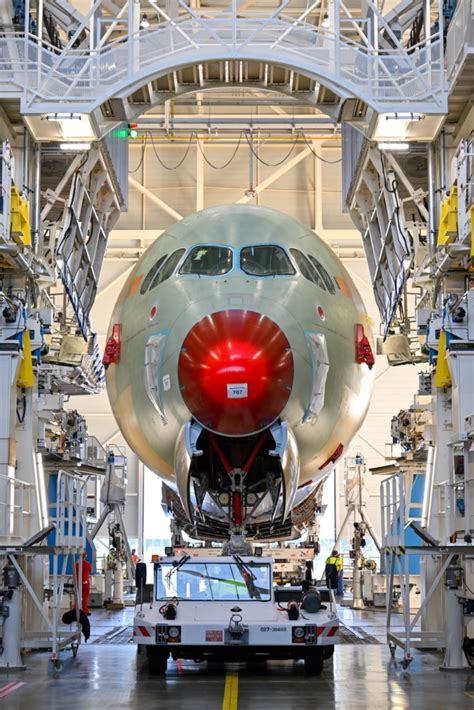
The standard Airbus A350 is already one of the most efficient long-range aircraft ever produced. Around 53% of its structure is made from advanced composite materials, dramatically reducing overall weight compared to older aluminum-heavy designs.
Lower structural weight translates directly into better fuel efficiency, especially over ultra-long distances where every kilogram matters.
The aircraft’s aerodynamic profile also plays a major role. Its slender carbon-fiber wings feature adaptive wing technology that optimizes shape during different phases of flight, minimizing drag while improving lift efficiency. Combined with highly advanced flight management systems, the A350 can extract extraordinary performance from each kilogram of fuel onboard.
But even the standard A350-1000 could not simply begin flying Sydney to London nonstop without significant modification.
Project Sunrise required Airbus to engineer something far more specialized.
Massive Fuel Capacity Is The Foundation Of The Entire Aircraft
The defining feature of the A350-1000ULR is its enormous fuel capacity.
Qantas and Airbus solved the range challenge by adding an additional 20,000-liter rear center fuel tank, dramatically increasing the aircraft’s usable fuel load. This allows the aircraft to remain airborne for up to 22 hours while maintaining mandatory reserve margins for diversions, holding patterns, and adverse weather.
That additional fuel is absolutely essential because ultra-long-haul routes cannot operate close to minimum endurance limits. A diversion to Manchester, Frankfurt, or another alternate airport late in the flight could require hundreds of additional nautical miles.
Strong winter headwinds over Eurasia can also radically increase fuel burn. The aircraft therefore needs substantial operational flexibility built into every mission.
However, adding fuel creates another problem: weight.
A conventional A350-1000 would exceed its maximum takeoff weight if fully loaded with this expanded fuel capacity. Airbus therefore reinforced the aircraft structure and landing gear while increasing the certified maximum takeoff weight beyond standard configurations.
The modifications effectively transform the A350-1000ULR into a bespoke aircraft optimized for one singular purpose: flying farther than almost any commercial airliner in history.
Rolls-Royce Trent XWB-97 Engines Make The Mission Possible
The engines powering the aircraft are equally important.
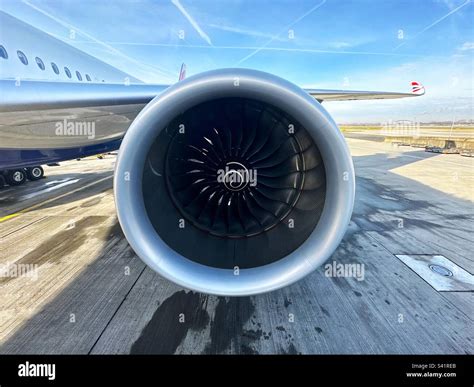
The A350-1000ULR uses the Rolls-Royce Trent XWB-97, the most powerful engine ever installed on an Airbus airliner. Each engine generates up to 97,000 pounds of thrust, delivering the performance necessary to lift a heavily fueled aircraft into the air from Sydney’s long-haul departure runways.
Yet brute force alone would not solve the problem. The engines also needed exceptional efficiency.
That is where the Trent XWB family has become a technological standout. Despite producing enormous thrust, the XWB-97 achieves dramatically lower fuel consumption compared to older generation engines. Rolls-Royce engineered the powerplant with an extremely high bypass ratio and advanced pressure compression system, maximizing efficiency during long cruise phases.
The engine’s 50:1 pressure ratio and sophisticated turbine architecture help reduce fuel burn while maintaining reliable long-duration performance. That balance is crucial because even minor efficiency gains compound significantly over 20-plus hours of flight.
A tiny reduction in hourly fuel burn can translate into thousands of pounds of saved fuel across the mission.
Equally important is reliability. Ultra-long-haul routes leave virtually no room for technical disruptions. Rolls-Royce reports dispatch reliability figures above 99.9% for the Trent XWB family, a critical requirement for aircraft operating some of the longest routes on Earth.
The Aircraft Sacrifices Passenger Numbers To Gain Range
One of the least glamorous but most essential realities of Project Sunrise is this: the aircraft cannot carry a traditional passenger load.
A typical Airbus A350-1000 can accommodate more than 350 passengers in standard long-haul layouts. Some dense configurations push toward 480 seats.
Qantas’ Project Sunrise aircraft will carry just 238 passengers.
That reduction is not an accident. It is fundamental to the aircraft’s viability.
Every additional passenger adds baggage weight, catering requirements, water consumption, and cabin supplies. More passengers also require additional seating infrastructure, increasing total aircraft mass even before accounting for luggage.
By dramatically reducing capacity, Qantas frees up weight allowance for extra fuel while improving the aircraft’s operational flexibility during difficult weather conditions.
The economics also shift heavily toward premium travel.
Project Sunrise is not designed around mass-market economy traffic. It targets business travelers and affluent leisure passengers willing to pay a premium to eliminate stopovers and cut total journey time. For many travelers, avoiding a mid-route airport transit after 20 hours of travel carries enormous value.
Qantas understands that the passengers most interested in nonstop Sydney-London services are also the passengers most willing to pay for convenience, privacy, and comfort.
That strategy mirrors Singapore Airlines’ approach with the A350-900ULR, which operates ultra-long-haul routes with premium-heavy cabin layouts instead of dense economy seating.
Passenger Comfort Became A Core Engineering Priority
Flying for more than 20 hours creates physiological challenges that standard long-haul design philosophies cannot adequately address.
Jet lag intensifies. Dehydration worsens. Fatigue accumulates. Cabin lighting, movement space, air quality, and noise levels suddenly become far more important than they are on shorter flights.
Qantas therefore treated passenger wellbeing as a central part of the aircraft’s design.
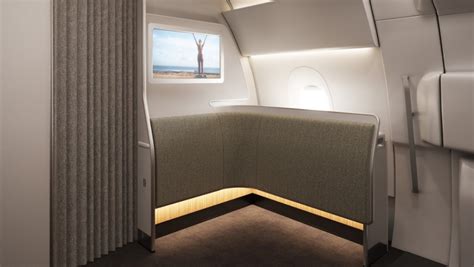
Australian designer David Caon worked with Airbus and Qantas to create specialized cabin environments tailored specifically for ultra-long-haul operations. The aircraft incorporates advanced lighting programs intended to influence passenger circadian rhythms and reduce the physical strain associated with crossing multiple time zones nonstop.
Cabin layouts also emphasize spaciousness over density. Fewer passengers mean wider personal space allocation, less crowding, and reduced cabin congestion during a nearly day-long flight.
The A350 itself already offers one major advantage for ultra-long-haul comfort: lower cabin altitude.
Unlike older aircraft, the A350 maintains a cabin altitude closer to 6,000 feet instead of the more exhausting 8,000-foot environment common on older widebodies. Combined with higher humidity levels enabled by composite construction, passengers typically arrive less fatigued after extremely long flights.
On a 22-hour mission, those details stop being luxury features and start becoming operational necessities.
Crew Operations Become Radically More Complex Beyond 20 Hours
The aircraft may be technologically advanced, but the humans operating it still face biological limitations.
Project Sunrise therefore required extensive redesigns of crew rest facilities and operational procedures.
Pilots and cabin crew need larger rest compartments capable of supporting proper sleep cycles during ultra-long sectors. Additional crew members must also be carried onboard, increasing weight and reducing available revenue space further.
Fatigue management becomes extraordinarily complicated when crews operate near an entire day continuously airborne.
Operational planning also grows more demanding. Dispatchers must analyze fuel margins, winds, alternate airports, airspace restrictions, and weather systems across enormous geographic distances spanning multiple continents.
Even small delays can create cascading complications.
A late departure from Sydney could shift arrival slots in London, alter crew rest calculations, and affect fuel burn projections due to changing atmospheric conditions. Every aspect of the operation requires precision.
Ironically, the aircraft’s huge range also provides advantages. With greater endurance, the A350-1000ULR can route around severe weather systems or congested airspace more flexibly than shorter-range aircraft operating near fuel limits.
Why Boeing Currently Has No True Competitor To The A350-1000ULR
Boeing’s absence from Project Sunrise is striking given its dominance in long-haul aviation for decades.
The company proposed variants of the 777 and 787 families during Qantas’ evaluation process, but none matched Airbus’ combination of range, payload capability, and fuel efficiency.
The Boeing 777-8 theoretically approaches the required range figures, but certification delays and program uncertainty weakened its competitiveness. The larger 777X family is also substantially heavier, reducing operational efficiency on ultra-long-haul sectors.
Meanwhile, the 787-9 and 787-10 simply lack the payload-range balance necessary for reliable Sydney-London operations with commercially viable passenger loads.
The Airbus A350-1000ULR effectively occupies a niche where no direct rival currently exists.
That advantage may remain intact for years.
Project Sunrise Could Permanently Change Global Long-Haul Travel
When Qantas launches nonstop Sydney-London flights, the route will represent more than an aviation milestone.
It will demonstrate that geography no longer imposes the same limitations it once did on intercontinental travel. Cities previously considered too distant for practical nonstop service may suddenly become reachable with future generations of ultra-efficient aircraft.
The psychological impact matters too.
Passengers increasingly value time efficiency and convenience over traditional hub-and-spoke connections. Eliminating stopovers reduces missed connections, transit stress, security delays, and total journey uncertainty.
If Project Sunrise succeeds commercially, airlines worldwide may pursue similar ultra-long-haul strategies connecting distant city pairs directly.
For now, though, only one aircraft possesses the precise combination of technology, efficiency, structural capability, and operational flexibility necessary to make the mission realistic.
The Airbus A350-1000ULR is not merely another long-range jet.
It is an aircraft engineered specifically to conquer one of commercial aviation’s final frontiers.