Are red-eye flights less crowded? For years, these late-night departures were the secret haven for budget travelers, standby flyers, and aviation insiders. But as we move deeper into the post-pandemic era, this once-reliable rule of thumb is quickly dissolving. In reality, red-eye flights have become some of the most consistently full flights in commercial aviation, and the reasons behind this shift reveal much about modern airline operations, passenger behavior, and logistical necessity.
The Legacy of the Empty Red-Eye
Historically, red-eye flights offered a sense of space that has since vanished. Passengers flying cross-country or transpacific in the late 1980s through the early 2000s often enjoyed entire rows to themselves. For instance, the 1987 MEL–LAX red-eye was famously underbooked, often allowing passengers to sprawl out across multiple seats.
By 2017 and 2018, red-eye passengers on flights such as SFO to BOS or SFO to New Hampshire still had a good chance of grabbing empty middle rows. As recently as February 2020, passengers on routes like SFO–TPE could expect solitary seating for long stretches of the night. But in the span of just two years, those conditions evaporated entirely.
A Post-COVID Transformation
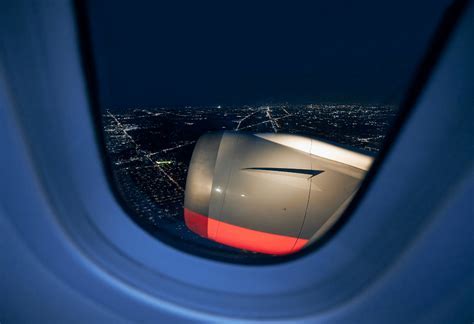
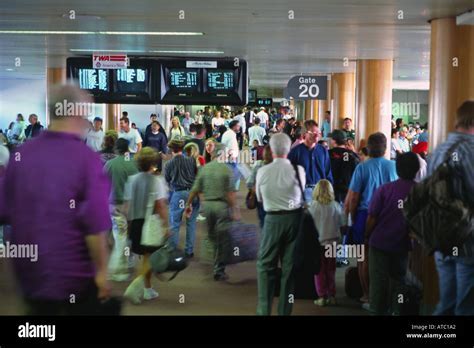
Since early 2022, red-eye flights have shifted from empty to consistently full. MileagePlus elites and frequent flyers on both United and other major carriers report the same trend: almost every red-eye since 2020 has been completely booked. The once-peaceful, half-empty cabin has been replaced by crowded aisles, booked-out seat maps, and overworked gate agents managing standby queues.
This transformation wasn’t arbitrary. A series of calculated adjustments by airlines reshaped the economics and capacity of night flights.
Airline Strategy: Cutting Supply, Raising Demand
The COVID-19 pandemic initially led to a massive reduction in flights. But as travel rebounded, airlines chose not to reinstate all pre-2020 routes. Instead, they leaned into aggressive demand forecasting and pricing optimization. The result? Airlines managed to maintain record operating profits and free cash flow, even with fewer flights on the schedule.
Red-eyes became a convenient dumping ground for failed connections, last-minute rebookings, and Basic Economy passengers who were assigned their seats late in the boarding process. As standby lists grew longer—especially with internal airline staff, non-revenue passengers, and last-minute business travelers—seat maps that once showed availability an hour before boarding quickly filled up.
Economics and Passenger Behavior
Red-eye flights, while uncomfortable for some, are still viewed as economically advantageous:
-
Lower fares compared to peak-hour departures.
-
Savings on hotel stays, particularly for budget-conscious travelers.
-
Better alignment with international and cross-country schedules, especially when trying to arrive early morning for business or family obligations.
These financial and logistical benefits are not lost on passengers, especially those willing to sacrifice sleep for savings.
Seat Classes and Route Variation
While the overall trend is one of crowding, not every seat or route is impacted equally. Business class (e.g., Polaris cabins) on red-eye flights tend to sell out well in advance, particularly on transcontinental and long-haul international routes. Premium Economy and Economy Plus also see high occupancy due to loyalty upgrades and moderate price differentials.
However, occasional gaps remain in standard economy on certain short-haul late-night flights, like SFO to LAS at 11 PM. These flights are generally not connection-driven and have lower demand from international passengers. Thus, they remain the best bet for travelers hoping for an empty seat next to them.
The Standby and Non-Rev Angle
Red-eyes continue to serve as a crucial travel window for non-revenue employees, flight crew, and standby passengers. Airline staff who commute across the country to report for duty often rely on these overnight flights for positioning. Pilots and flight attendants may take up jump seats, and internal systems prioritize them over other standby passengers.
This added demand further complicates the seat availability picture. Even when seat maps appear open pre-boarding, they can fill rapidly with standby allocations, upgrades, and late check-ins.
Comfort and Tolerance: The Human Element
Despite their popularity, red-eye flights still require a unique level of personal tolerance. Older passengers or those unaccustomed to flying may find it difficult to sleep upright, even with sleep aids like melatonin, noise-canceling headphones, or eye masks. Others try “food coma” tactics—eating a heavy meal pre-flight to induce restfulness—but results vary.
Cabin temperature is another critical factor. Many red-eyes run cooler than daytime flights, which some flyers find relaxing, while others suffer through chills without proper layers.
Still, travelers weighing these discomforts against lower fares, hotel savings, and faster schedule alignment frequently find the trade-off worthwhile.

A System Built on Capacity and Contingency
Airlines today run like finely tuned machines. Every seat not filled represents lost revenue. Red-eyes, once overlooked as secondary flights, now operate as critical overflow valves in an airline’s daily routing strategy. Flights delayed, missed, or canceled during the day often see their passengers pushed onto night flights, raising capacity on these routes beyond their originally intended loads.
Combined with the surge in Basic Economy ticketing—where passengers are not assigned seats until shortly before boarding—the appearance of open red-eye seats has become a mirage. It is not uncommon for a seat map to appear 30% open at check-in, only to completely fill by final boarding call.
The Future of Red-Eye Flights
As airlines continue to chase profitability with data-driven optimization, it is unlikely we’ll return to the red-eye conditions of the past. Modern red-eyes are now embedded into network recovery strategies, connecting the dots between missed itineraries and high-density demand periods. The implication is simple: expect a full cabin, not a quiet sanctuary.
For those seeking more privacy or rest, the only alternatives may be:
-
Upgrading to business class, if budget allows.
-
Targeting short-haul, low-demand late flights, preferably between domestic hubs without international connectors.
-
Flying midweek instead of Sundays or Fridays, which are increasingly saturated.
Ultimately, what was once a budget flyer’s dream has evolved into a mainstream travel norm, reflecting the airline industry’s pivot toward revenue maximization, predictive scheduling, and efficiency under pressure.
FAQs
Are red-eye flights ever empty anymore?
Rarely. While isolated exceptions exist, particularly on short-haul domestic routes without feeder connections, the majority of red-eyes today are consistently full. This is due to increased demand, rebooking strategies, and tighter post-COVID flight schedules.
Why do airlines overbook red-eye flights?
Airlines often overbook based on statistical no-show models. Red-eyes serve as recovery buffers for missed connections or delayed earlier flights, so overbooking helps maximize load factors while accommodating irregular operations.
Which red-eye routes are still likely to have empty seats?
Short-haul routes with minimal demand or without major connecting traffic—such as late-night west coast hops like SFO to LAS or SEA to PDX—are most likely to have open seats. However, even these are not guaranteed and often fill with standby passengers or Basic Economy assignments.