The DEFCON system was developed during the Cold War as a standardized protocol for U.S. military alertness. It ranges from DEFCON 5, denoting normal peacetime operations, up to DEFCON 1, the ultimate threshold where military forces are at maximum readiness and nuclear engagement is expected.
Each level correlates to specific military postures and actions, providing a structured escalation scale in the face of national security threats. It is jointly managed by the Joint Chiefs of Staff, U.S. Strategic Command, and other branches of the armed forces, who can direct changes based on real-time intelligence.
The Meaning of Each DEFCON Level
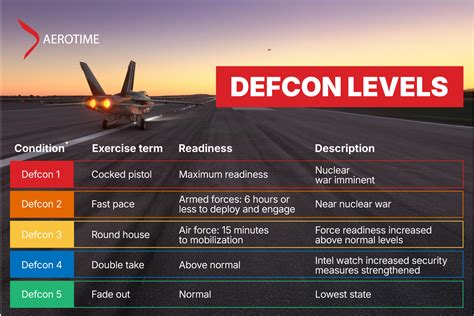
To grasp the seriousness of a DEFCON status, it’s essential to comprehend what each level entails:
- DEFCON 5 – Normal Readiness: This is the baseline. It indicates routine operations, training, and intelligence collection in peacetime. No known threats to national security are active.
- DEFCON 4 – Increased Intelligence Watch and Strengthened Security Measures: While military forces remain in peacetime mode, surveillance is heightened, and commands might begin reviewing contingency plans.
- DEFCON 3 – Increase in Force Readiness Above That Required for Normal Readiness: This status represents an elevated alert. The U.S. reached DEFCON 3 during the September 11 attacks, with some Air Force units prepared to deploy within 15 minutes.
- DEFCON 2 – Next Step to Nuclear War: Forces are ready to deploy and engage within six hours. The only time the U.S. publicly acknowledged reaching this level was during the Cuban Missile Crisis in 1962.
- DEFCON 1 – Maximum Readiness: Total war is imminent or already underway. This level has never been declared in U.S. history, underscoring the severity of its implications.
Public Misconceptions and Pop Culture Misuse
The DEFCON scale’s inverted numbering system—where lower numbers signal higher danger—has caused widespread misunderstanding. Casual phrases like “It’s DEFCON 5 in here!” are often intended to express urgency or chaos. Ironically, such phrases are grossly inaccurate if danger is what they aim to convey.
Much of this confusion stems from popular media and video games. Franchises like Call of Duty and WarGames have popularized the term but often with little regard for its technical meaning. Characters invoke DEFCON levels for dramatic emphasis without context, reinforcing the public’s backwards association with the scale.
Historical Moments of Elevated DEFCON Status
While the United States has never reached DEFCON 1, the system has been escalated during pivotal global crises. The most notable example is the Cuban Missile Crisis in October 1962, when Strategic Air Command was placed at DEFCON 2. Bombers were loaded with nuclear weapons and placed on round-the-clock alert, just one step from total nuclear warfare. This marked the closest humanity has ever come to global thermonuclear conflict.
Following the terrorist attacks on September 11, 2001, U.S. military forces were raised to DEFCON 3. While not as extreme as DEFCON 2, this move reflected the unprecedented nature of the attack and the concern over further threats. Tactical air forces were scrambled, and NORAD maintained elevated patrols across North American airspace.
Who Controls the DEFCON Level?
Contrary to popular belief, the President of the United States does not unilaterally set the DEFCON level. Instead, it is established by the U.S. Armed Forces’ Joint Chiefs of Staff, often in consultation with Strategic Command and the National Command Authority (NCA), which includes both the President and the Secretary of Defense.
This decentralized protocol ensures that a DEFCON shift is based on verified intelligence and collaborative threat assessments, rather than reactive or politicized decision-making. The specific DEFCON levels of individual military commands may differ from the national level depending on geographic and strategic concerns.
DEFCON in Civilian Use: Linguistic Drift and Hyperbole
The use of DEFCON terminology has extended far beyond military or strategic circles. In internet memes, TV shows, office banter, and even domestic disputes, people invoke DEFCON levels as colorful metaphors. Statements like “We went DEFCON 1 when we saw a mouse in the kitchen” might be humorous, but they dilute the seriousness of the terminology.
This linguistic drift reflects how military jargon can lose its meaning when filtered through popular culture. However, the misuse also contributes to public confusion, which is problematic in times of real-world tension. The public might misunderstand the implications if a higher DEFCON level is ever announced.
Related Terms: The Doomsday Clock vs. DEFCON
A related but separate concept is the Doomsday Clock, maintained by the Bulletin of the Atomic Scientists. Unlike the DEFCON system, the Doomsday Clock is a symbolic representation of how close the world is to catastrophic destruction, primarily due to nuclear threats, climate change, and disruptive technologies. Midnight represents the apocalypse.
While both the Doomsday Clock and DEFCON measure existential risk, they are entirely independent. One is military and operational, while the other is symbolic and activist-driven.
DEFCON and International Military Protocols
Though unique to the United States, similar systems exist globally. NATO allies and other military powers maintain internal alert levels to manage readiness. For example, the United Kingdom employs DEFCON-like readiness codes, though their specifics are classified. Russia maintains its own defense escalation protocols, although they are typically not shared publicly.
Understanding the DEFCON framework offers a window into how military powers structure their defensive strategies, communicate urgency internally, and prepare for escalation. In this sense, it is both a procedural necessity and a deterrent mechanism.
Why the Public Should Understand DEFCON Hierarchy
Even though DEFCON statuses rarely surface in mainstream news, and changes are usually classified, it remains important for the public to grasp their basic meanings. In times of international crisis, rumors and misinformation spread quickly. Knowing that DEFCON 1 is worse than DEFCON 5 could prevent panic, miscommunication, or complacency.
Moreover, in an age of hybrid warfare, cyberattacks, and strategic ambiguity, public literacy around national security terminology is more relevant than ever. While average citizens do not need to track DEFCON status daily, they should be able to interpret official language accurately when it surfaces in headlines.
Conclusion: Respect the Terminology, Understand the Gravity
The DEFCON scale is not a catchphrase, a meme, or a theatrical line—it is a real-world military protocol for measuring existential threat levels to the United States and its allies. Misusing the terminology not only reflects ignorance but also trivializes the immense weight behind each level.
Next time someone says “We’re at DEFCON 5,” consider the context. Are they referring to peace—or mistakenly invoking a state of war? Precision matters, especially when the stakes involve nuclear weapons and global stability.
Understanding the DEFCON system is not just for military enthusiasts or historians. It is a small but vital part of being an informed citizen in a complex, ever-evolving geopolitical landscape.