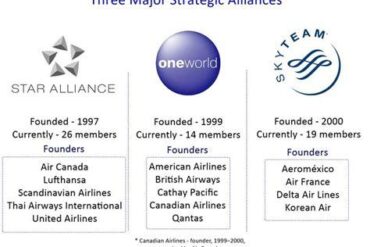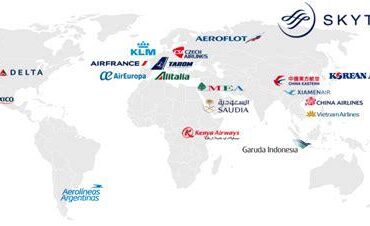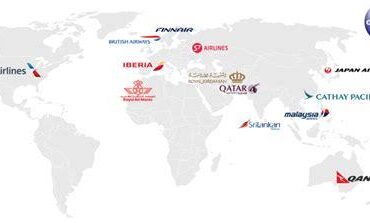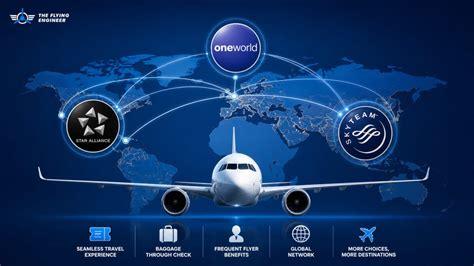
The global airline alliance system is entering one of its most significant transformations in decades. For years, passengers and industry observers viewed Star Alliance, SkyTeam, and oneworld as the dominant structures controlling international cooperation. These three groups connected hundreds of airlines through shared loyalty benefits, airport lounges, coordinated schedules, and global network access. However, in 2026, the traditional alliance model is being reshaped by a new generation of partnerships that are less visible but often more commercially powerful.
Instead of simply expanding alliance membership, airlines are increasingly focusing on joint ventures, strategic bilateral agreements, and targeted commercial partnerships. These arrangements allow carriers to cooperate more deeply on specific markets without accepting the limitations of a full alliance membership. The result is a quieter but fundamental shift in how global aviation networks are organized.
The changes became especially clear in 2026, when several major airlines moved between alliance groups. ITA Airways joined Star Alliance, Hawaiian Airlines entered oneworld, and Asiana Airlines prepared to leave Star Alliance following its merger with Korean Air. Each move altered the competitive balance between the three global alliances, but the bigger story was not simply who joined or left. The deeper change was that airlines were beginning to question whether traditional alliance membership remained the best path for growth.
Three Major Airline Alliance Membership Changes Reshape Global Networks
The movement of three airlines in 2026 represents one of the most active periods of alliance restructuring in recent aviation history. These changes highlight how mergers, ownership decisions, and regional strategies are becoming major forces behind alliance evolution.
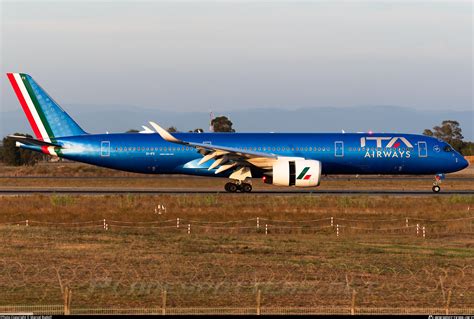
ITA Airways’ move to Star Alliance was one of the most strategically important developments. The Italian carrier officially joined Star Alliance on April 1, 2026, becoming the alliance’s 26th member. The transition followed Lufthansa Group’s acquisition of a 41% stake in ITA Airways in January 2025.
Before joining Star Alliance, ITA was part of SkyTeam, having replaced Italy’s former flag carrier Alitalia after its collapse. However, Lufthansa’s investment changed the airline’s long-term direction. As part of the Lufthansa Group, ITA’s integration into Star Alliance created a stronger European network for the alliance while providing Lufthansa with additional access to Italy’s important aviation market.
The move also gave Star Alliance something it had lacked: a major Italian hub presence through Rome Fiumicino Airport. For SkyTeam, the departure represented the loss of its only Italian member and reduced its ability to compete directly in Southern Europe.
ITA’s loyalty program transition also reflected the deeper integration process. The airline’s Volare program ended, with members transferred into Lufthansa’s Miles & More ecosystem. This demonstrated that alliance changes are no longer just marketing decisions but often involve major operational and customer relationship adjustments.
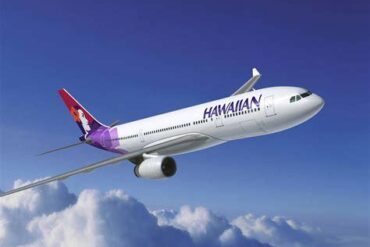
Meanwhile, Hawaiian Airlines joining oneworld represented a different type of alliance expansion. The decision followed Hawaiian’s merger with Alaska Airlines, which was completed in September 2024. Alaska had already been a oneworld member since 2021, making Hawaiian’s transition a natural extension of the combined airline group.
Hawaiian officially joined oneworld on April 22, 2026, becoming the third major US airline in the alliance alongside Alaska Airlines and American Airlines. The addition strengthened oneworld’s position in the Pacific region while giving passengers improved access between Hawaii, North America, and international destinations.
Although Hawaiian continues operating under its own brand, the airline adopted Alaska’s flight codes and moved customers toward the combined Atmos Rewards loyalty program. This illustrates a growing trend in aviation: airline mergers increasingly influence alliance structures, sometimes more than independent strategic decisions.
The third major change involves Asiana Airlines leaving Star Alliance after its merger with Korean Air. The merger process, originally announced in 2020, received final regulatory approval in 2026 after authorities required several conditions, including the sale of Asiana’s cargo operations.
On December 16, 2026, Asiana will officially leave Star Alliance before disappearing as an independent airline. The following day, it will become fully integrated into Korean Air, a founding member of SkyTeam.
The result creates a major shift in Northeast Asia. Star Alliance will lose its only South Korean carrier, while SkyTeam strengthens its position through Korean Air’s expanded network. However, because Korean Air was already a SkyTeam member, the merger does not add a new airline to the alliance system. Instead, it removes a competitor from another alliance.
Why Joint Ventures Are Becoming More Important Than Airline Alliances
Although alliance membership receives the most public attention, the real competitive battle in international aviation increasingly happens through joint ventures.
Traditional alliances were designed as broad cooperation networks. They allowed airlines to share benefits such as lounge access, mileage earning, baggage transfers, and connecting itineraries. However, these relationships were often limited in commercial depth.
A passenger holding Star Alliance Gold status can access lounges across dozens of airlines worldwide. Yet two Star Alliance members operating the same international route may still compete against each other rather than coordinate pricing, capacity, or revenue.
Joint ventures operate differently. They allow airlines to behave almost like a single company on selected routes. Partners can coordinate schedules, share revenue, plan capacity, and jointly manage pricing strategies.
The most successful examples exist on the world’s most profitable long-haul markets.
The Delta Air Lines, Air France-KLM, and Virgin Atlantic transatlantic joint venture demonstrates this model. The airlines coordinate hundreds of daily flights across the North Atlantic, creating a network that functions far beyond simple codesharing.
Similarly, the American Airlines, British Airways, Iberia, and Finnair partnership competes across the Atlantic through oneworld. On the Star Alliance side, the United Airlines and Lufthansa Group joint venture provides a comparable structure.
Across the Pacific, similar partnerships connect major airlines:
- United Airlines and ANA
- Delta Air Lines and Korean Air
- American Airlines and Japan Airlines
These agreements create deeper commercial cooperation than alliance membership alone can provide.
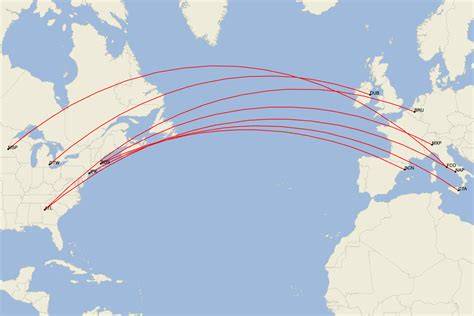
The growing importance of joint ventures explains why some of the biggest strategic decisions in aviation now happen outside alliance meetings. Airlines are increasingly asking a different question: not “Which alliance should we join?” but rather “Which partners can help us dominate specific markets?”
United And JetBlue Show The Rise Of Alliance-Free Partnerships
One of the clearest examples of this changing environment is the partnership between United Airlines and JetBlue.
Announced in 2025 and expanded during 2026, the agreement does not fit into the traditional airline alliance structure. JetBlue is not part of any global alliance, while United remains one of Star Alliance’s founding members.
Instead of changing alliance membership, the two airlines created a direct commercial connection.
The partnership includes reciprocal loyalty benefits between United MileagePlus and JetBlue TrueBlue, allowing customers to earn and redeem rewards across both networks. Elite members receive additional benefits, including priority services and improved travel flexibility.
The airlines also made each other’s flights available through their websites and booking platforms, creating a larger combined network without a formal alliance relationship.
The most strategically important element involves New York operations. JetBlue provides United with access to up to seven daily round-trip slots at John F. Kennedy International Airport beginning in 2027. For United, this creates a path back into JFK without requiring a costly acquisition or purchasing scarce airport slots.
For JetBlue, the partnership connects its strong East Coast leisure network with United’s extensive international system.
The agreement demonstrates that airlines can create significant commercial value without joining the same alliance. This approach provides flexibility and avoids many of the restrictions associated with formal membership.
Why Riyadh Air Is Avoiding Traditional Airline Alliances
Perhaps the strongest example of the new partnership philosophy is Riyadh Air.
Saudi Arabia’s newest airline has chosen a different strategy from traditional global carriers. Rather than joining Star Alliance, SkyTeam, or oneworld, Riyadh Air is building a network of individual partnerships across multiple alliance groups.
The airline, supported by Saudi Arabia’s Public Investment Fund and led by aviation executive Tony Douglas, believes bilateral cooperation provides greater flexibility.
Riyadh Air has already established partnerships with airlines from different alliance backgrounds. Its agreements include cooperation with Air France-KLM, Singapore Airlines, and Turkish Airlines.
This approach gives Riyadh Air access to multiple global networks without being restricted to a single alliance ecosystem.
The strategy resembles the approach used by Etihad Airways, which has operated outside formal alliances while building an extensive network of codeshare and commercial relationships.
For Riyadh Air, avoiding alliance membership may provide several advantages. Saudi Arabia already has Saudia, a SkyTeam member, meaning joining the same alliance could create unnecessary overlap. By remaining independent, Riyadh Air can cooperate with airlines across competing alliance groups.
The airline’s strategy reflects a broader industry trend: new carriers are increasingly choosing flexibility over traditional structures.
What Airline Alliances Still Offer In 2026
Despite these changes, global airline alliances remain highly valuable. They are not disappearing; they are evolving.
The biggest advantage of alliances is their unmatched global scale. A passenger traveling across several continents benefits from standardized loyalty recognition, lounge access, baggage agreements, and coordinated travel services.
A traveler flying on multiple Star Alliance airlines, for example, can often complete complex international journeys using one ticket with through-check-in and baggage transfers. Creating the same level of integration through separate bilateral agreements would require hundreds of individual negotiations between airlines.
Alliance-based products such as round-the-world fares also remain unique. These offerings allow travelers to create multi-stop global itineraries across numerous airlines under one structured ticket.
Recognizing changing market conditions, alliances are adapting their models. Instead of requiring every airline to become a full member, they are developing more flexible partnership options.
Star Alliance’s connecting partner program allows selected airlines to participate without full membership. Other alliances are exploring similar approaches.
This creates a future where airline cooperation may exist across multiple layers: full alliance membership, regional partnerships, joint ventures, and individual commercial agreements.
The Future Of Global Airline Partnerships
The airline alliance system in 2026 is not collapsing. It is becoming more complex.
The traditional three-alliance model remains the foundation of international cooperation, but airlines are increasingly building customized networks around their own strategic priorities. The strongest partnerships are no longer always the largest ones.
A carrier may remain inside an alliance for global connectivity while creating separate joint ventures for its most profitable routes. A new airline may avoid alliances entirely while connecting itself through dozens of bilateral agreements.
The future of aviation cooperation will likely be defined by flexibility. Alliances will continue providing worldwide passenger benefits, while joint ventures and direct partnerships will control the most valuable commercial opportunities.
In 2026, the biggest changes in airline cooperation are happening quietly. The logos on alliance websites may look familiar, but behind the scenes, the global aviation map is being redrawn.